SS27: VIKTORANISIMOV show
The new VIKTORANISIMOV collection was born from a reality in which war has long ceased to be a separate subject — it has become part of everyday life.
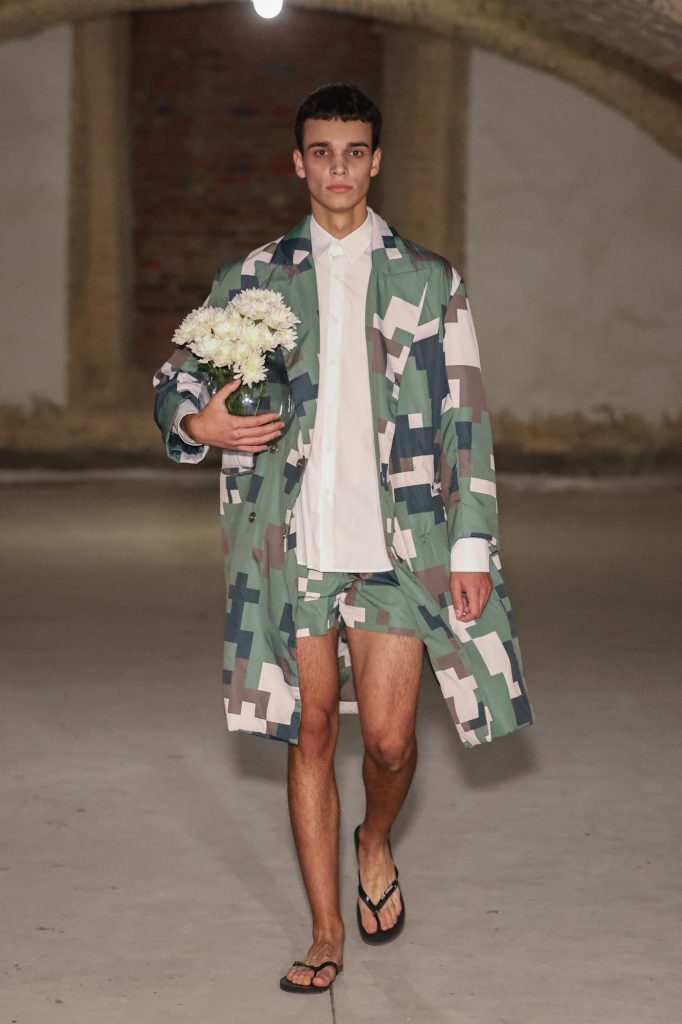
Viktor Anisimov turns to photographs of people taken in the aftermath of Russian missile and drone attacks on residential buildings. His attention is drawn not only to the destruction itself, but to the people caught within it: their faces, their behaviour, and, in particular, their clothes.
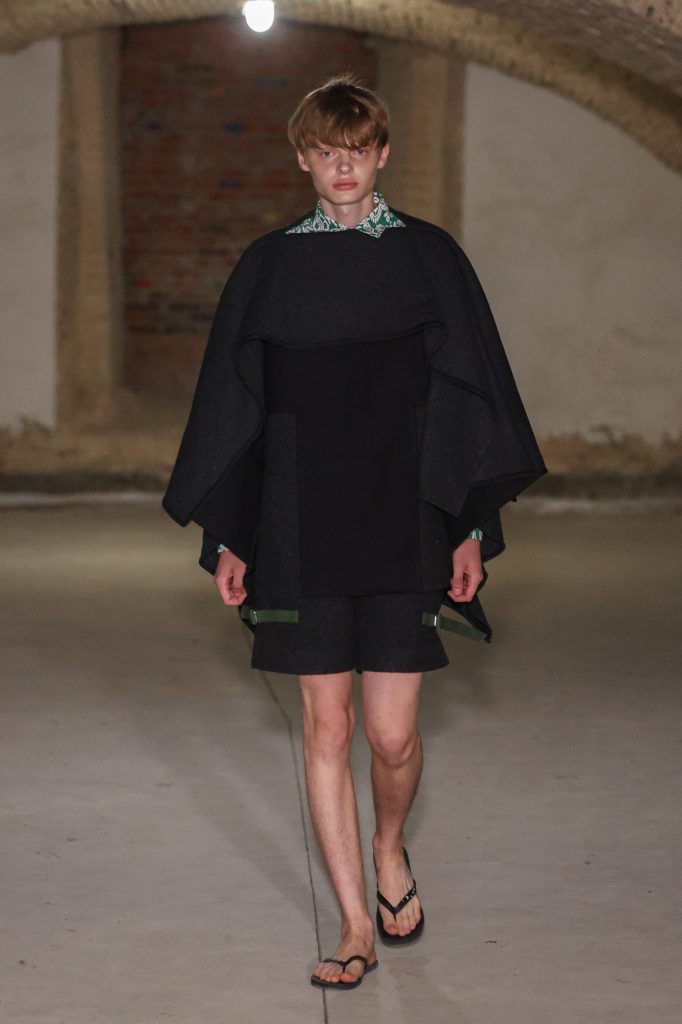
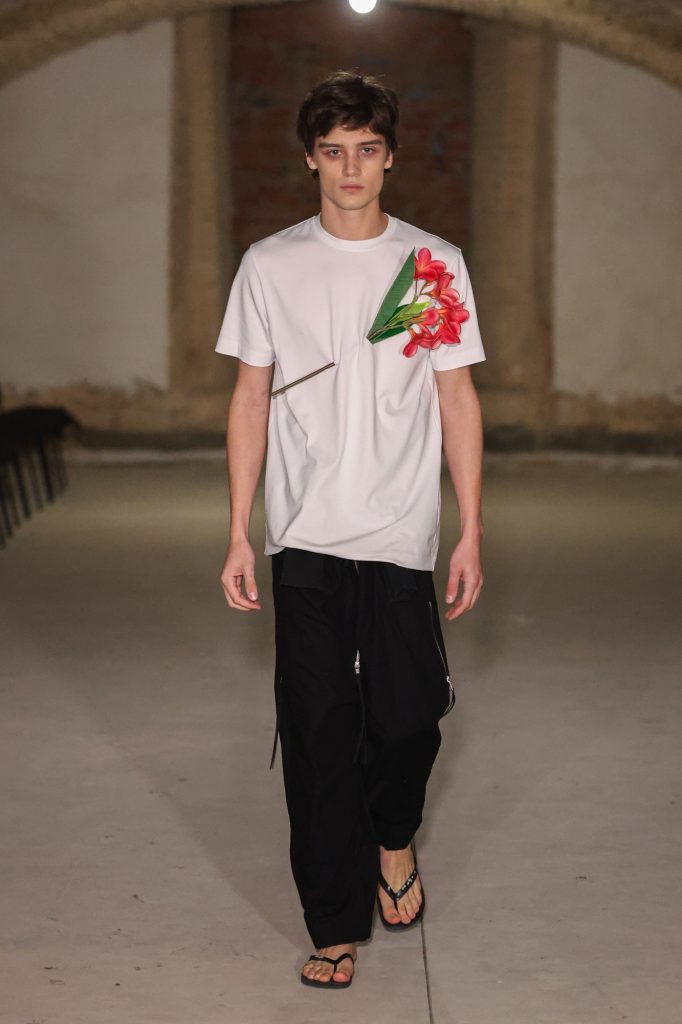
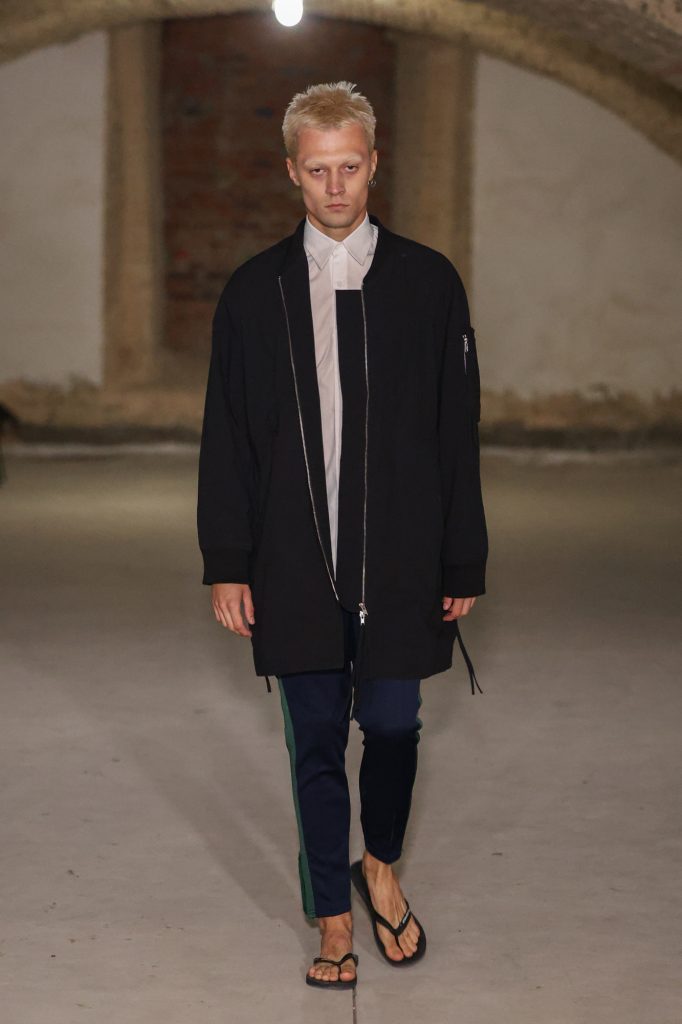
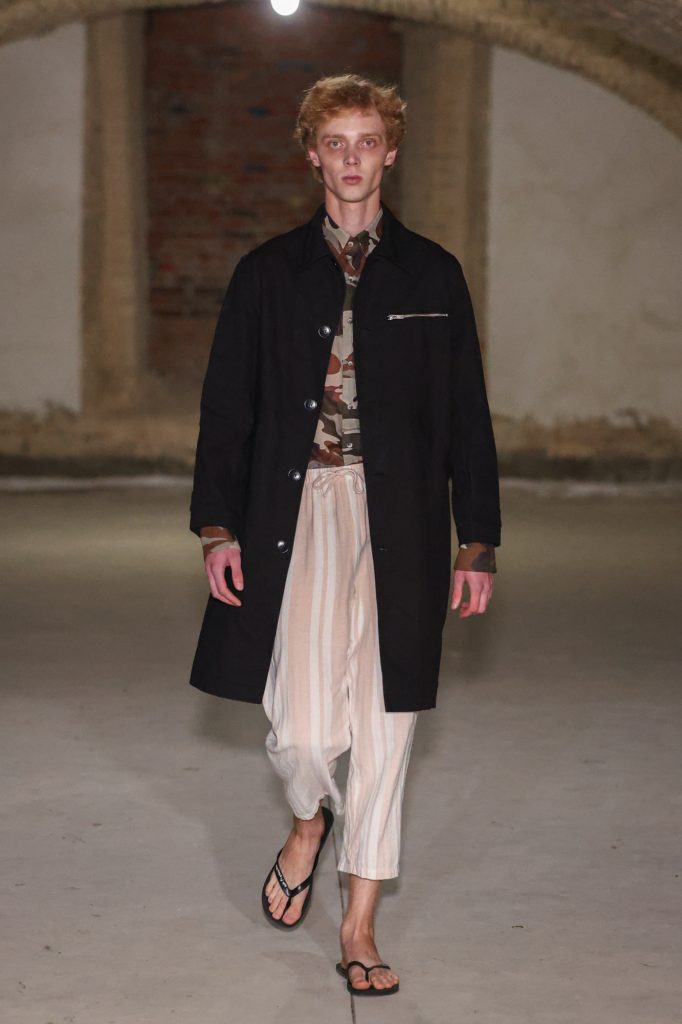
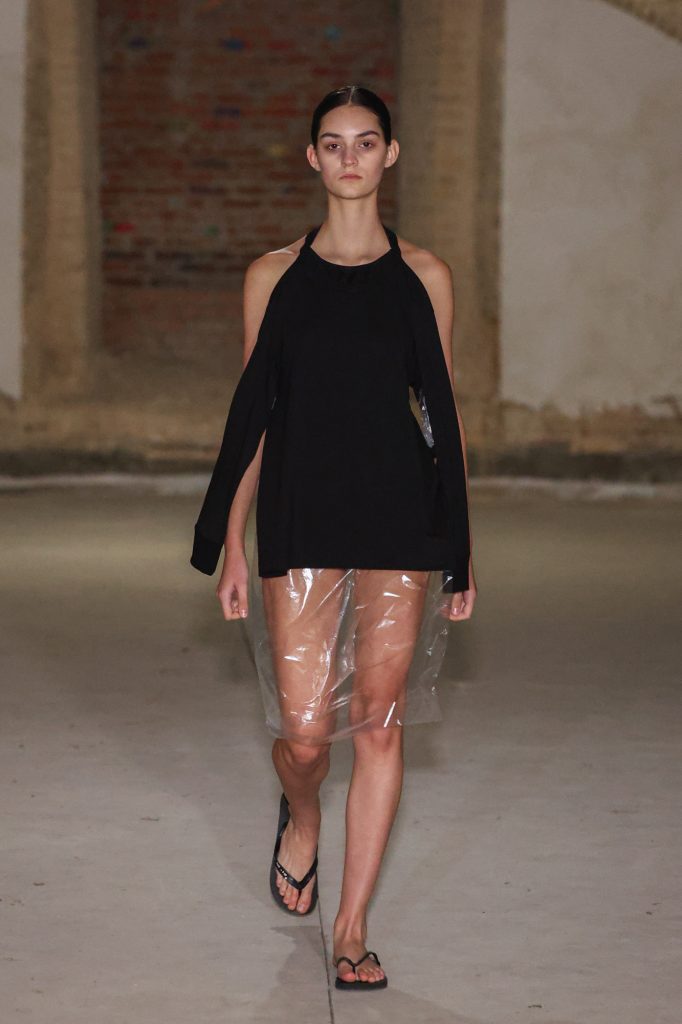
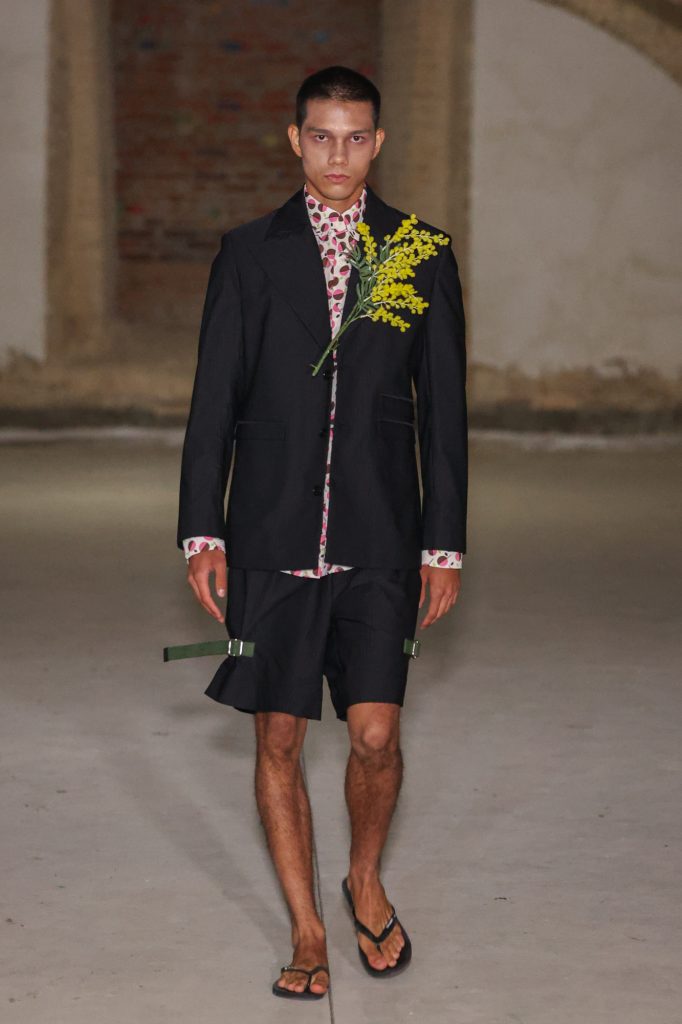
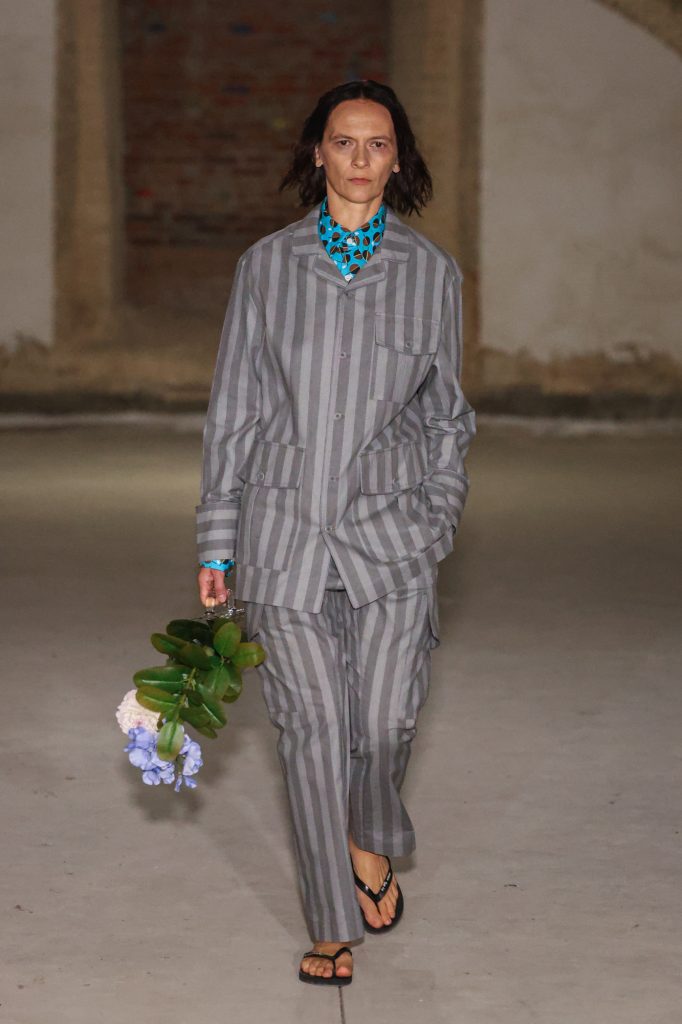
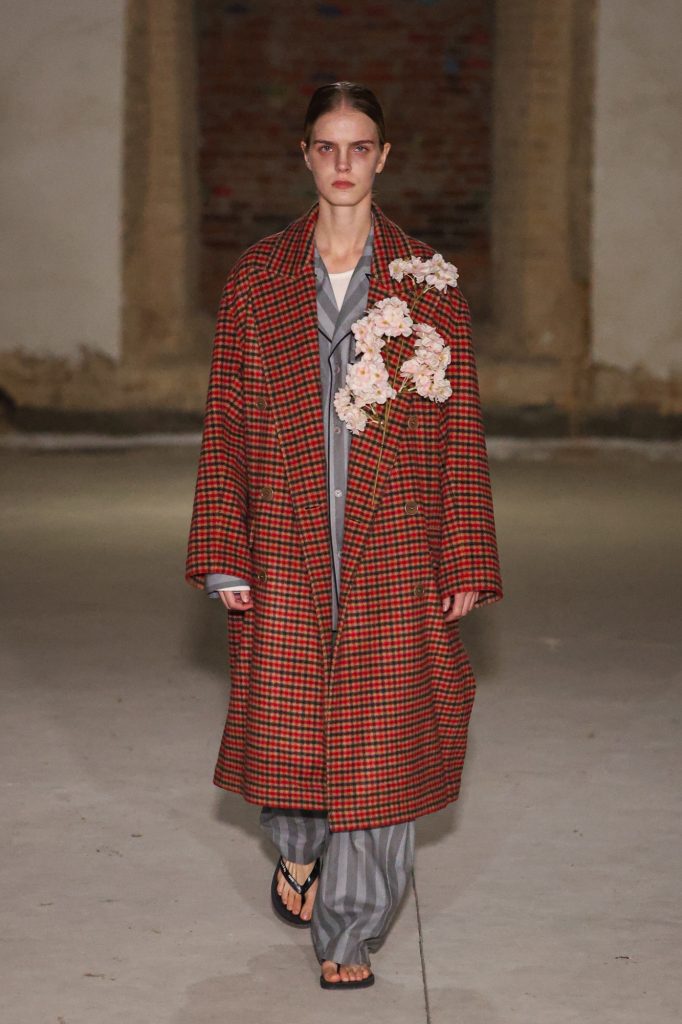
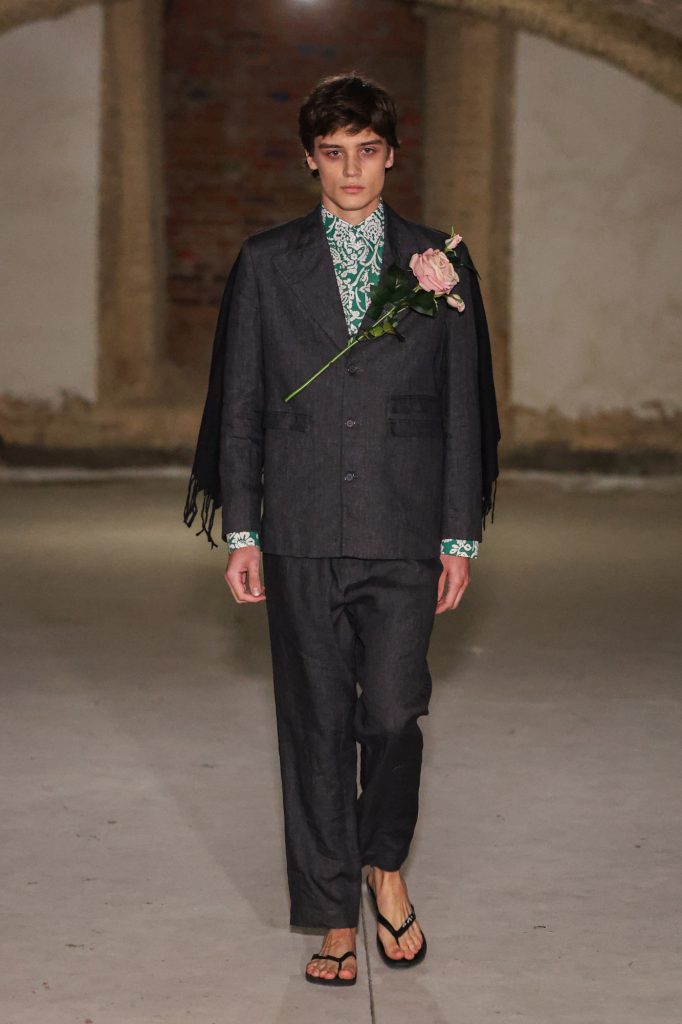
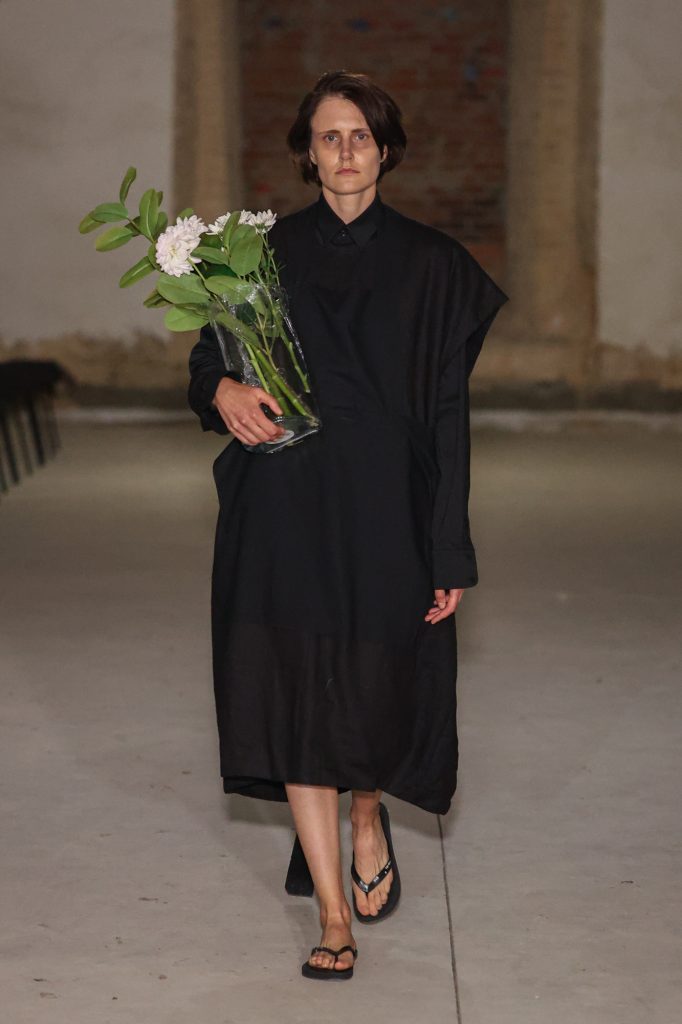
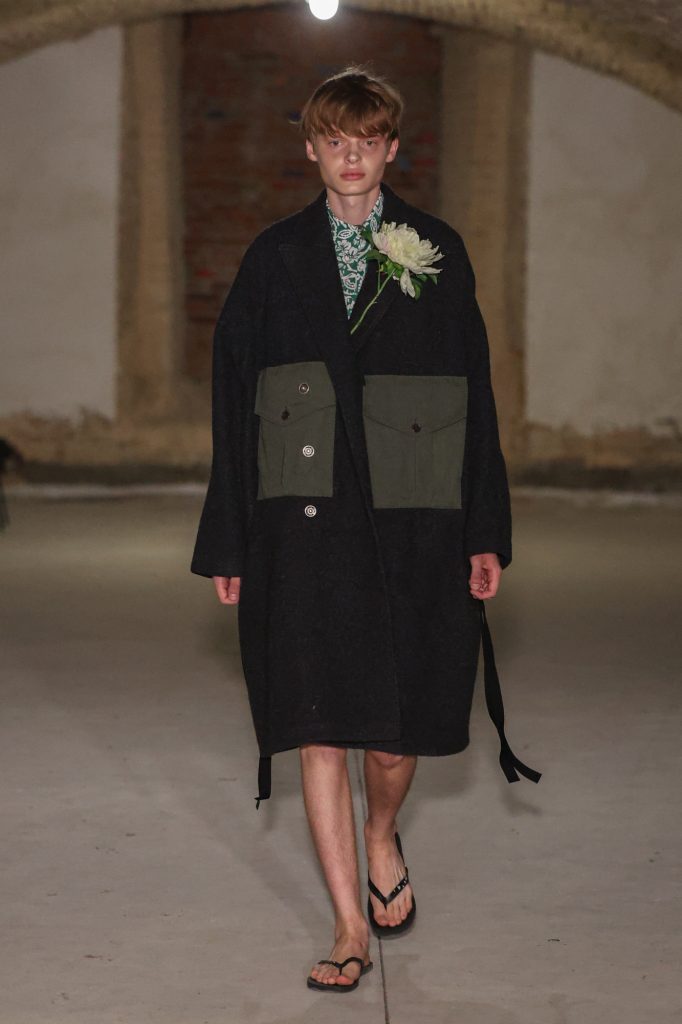
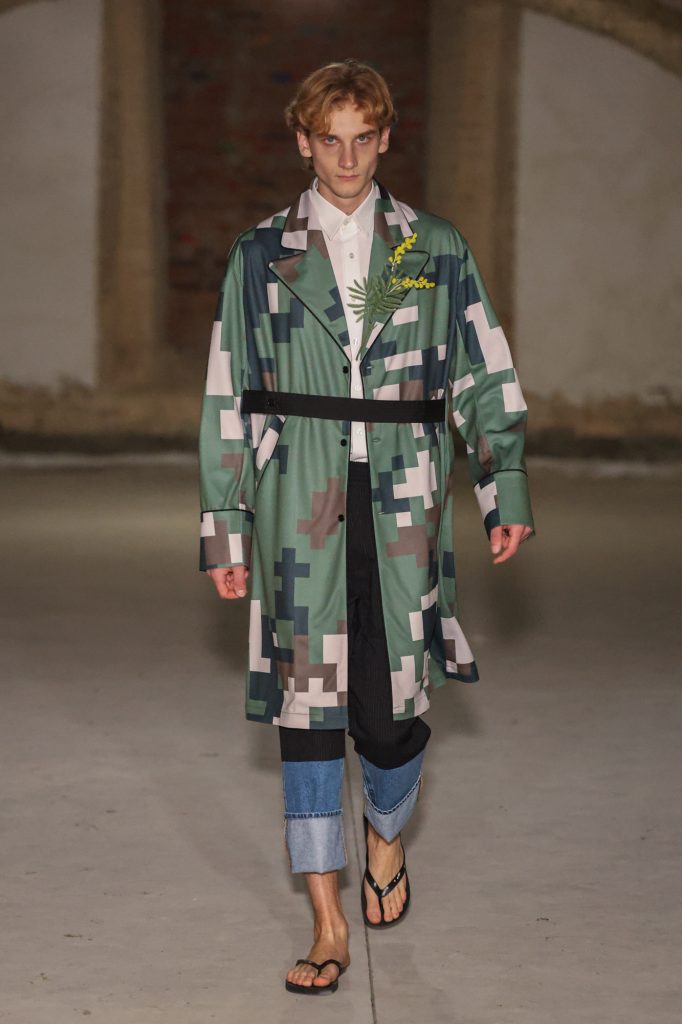
In these photographs, people from different apartments, with different lives and habits, may suddenly find themselves side by side. Someone has managed to get dressed in clothes prepared in advance; someone has run outside in pyjamas or a robe; someone has thrown a coat over their shoulders; someone has ended up in sportswear and slippers. Within seconds, the familiar order of things disappears — and a person is left with whatever they managed to grab or put on.
This sense of chance becomes one of the collection’s central images.
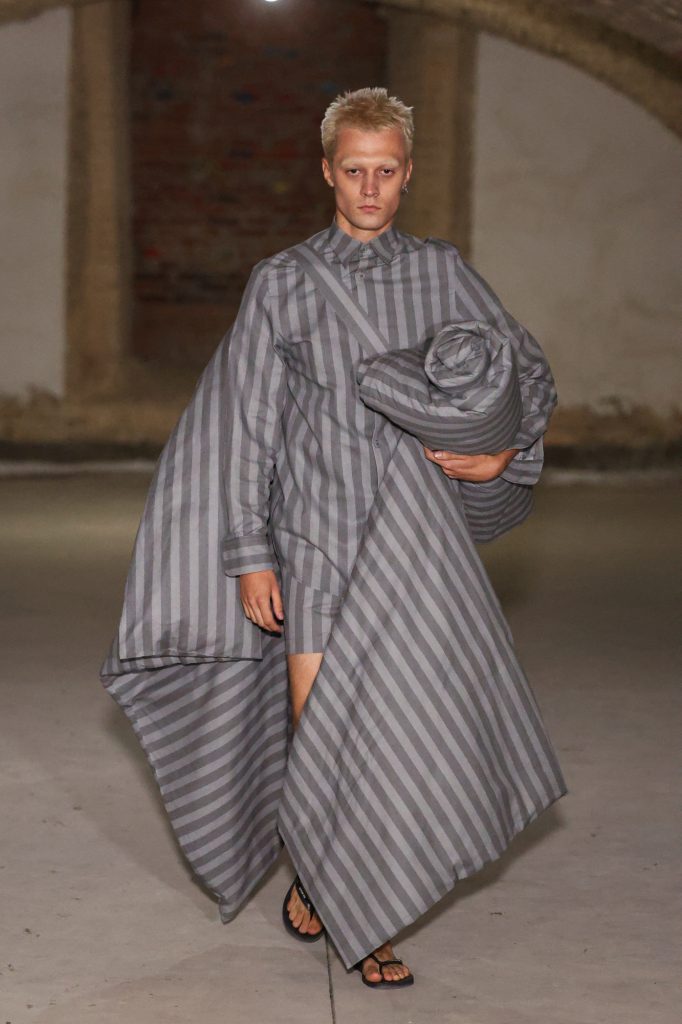
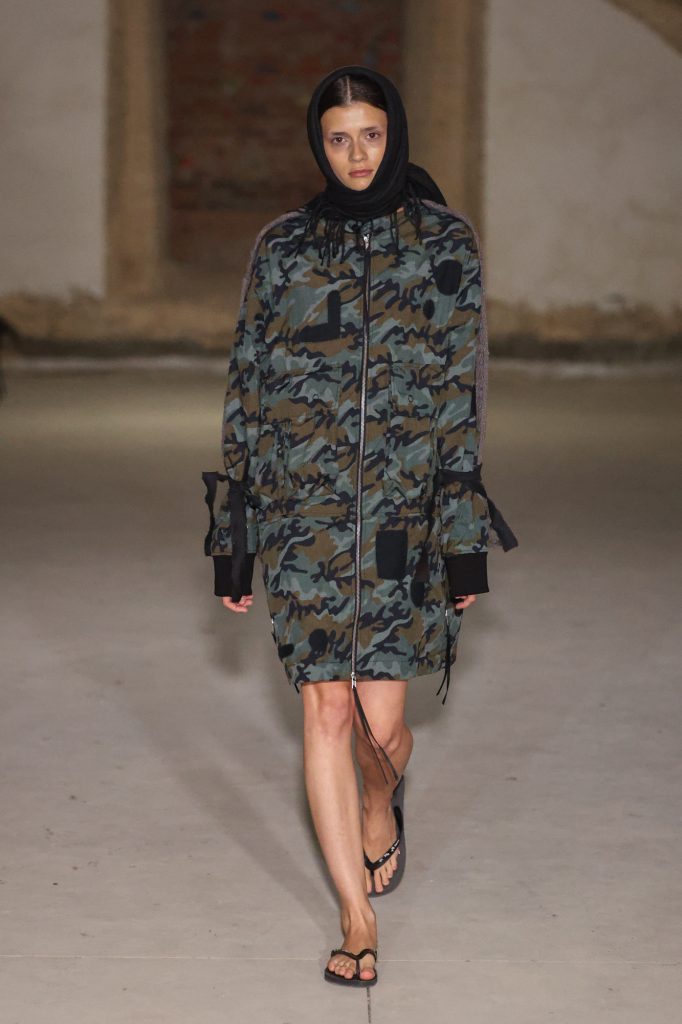
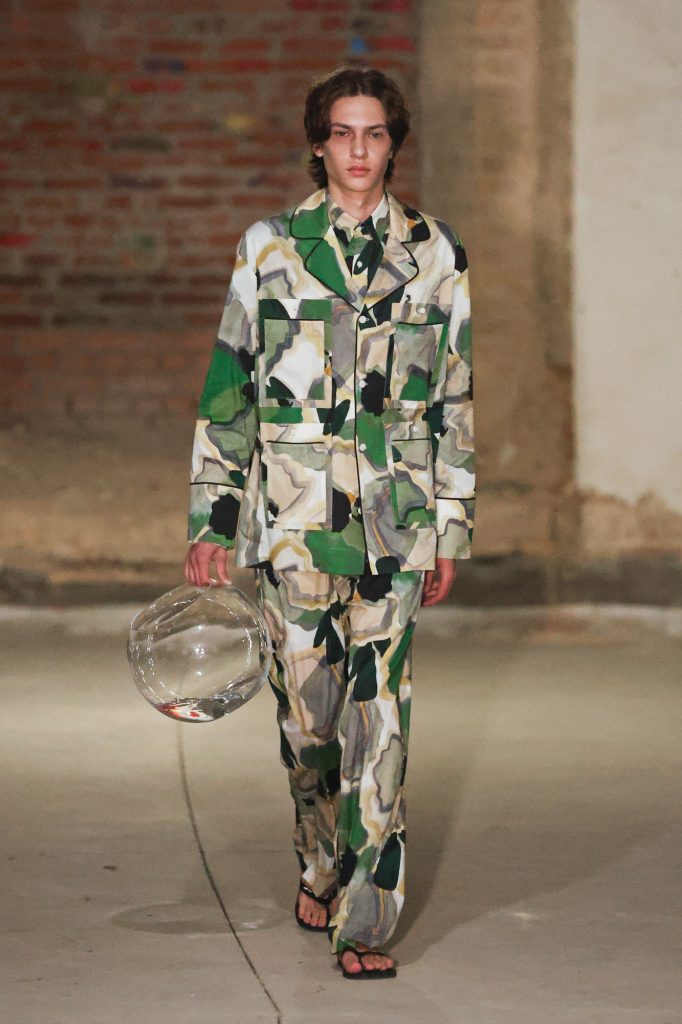
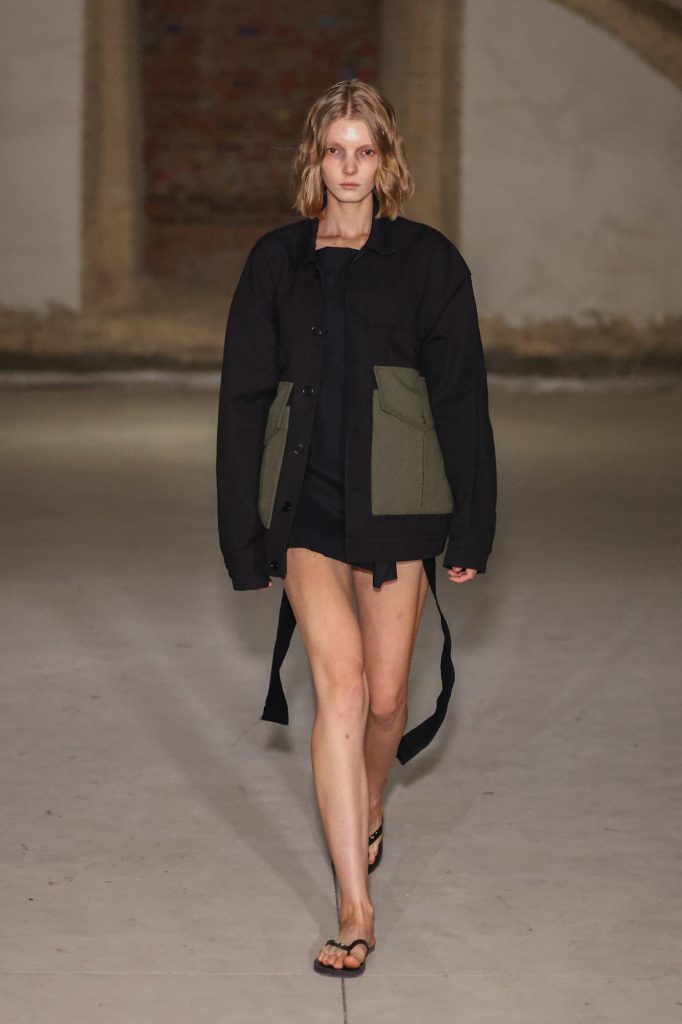
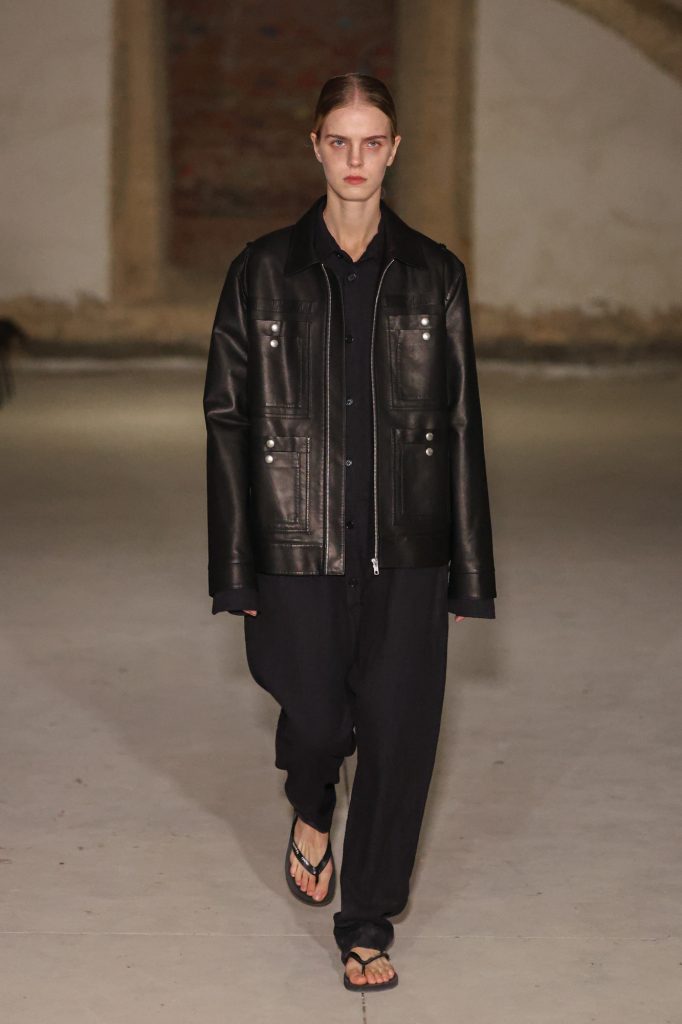
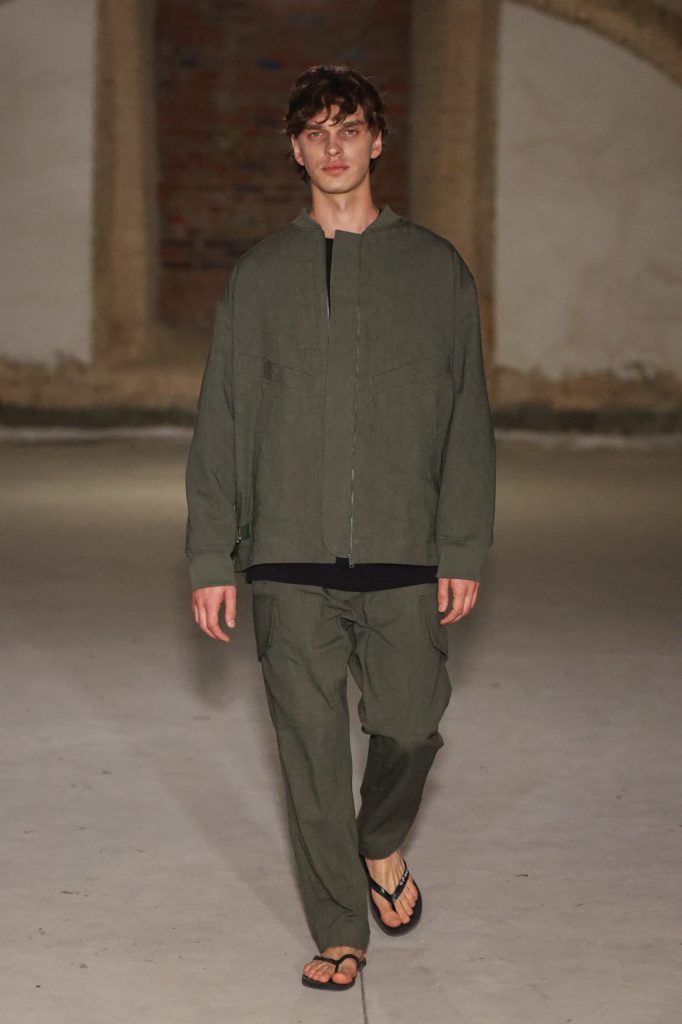
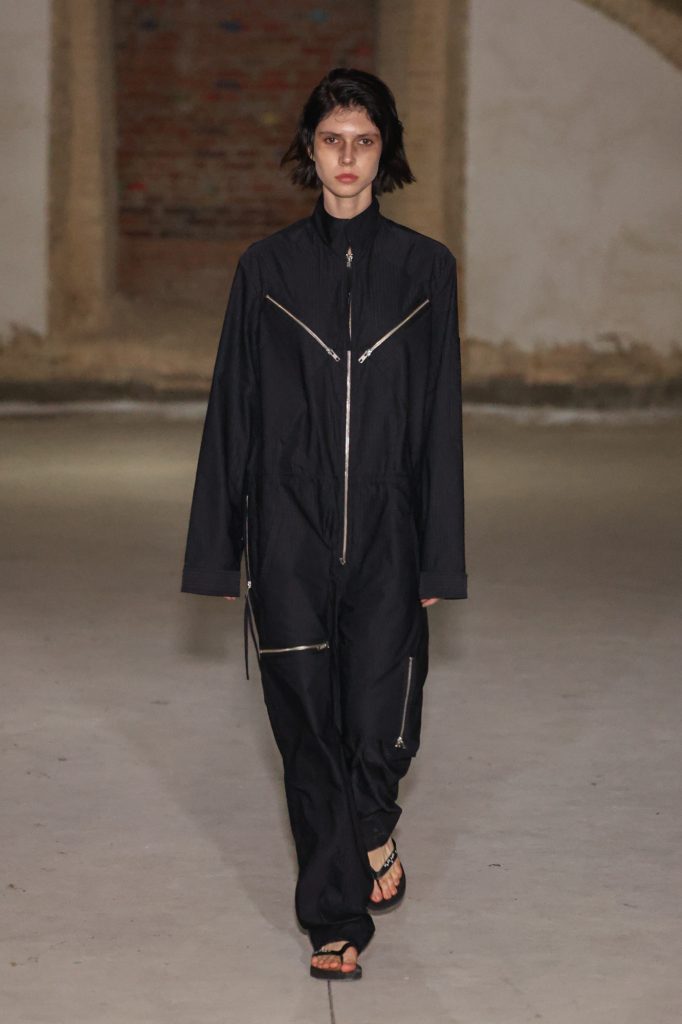
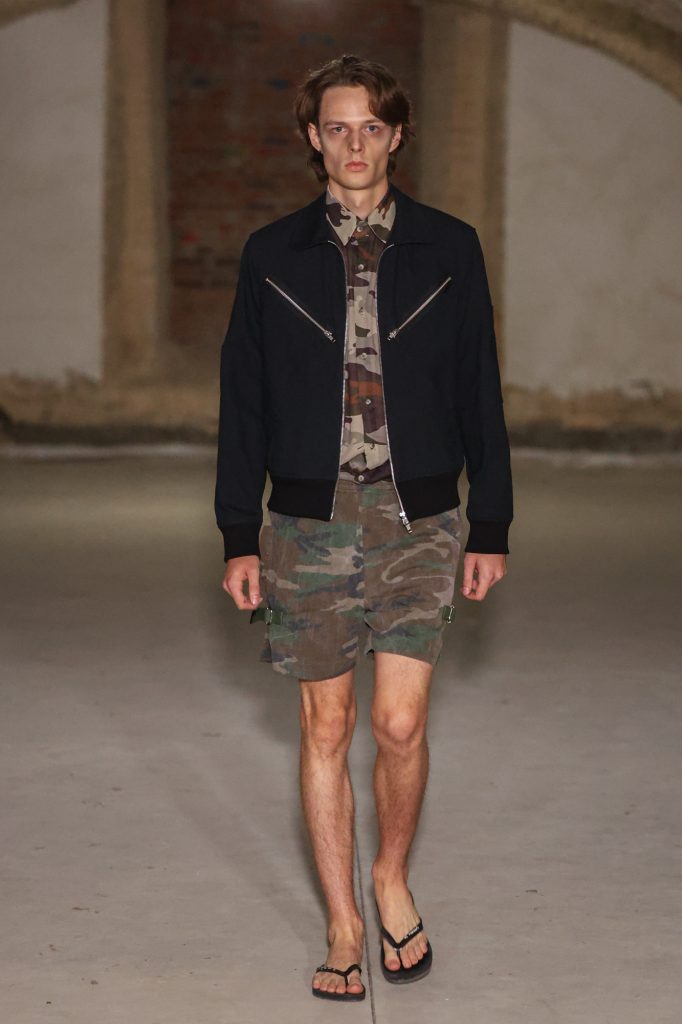
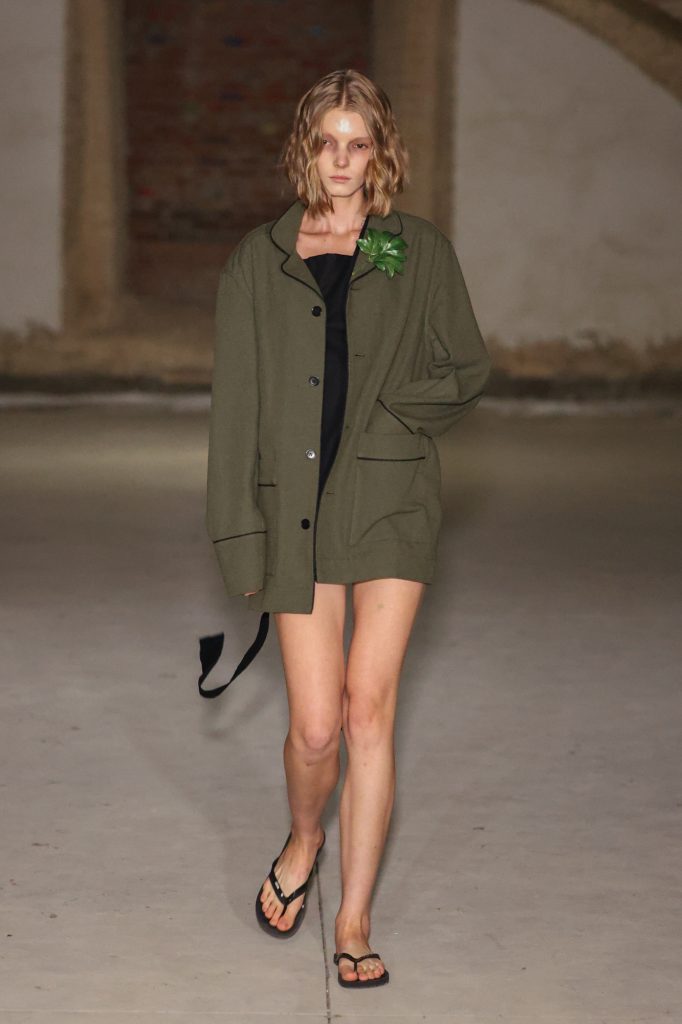
Homewear meets military-inspired elements throughout the collection. Pyjama silhouettes are fitted with military-style patch pockets — a reminder that, in wartime, everyone has in some way become a soldier, even when their uniform is a pair of pyjamas.
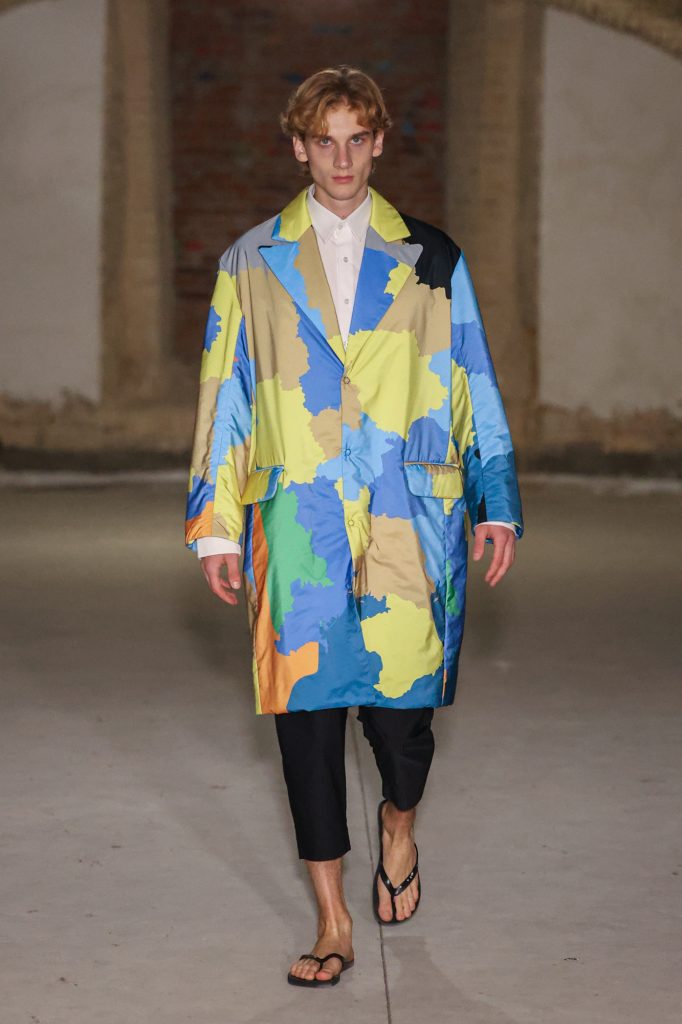
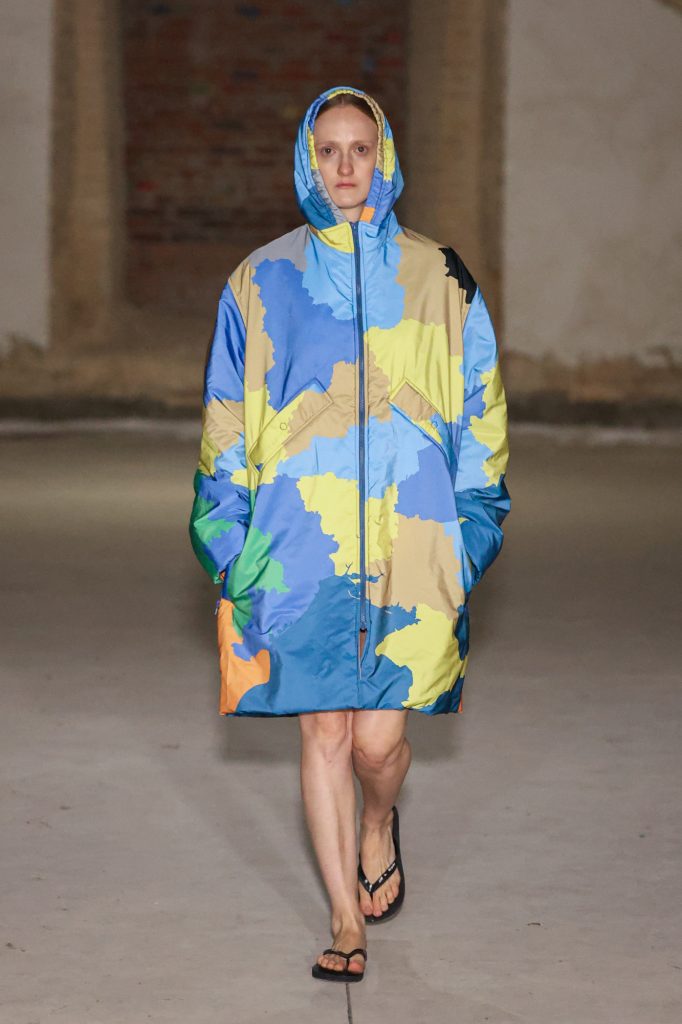
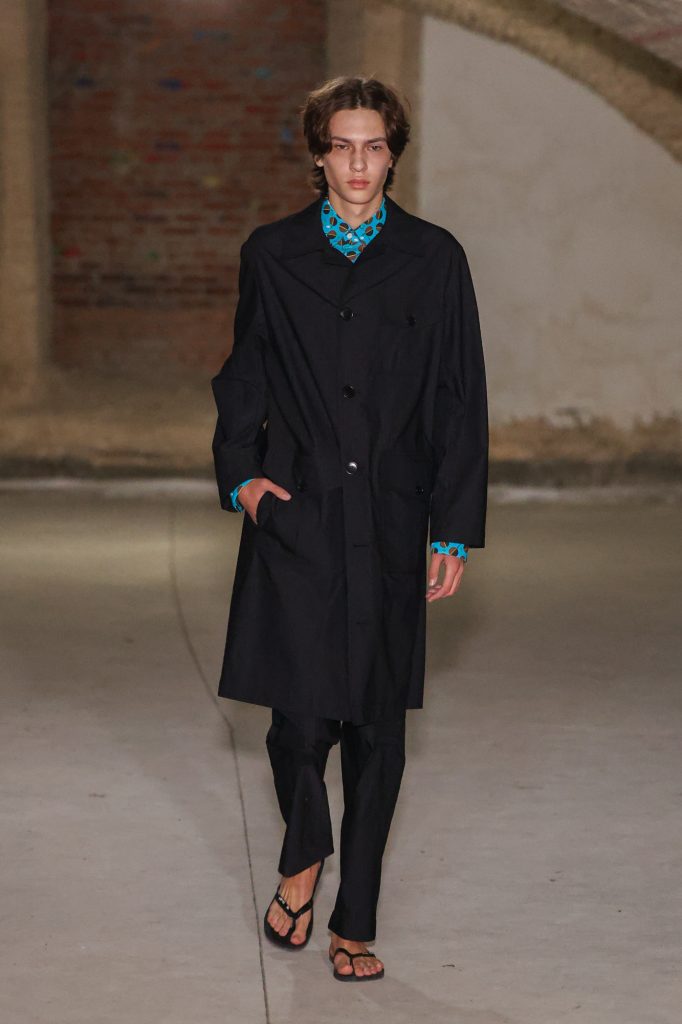
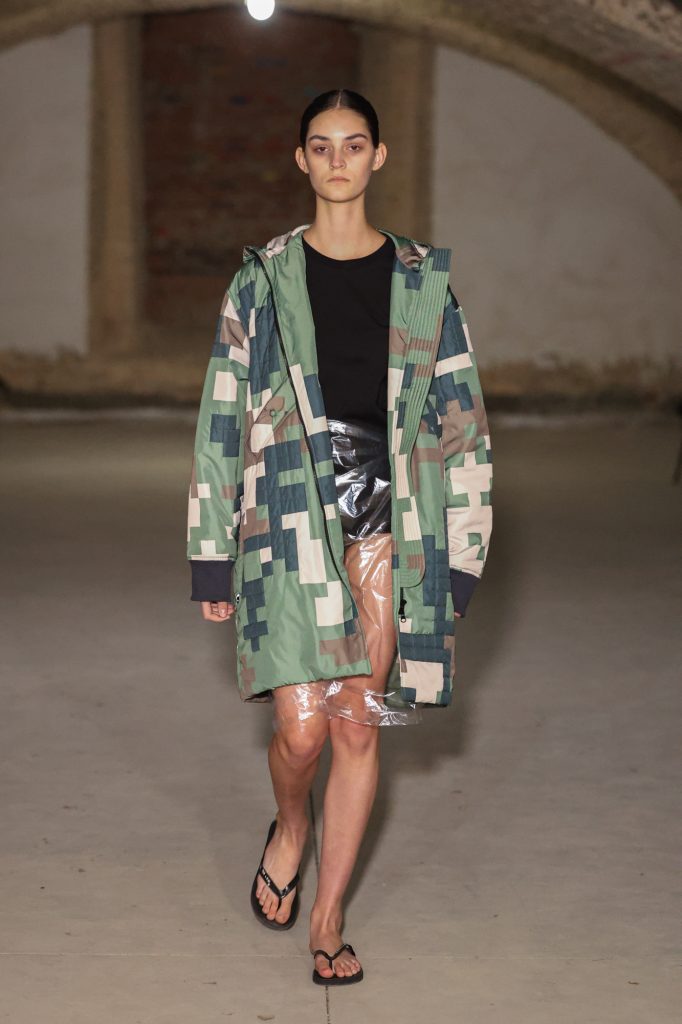
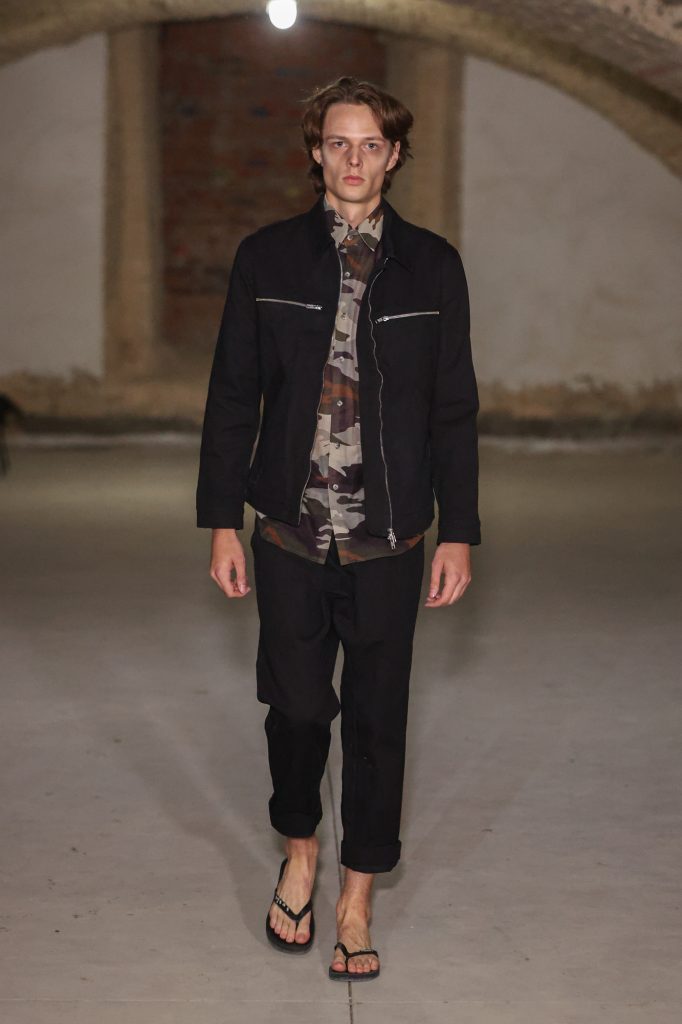
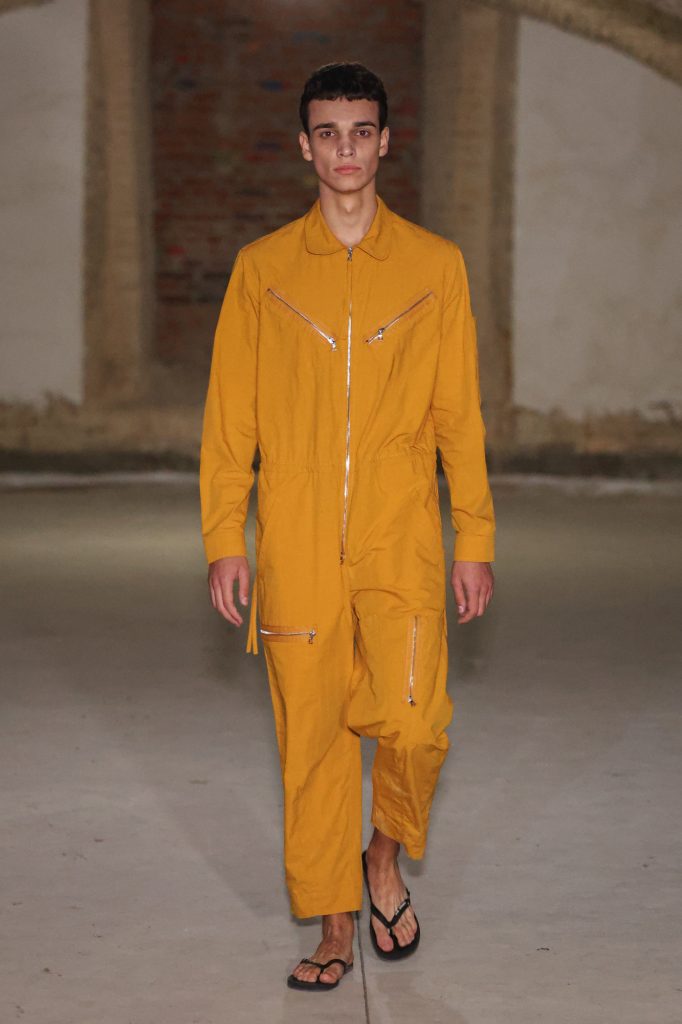
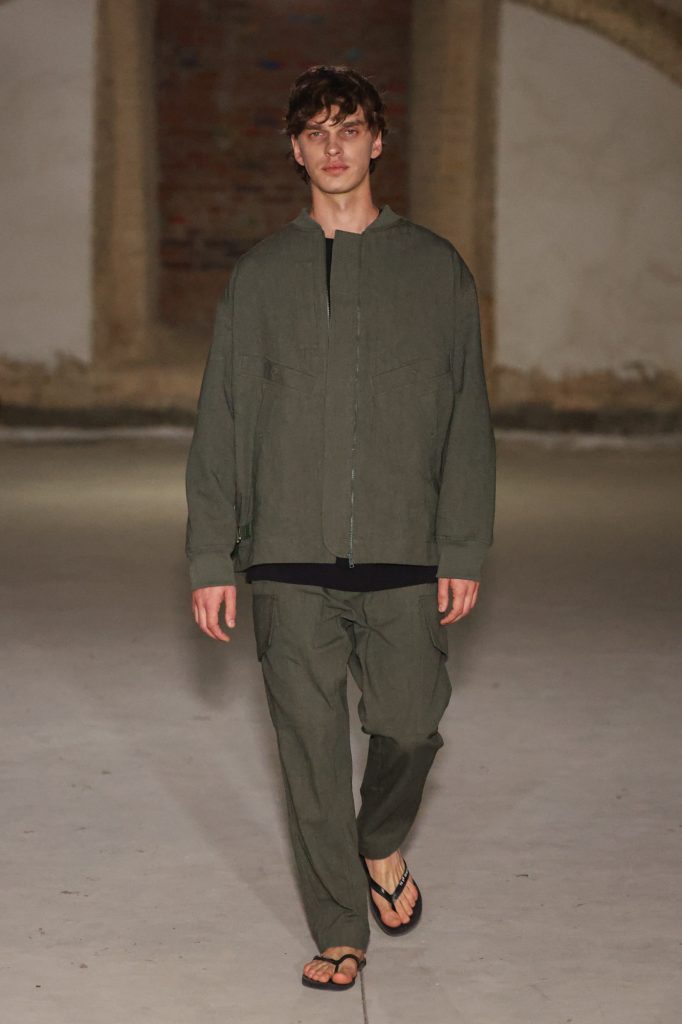
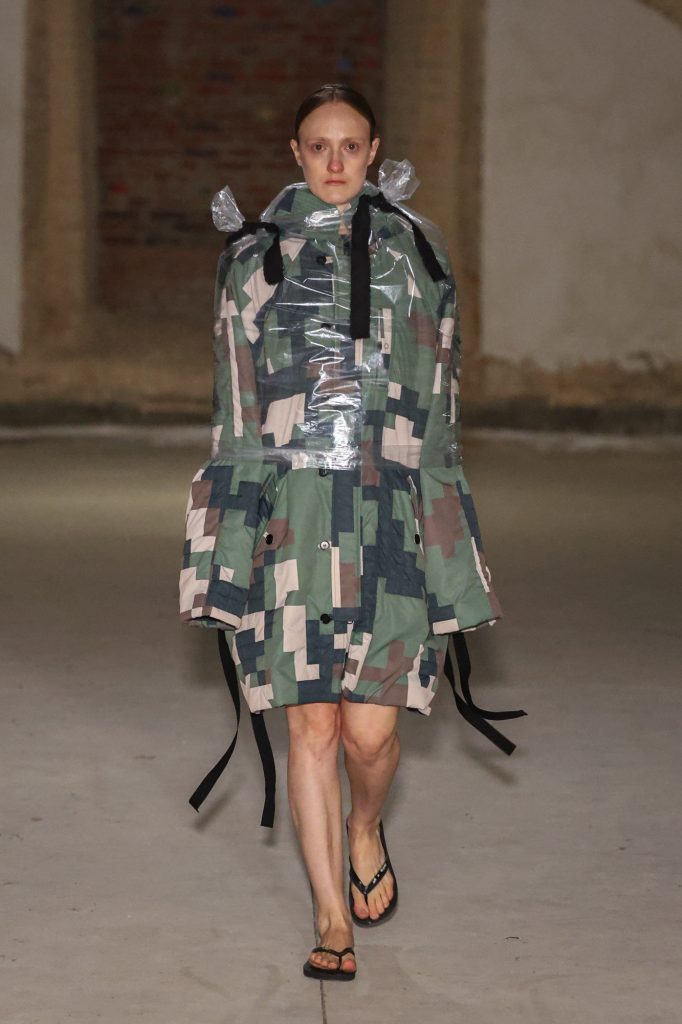
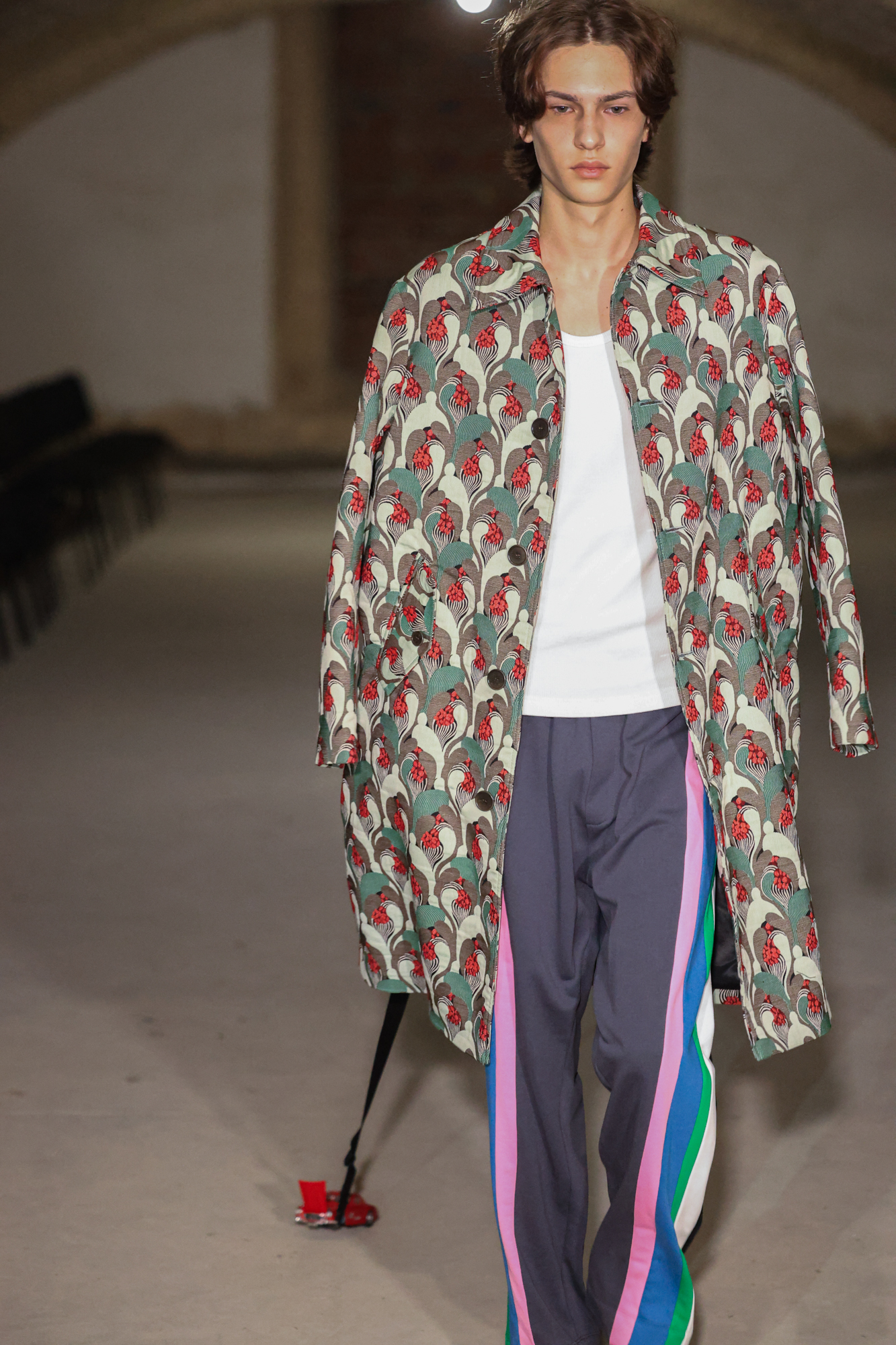
Classic coats are combined with functional details. Shirts, shorts, and pyjama sets exist alongside parkas, jumpsuits, and technical outerwear. Dressier fabrics and prints emerge among black, grey, and khaki, creating sudden flashes of colour.
These accents never dominate. They appear almost by chance — like remnants of ordinary life surviving within a dark reality.
The visual context of the collection is also shaped by the work of Ukrainian documentarians, including photographer Yevhenii Maloletka and filmmaker and documentary director Mstyslav Chernov. Their work has had a profound impact on Viktor Anisimov. What matters to the designer is their attention to the individual — not as an abstract symbol of war, but as a specific person continuing to live among its consequences.
At the centre of this story is clothing as a fragment of life.
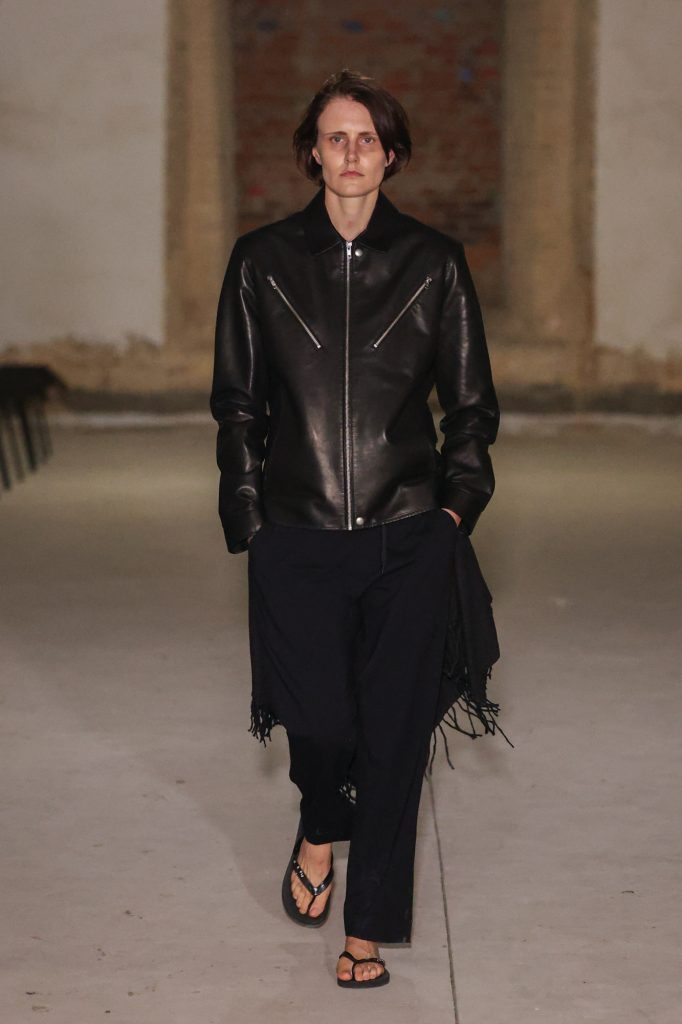
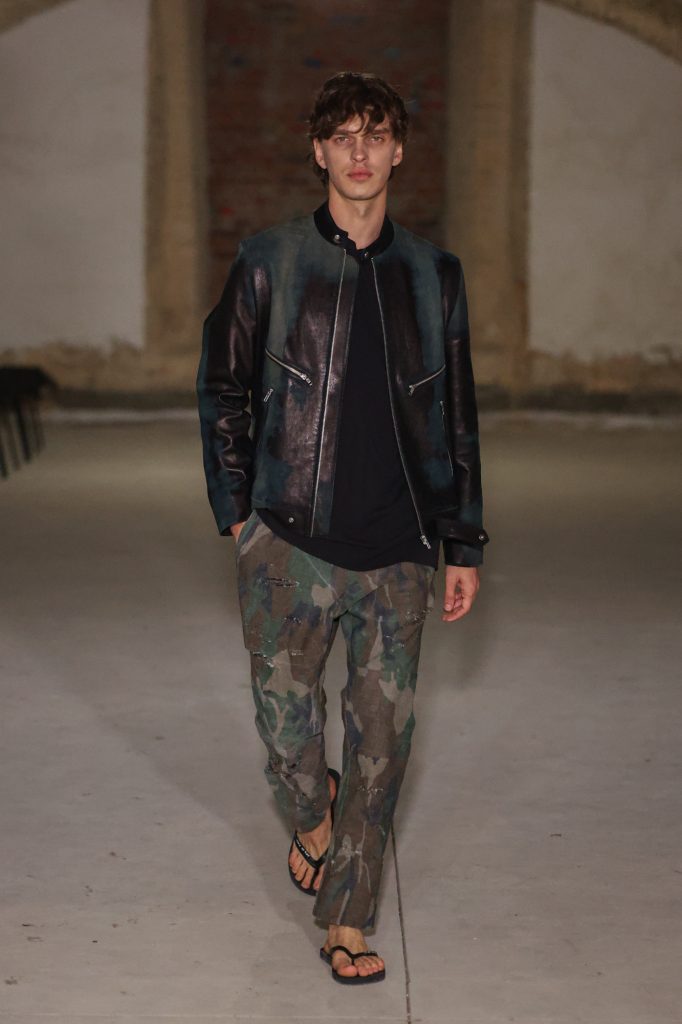
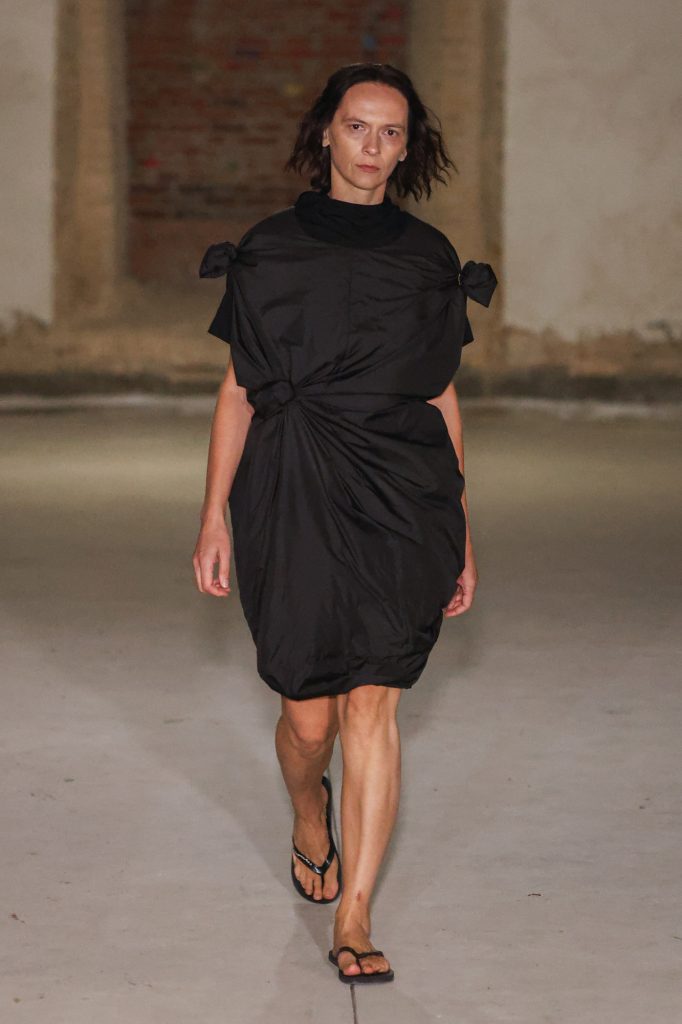
The ruins of a building resemble a puzzle from which pieces have suddenly disappeared. The same happens to clothing. Garments tear, lose their original shape, are repaired, and assembled again. This idea is reflected in the use of patchwork, raw edges, distressed surfaces, and a deliberate boiling treatment applied to the garments.
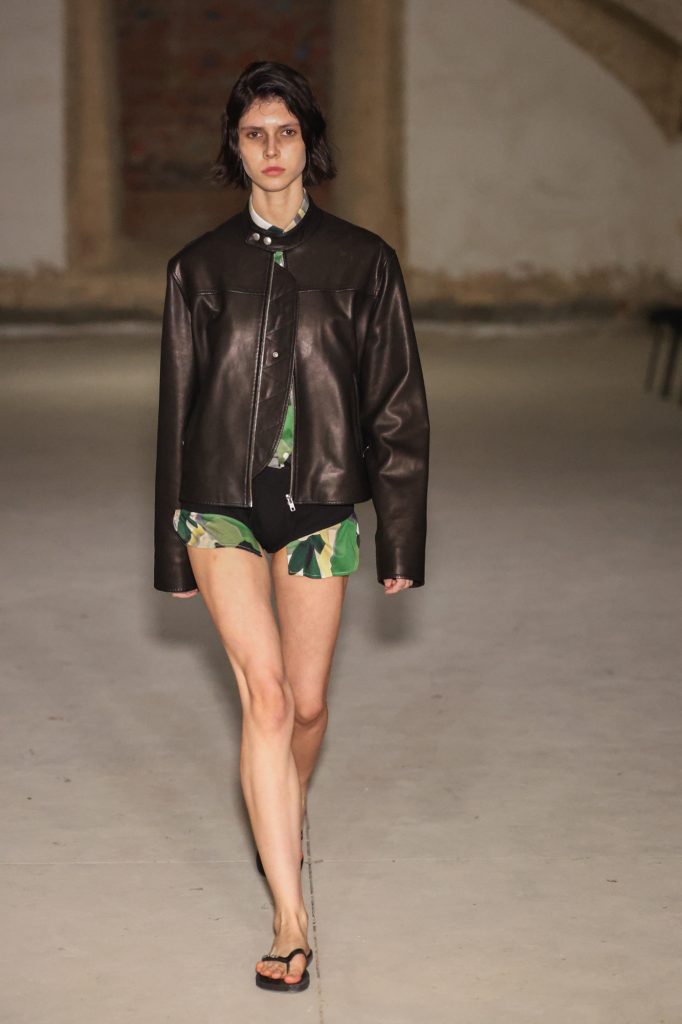
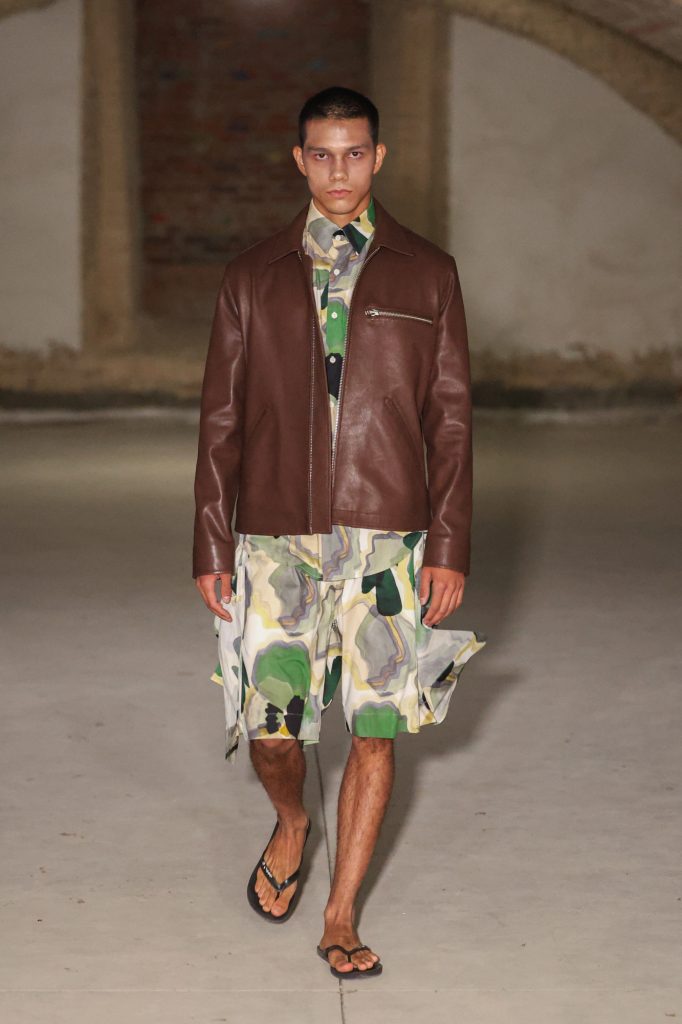
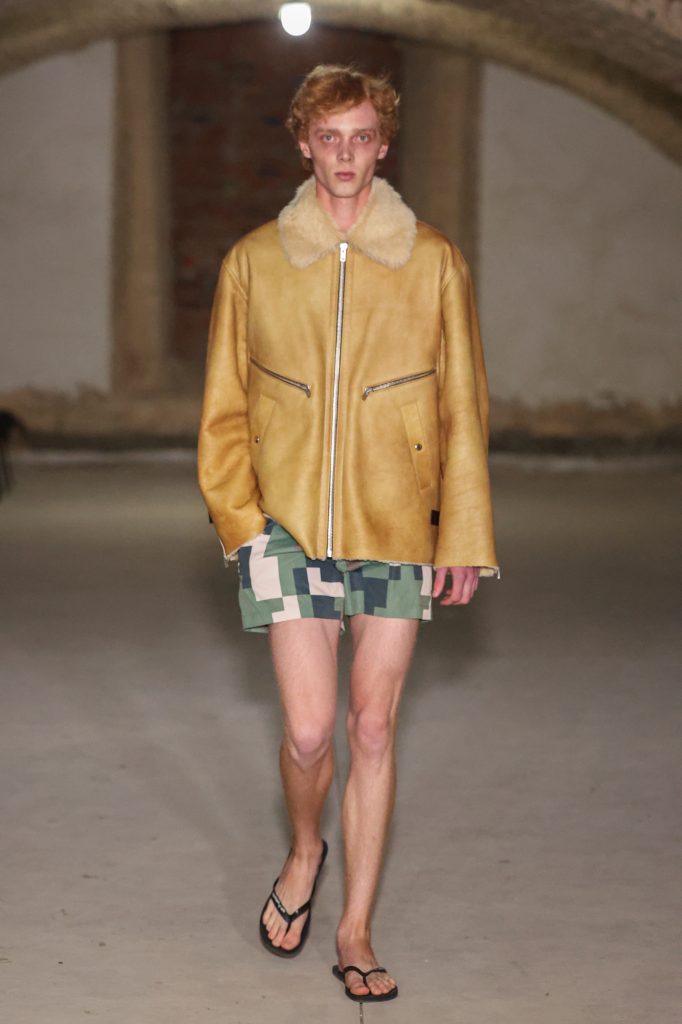
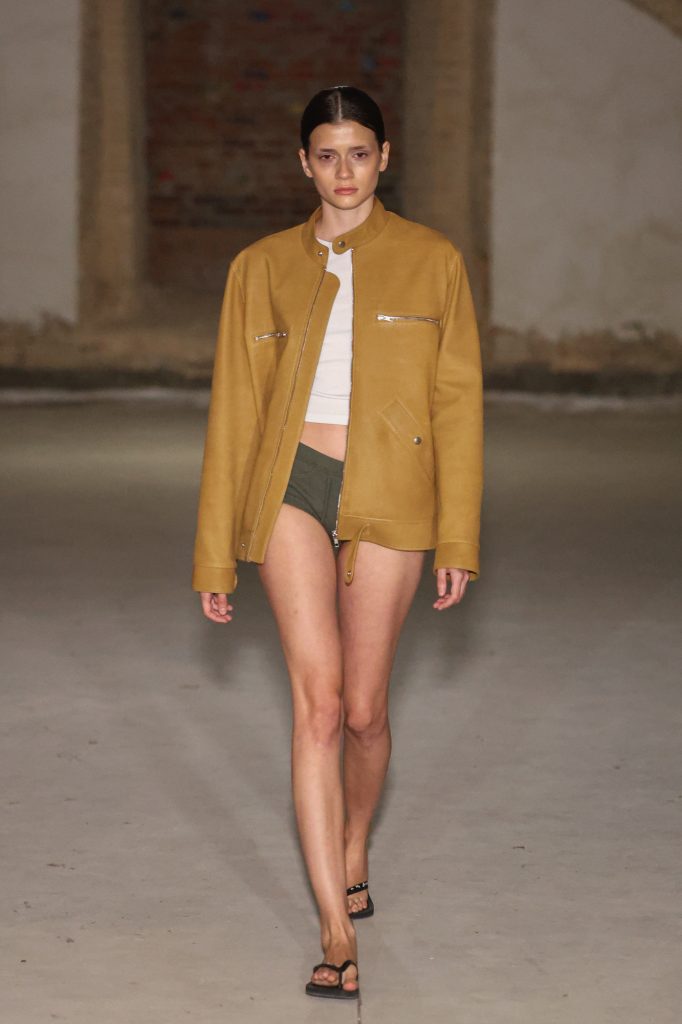
Natural leather is also specially treated: boiled, rubbed, and artificially aged to give the material the appearance of an object that already carries its own history.
After approximately seven years, Viktor Anisimov returns to his collaboration with craftsman Kostia Kosynskyi, with whom he creates the leather pieces for the new collection.
A new material also enters the designer’s vocabulary: merino wool. It is used alongside canvas, cotton, linen, nettle fibre, nylon, as well as coat and suiting fabrics. Some materials come from previous collections, given new life in a different context.
Canvas occupies a particular place in the collection — a rough material associated with temporary shelters, rescue operations, and spaces left in the aftermath of destruction. Here, it is transformed into lightweight outerwear, blurring the line between functional clothing and everyday wardrobe.
The collection remains predominantly dark in tone — black, grey, and khaki — while introducing checks, vivid printed fabrics, mustard, and other flashes of colour. Military-inspired details, which have been part of the VIKTORANISIMOV DNA from the beginning, acquire a new context here.
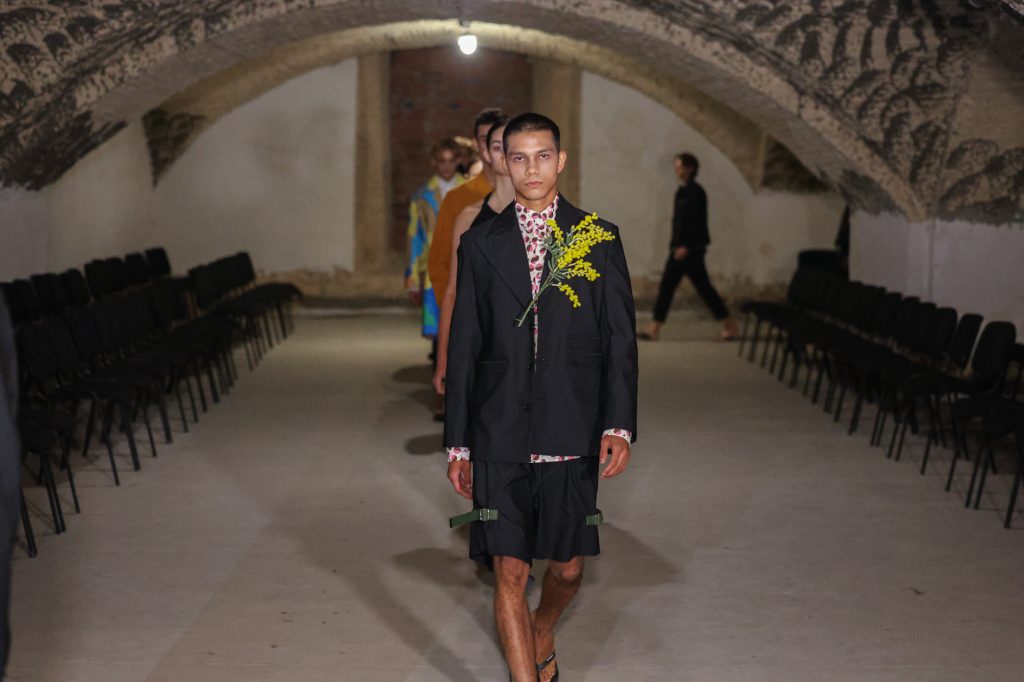
This is not a collection about war as a separate subject. It is a collection about people who live in a reality permeated by war.During the final show of the day, an air raid alert sounded and guests descended into a shelter. The designer made the decision to present the collection there, for those who were in the shelter at that moment.
The VIKTORANISIMOV show thus became more than a fashion presentation — a deeply symbolic reflection of the reality in which Ukrainian fashion continues to exist and create.