KSENIASCHNAIDER at London Fashion Week SS27
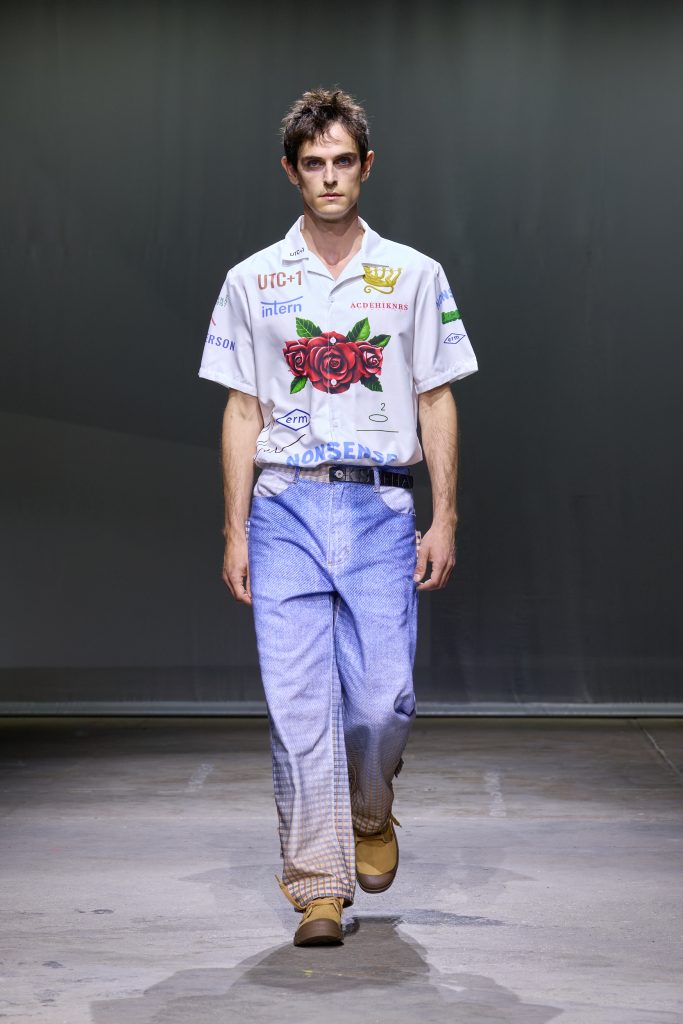
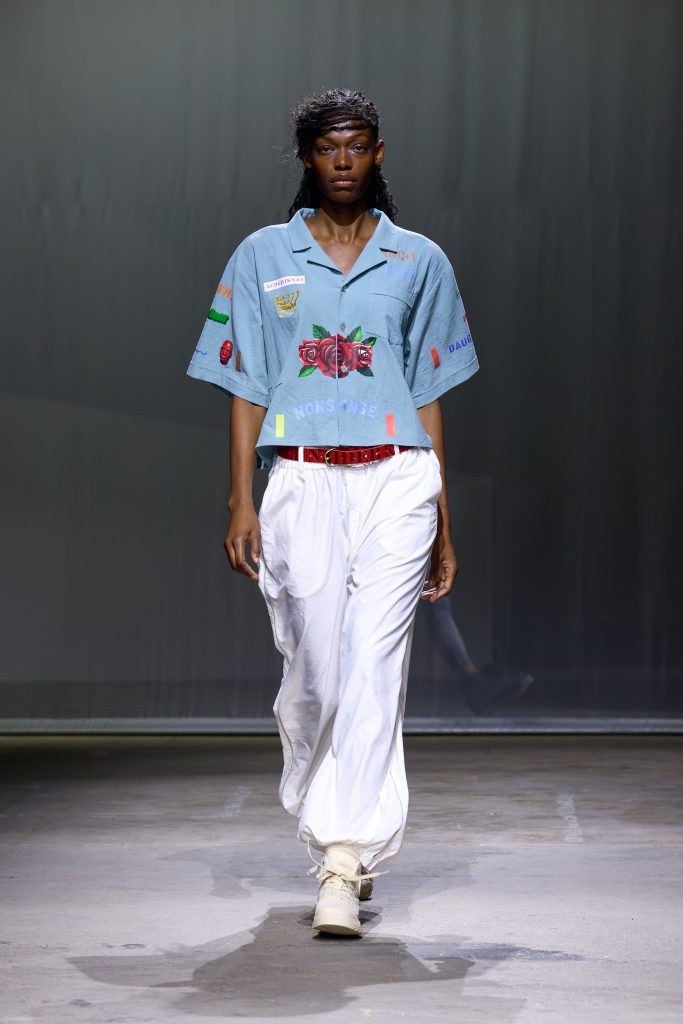
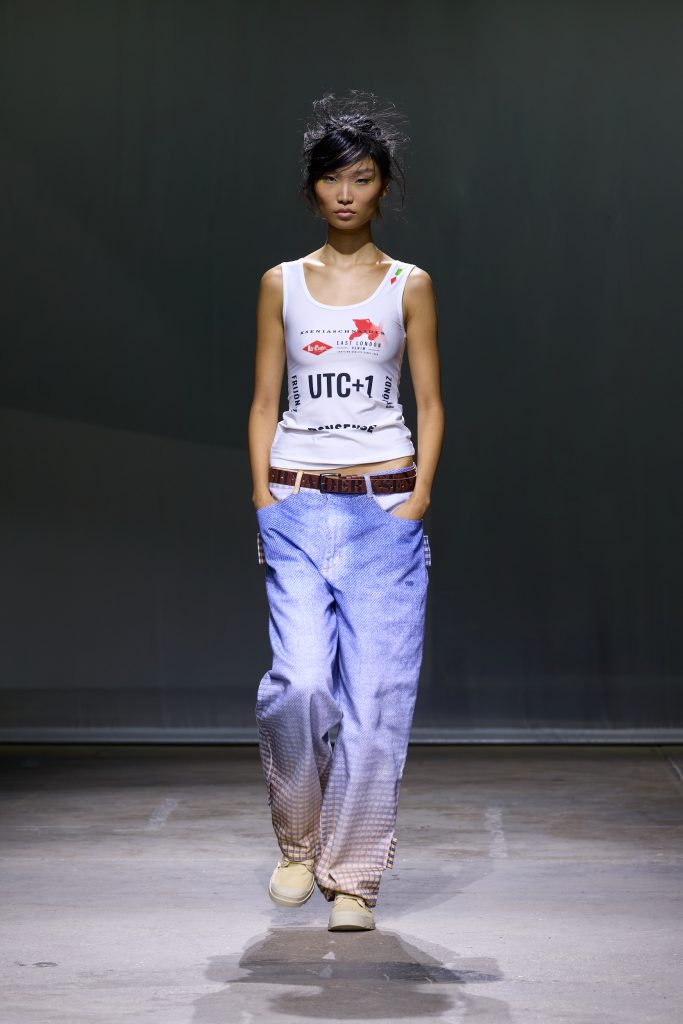
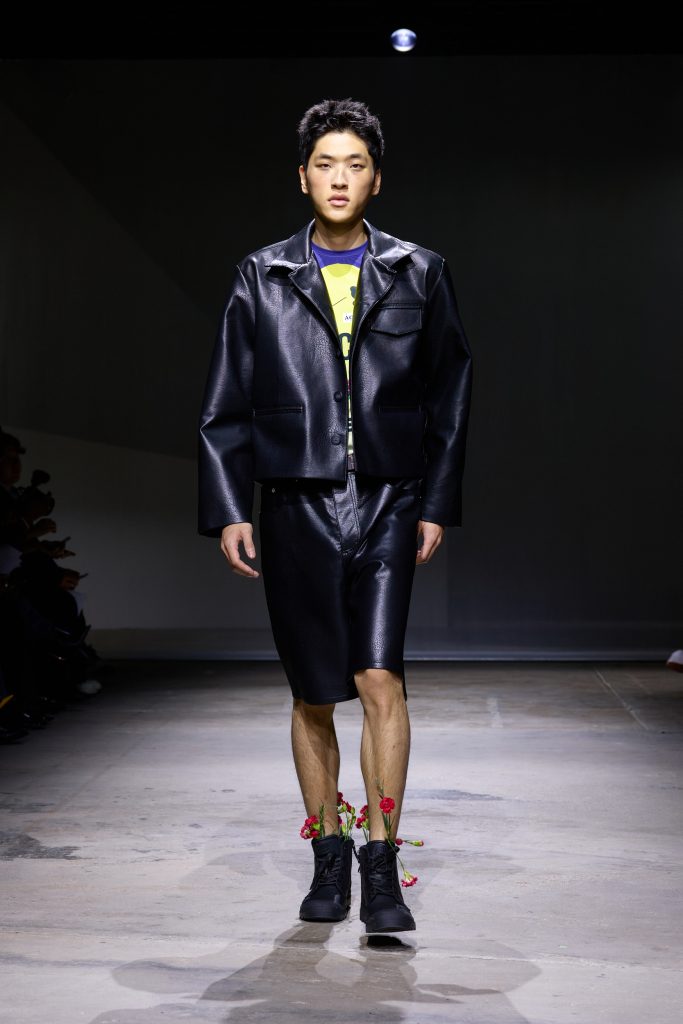
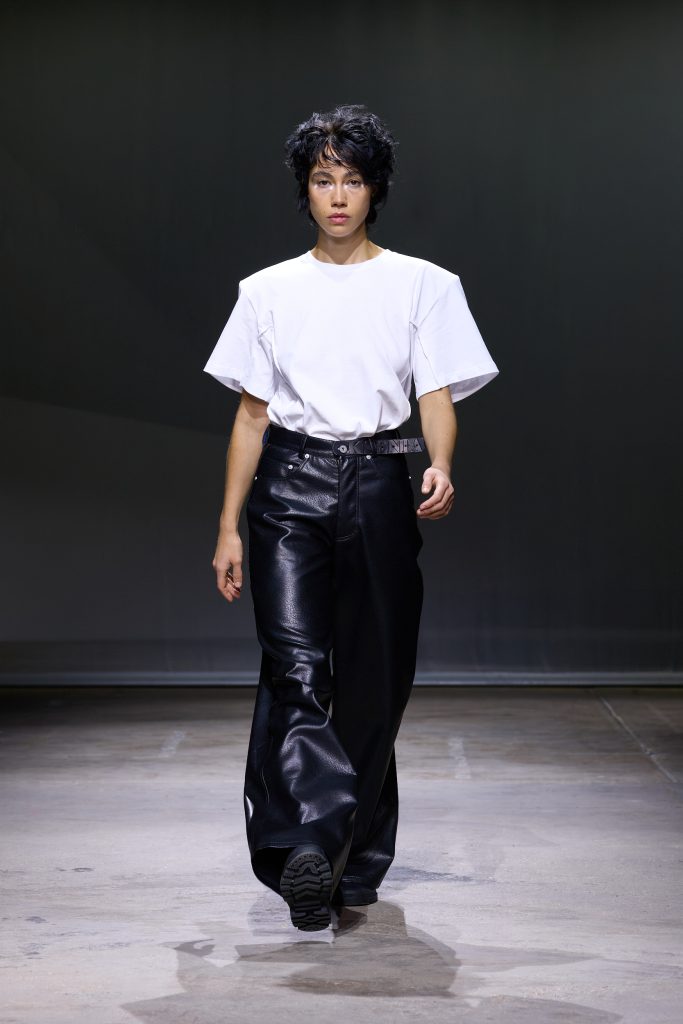
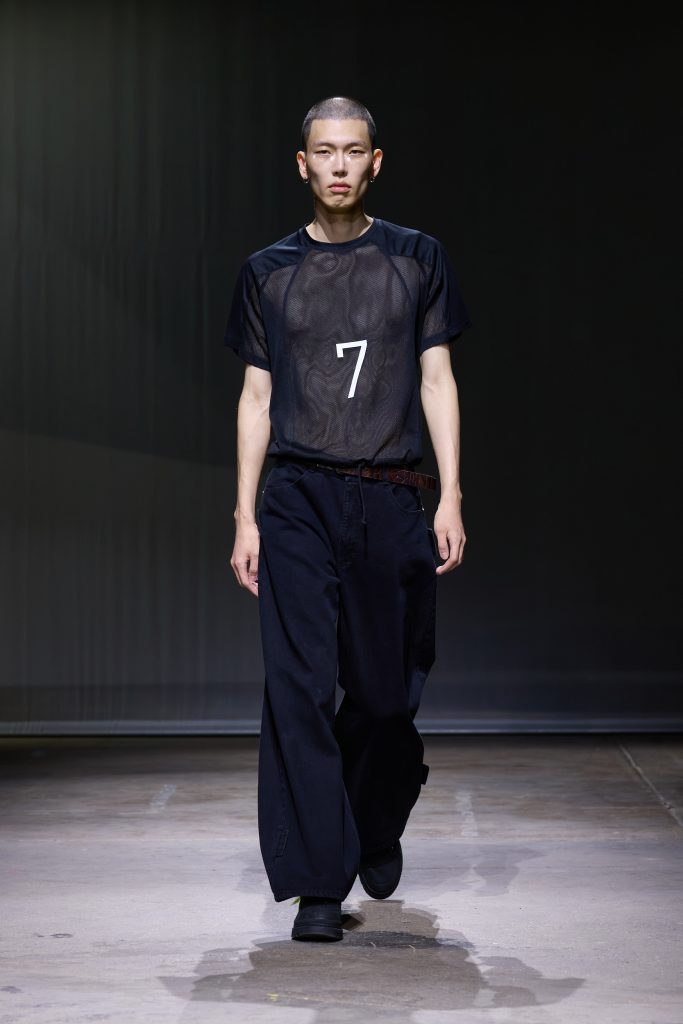
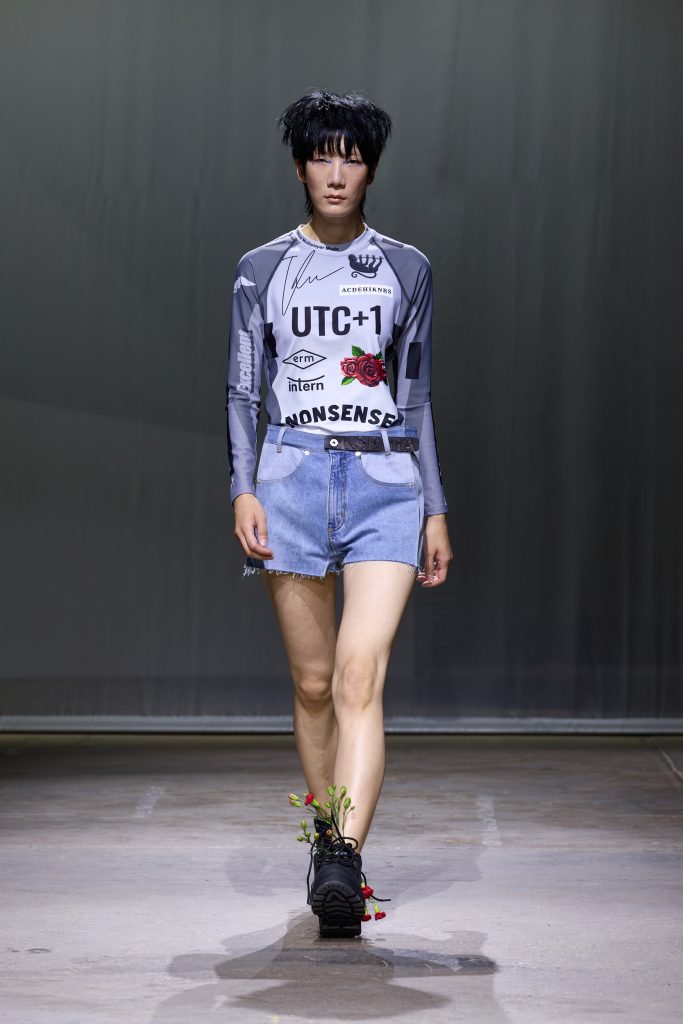
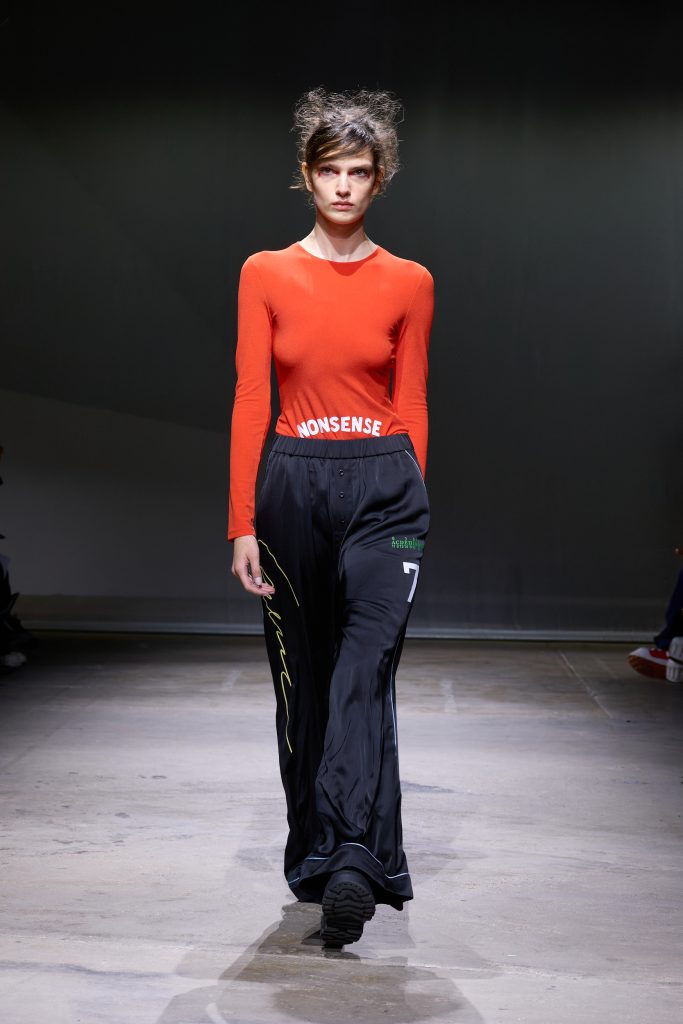
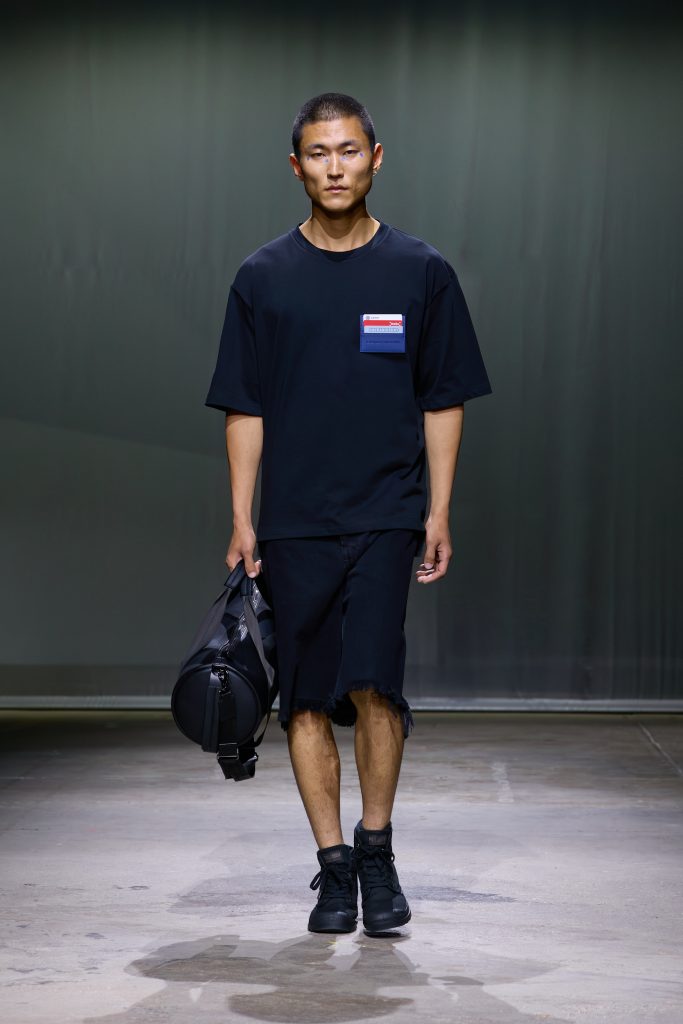
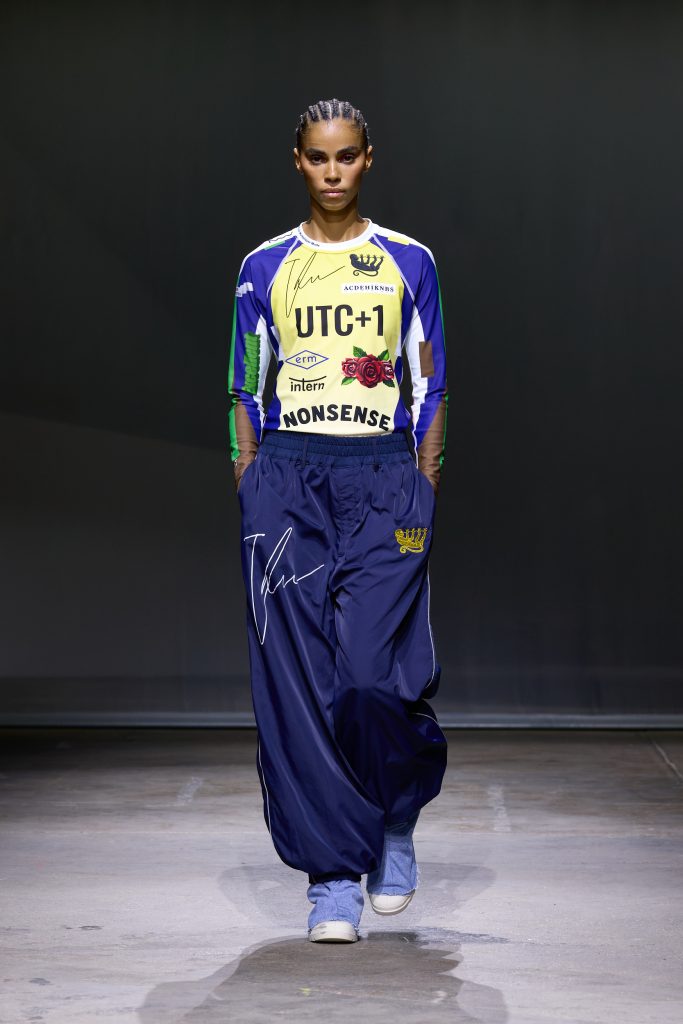
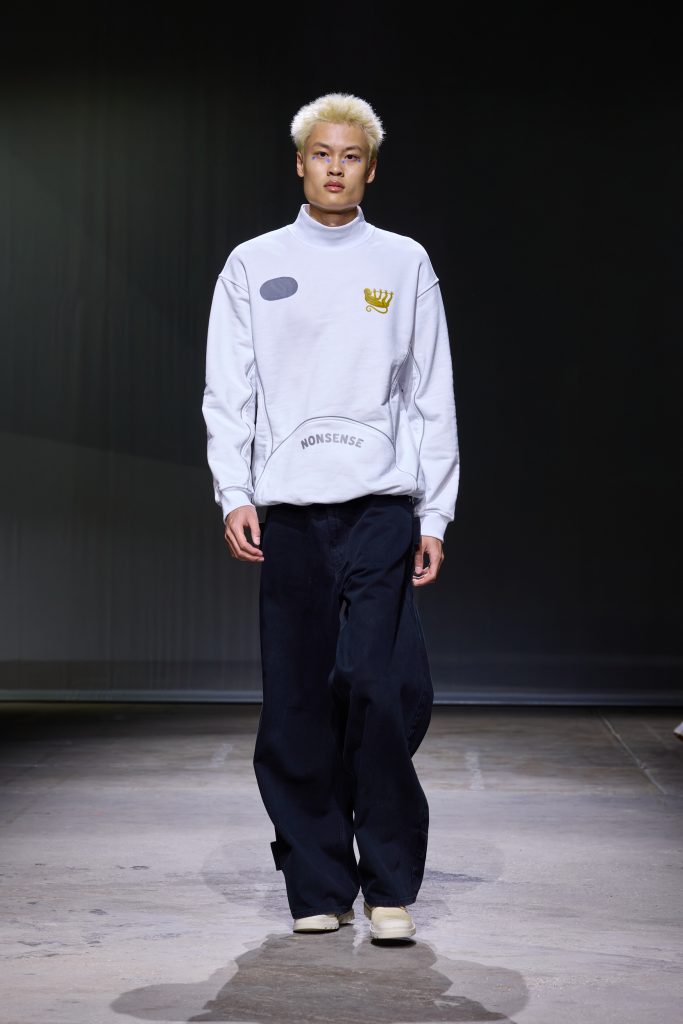
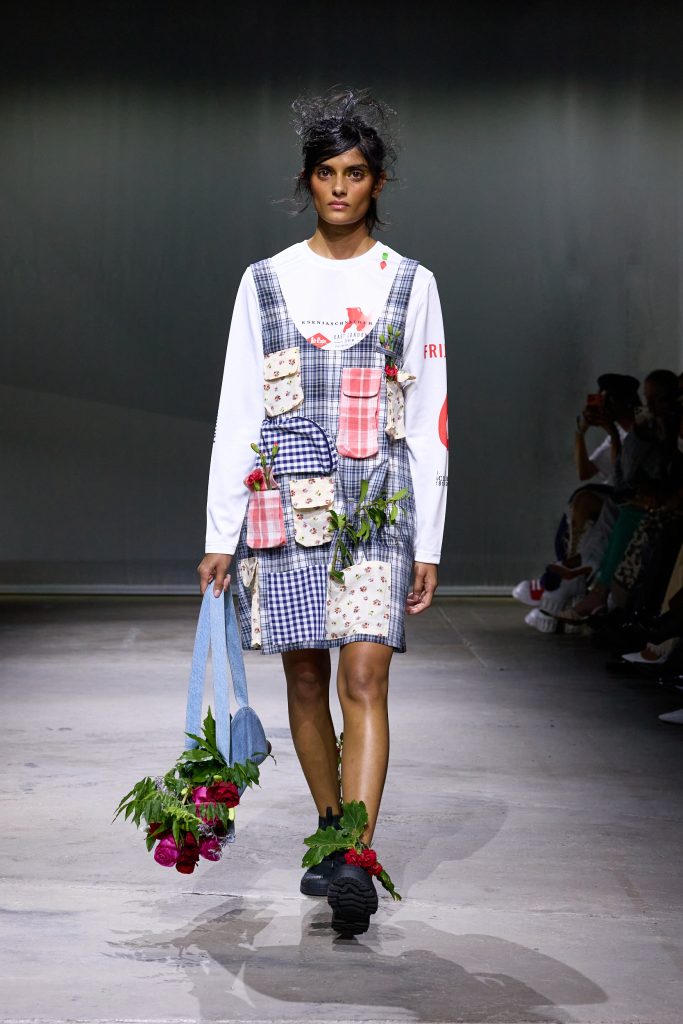
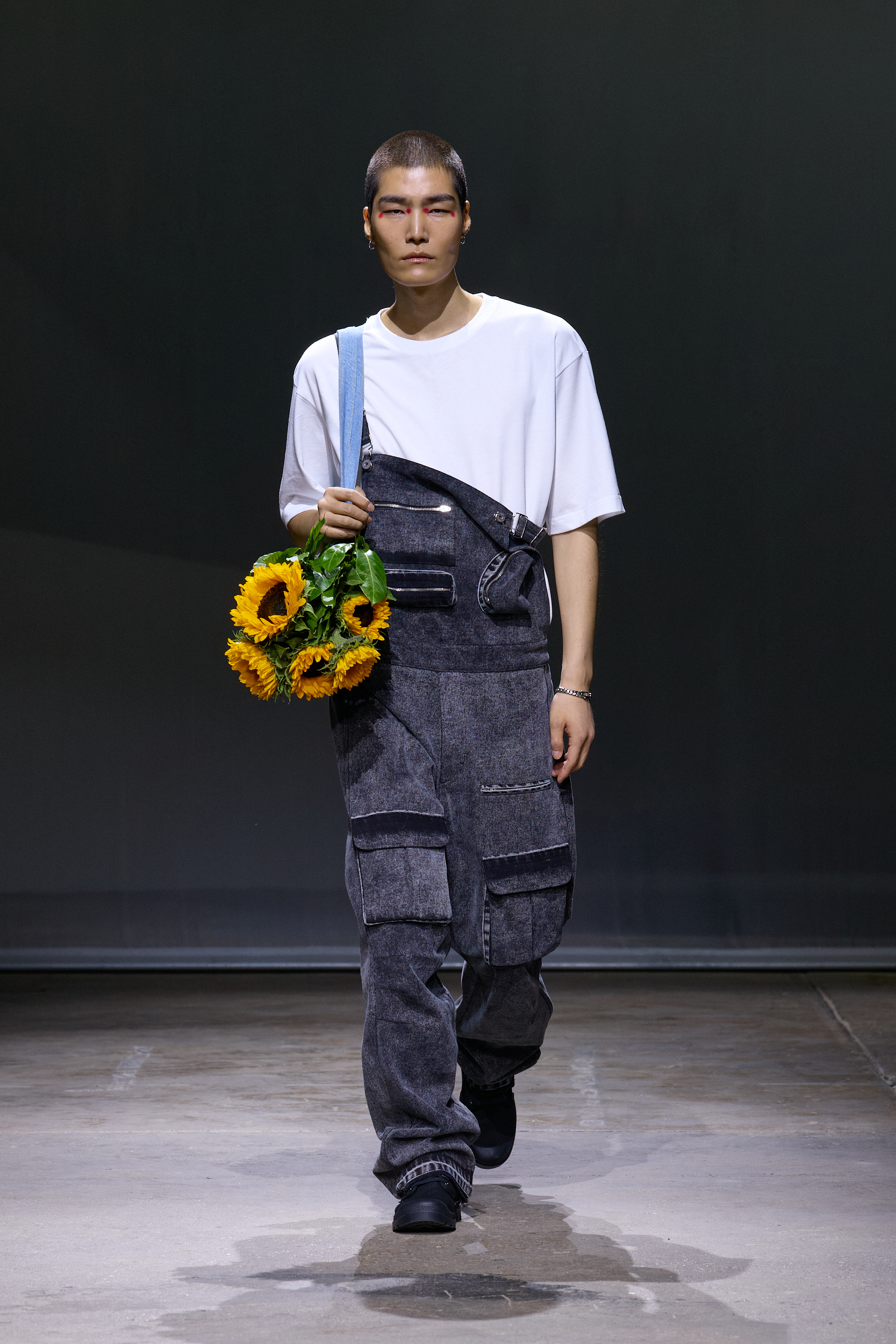
The third independent presentation by KSENIASCHNAIDER during London Fashion Week introduces “UTC+1,” a new collection exploring belonging and the visual language of identity through sports uniforms, merchandise, graphic symbols, logos, numbers and names.
For the first time since the brand was founded by Ksenia and Anton Shnaider in Kyiv in 2011, Anton Shnaider takes on the role of Creative Director. This season, the creative dialogue between Ksenia and Anton shifts. Anton steps into the foreground, no longer simply developing, reworking and expanding Ksenia’s ideas, but bringing his own memories, interests and visual references into the KSENIASCHNAIDER universe.
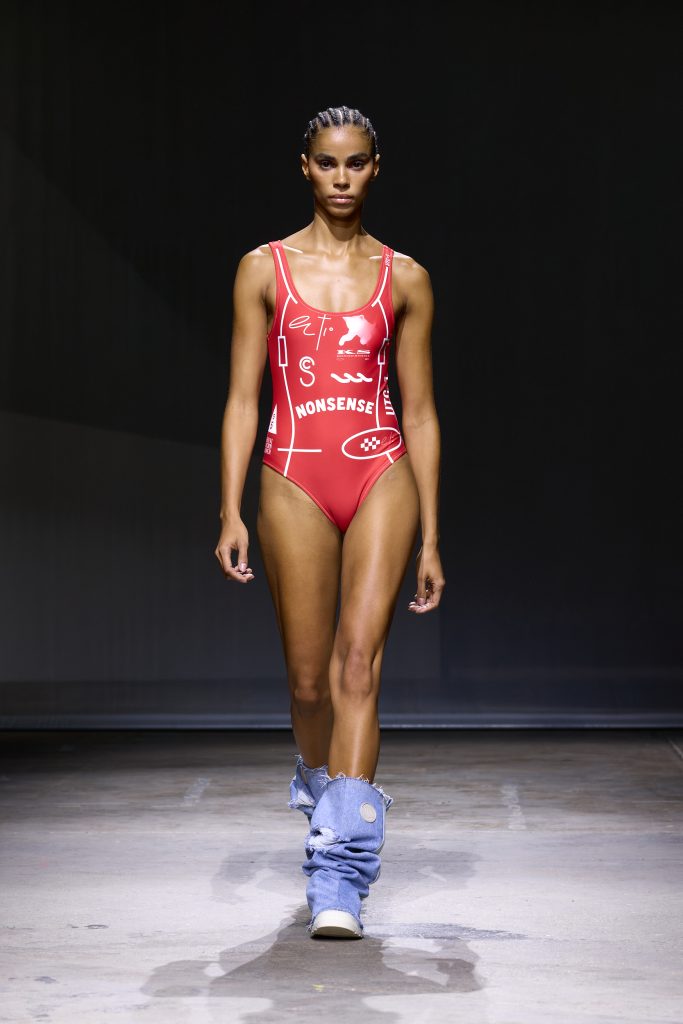
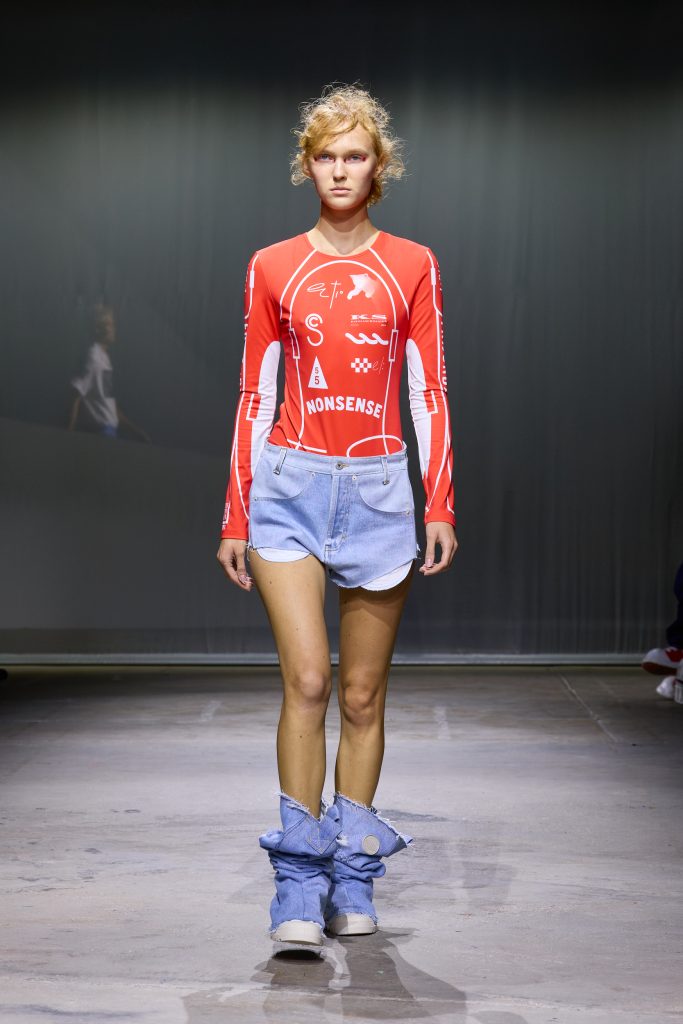
Graphic design, which Anton previously worked with, becomes part of the language of clothing itself. Football shirts, racing gear, club merchandise, sportswear and travel garments meet references to cars, movement, teams and fan culture. Logos, numbers, surnames, flags, sponsor marks and crests — familiar visual codes — speak of loyalty, origins, pride, memory and collective identity.
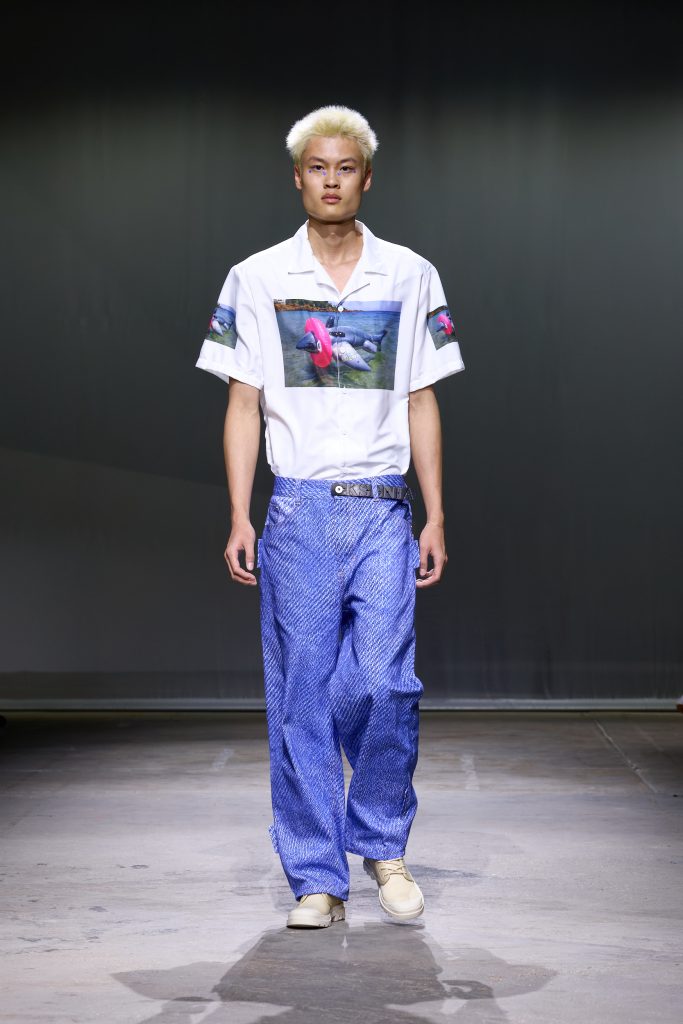
But UTC+1 is not simply about belonging. It is also about the desire not to belong to something all the time.
It is also about the desire not to belong to something all the time.
“I like the idea of belonging itself, but I don’t necessarily want to belong to something all the time. Everything, and any kind of belonging, seems to imply a position — a flag, a team, a logo. So I thought: why not start inventing my own?” says Anton Shnaider.
Rather than joining existing clubs, companies or countries, UTC+1 constructs its own fictional language of affiliation.Pseudo-logos look convincing, but lead nowhere. Familiar signs behave like statements, only to slip away before becoming literal. “Erm” no longer suggests hesitation or uncertainty — it becomes a logo. The name KSENIASCHNAIDER is fragmented into riddles and numbers, while the collection’s title locates the designer through a time zone rather than a country — temporary coordinates in place of permanent markers.
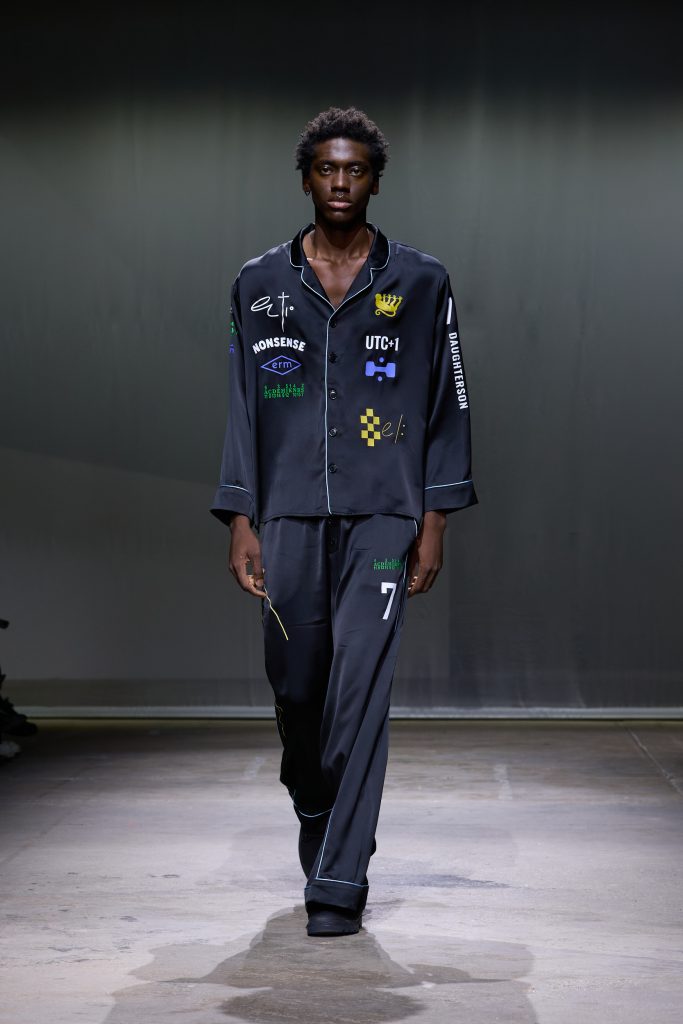
Direct symbols are replaced by traces of symbols, while ghostly marks evoke logos that have been erased. Faded areas preserve the memory of missing emblems; numbers appear to identify something, only to leave the viewer guessing. Inverted surnames recall the language of sports jerseys while taking on meanings of their own. “Daughterson” could belong to anyone, anywhere, while “Frijondz” reaches back to ancient Germanic roots associated with friendship, love and kinship.
Traditional surnames printed across the backs of garments cease to function as straightforward identifiers and become quieter messages about connection and belonging.
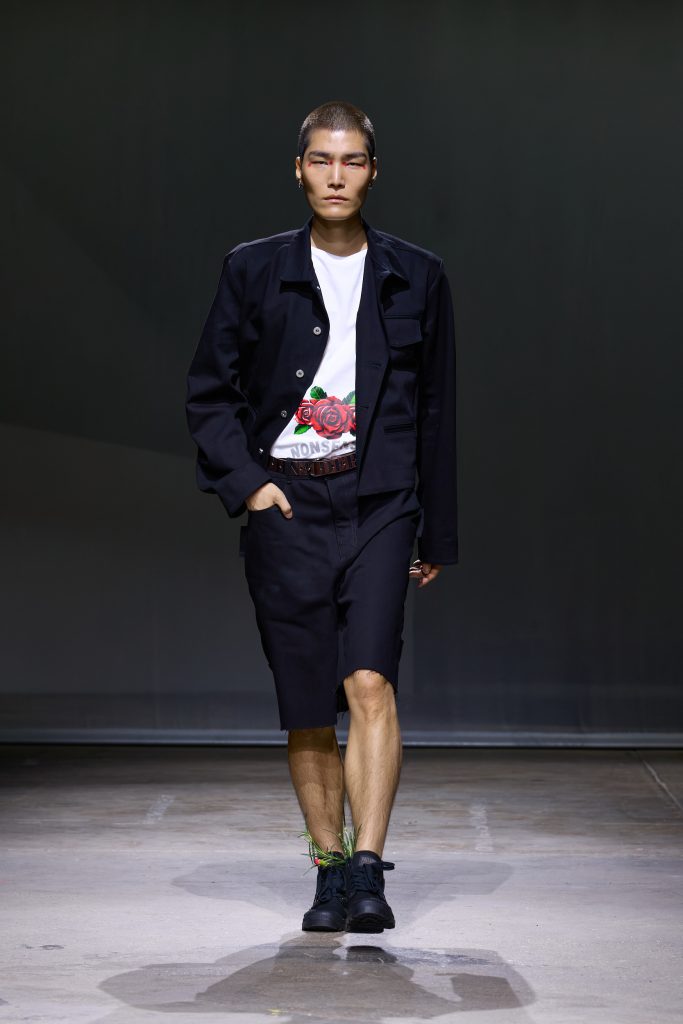
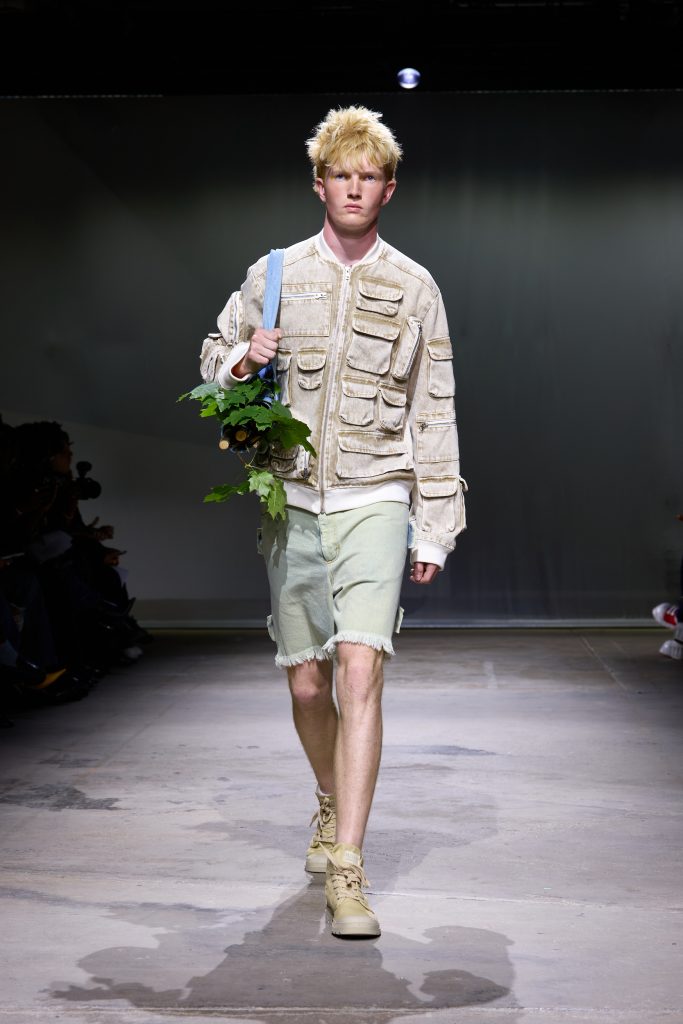
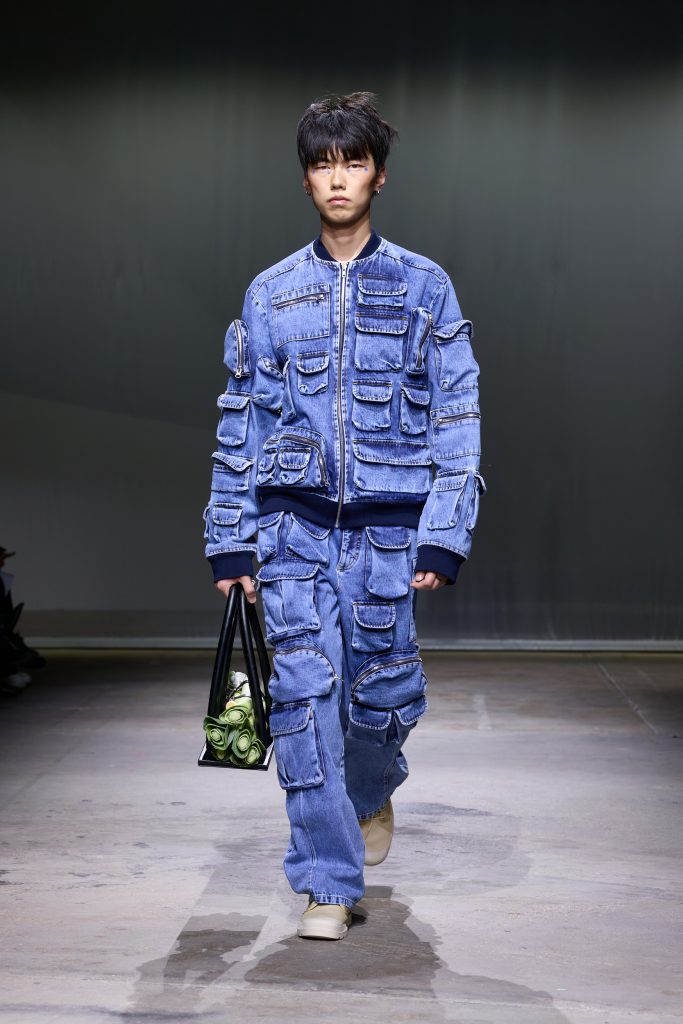
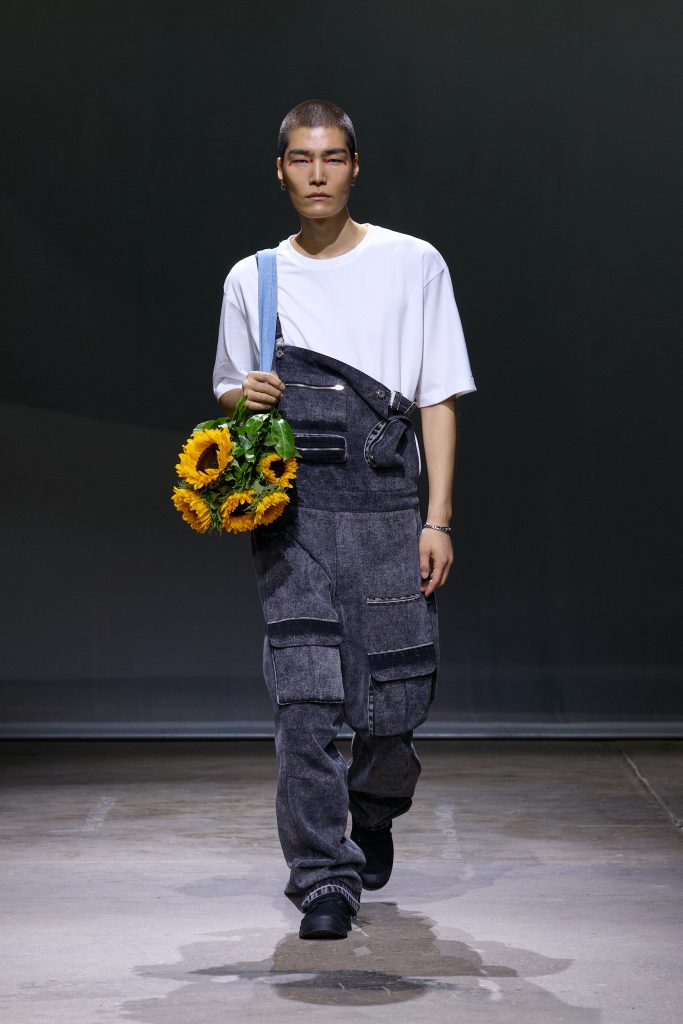
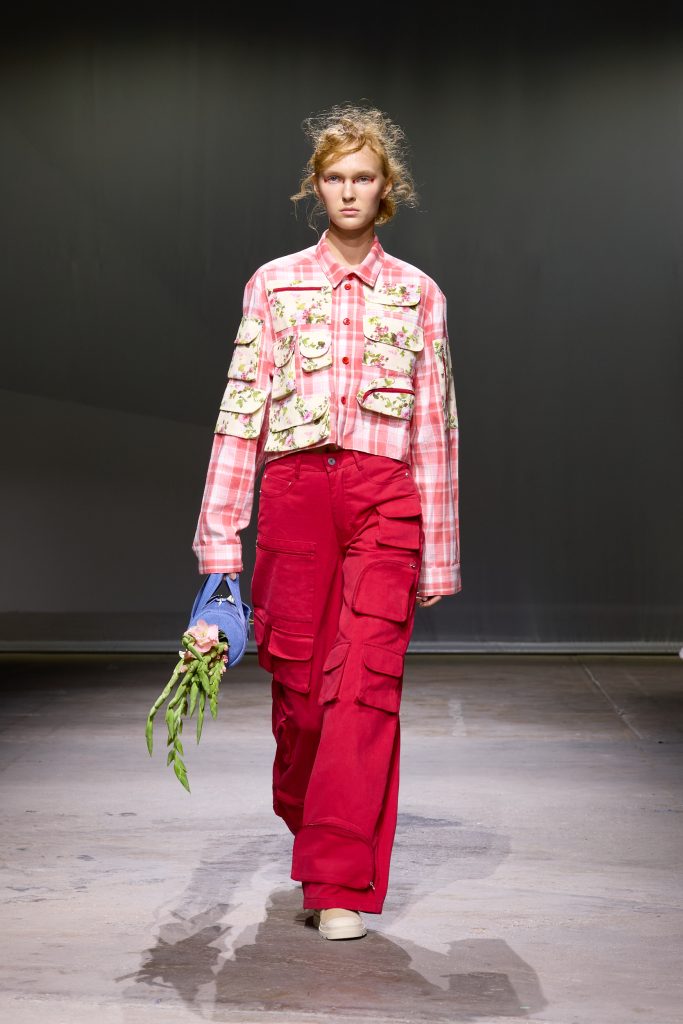
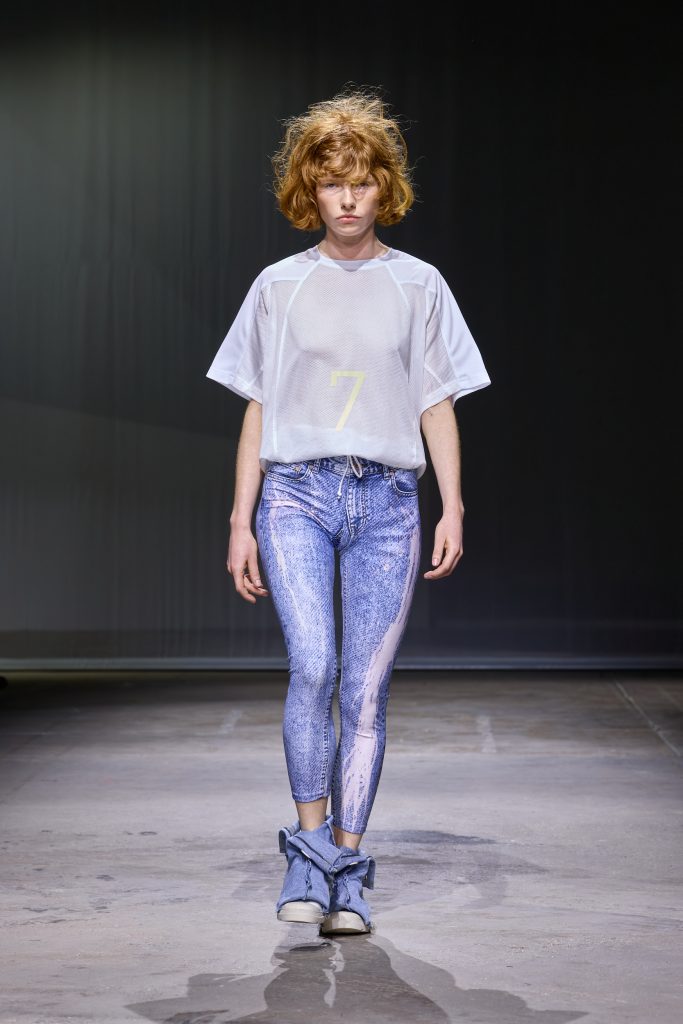
Alongside this invented graphic system comes its practical counterpart: walkwear.If workwear was shaped around labour and sportswear around performance, walkwear belongs to the flâneur, the traveller, the urban nomad — people who carry their lives with them and move continuously between places.Here, functionality is entirely real, but subtly displaced. Garments with multiple pockets reduce the need for a bag. A sun-protective bodysuit borrows the performance qualities of sportswear and brings them into everyday city life. Pseudo-belts retain the familiar image of a belt without necessarily performing its original function. Even practical details become graphic signs, while graphic signs acquire practical purpose.
“I’m interested in things that look as though they have a very clear function or meaning, but then you realise they don’t quite behave the way you expect them to,” Anton says. “Everything looks as though it should mean something specific, but the meaning keeps shifting.”
For all its invented identities and shifting forms of belonging, the collection has a very precise place of origin. Every piece in UTC+1 is made in Kyiv, Ukraine, at KSENIASCHNAIDER’s own production facility.
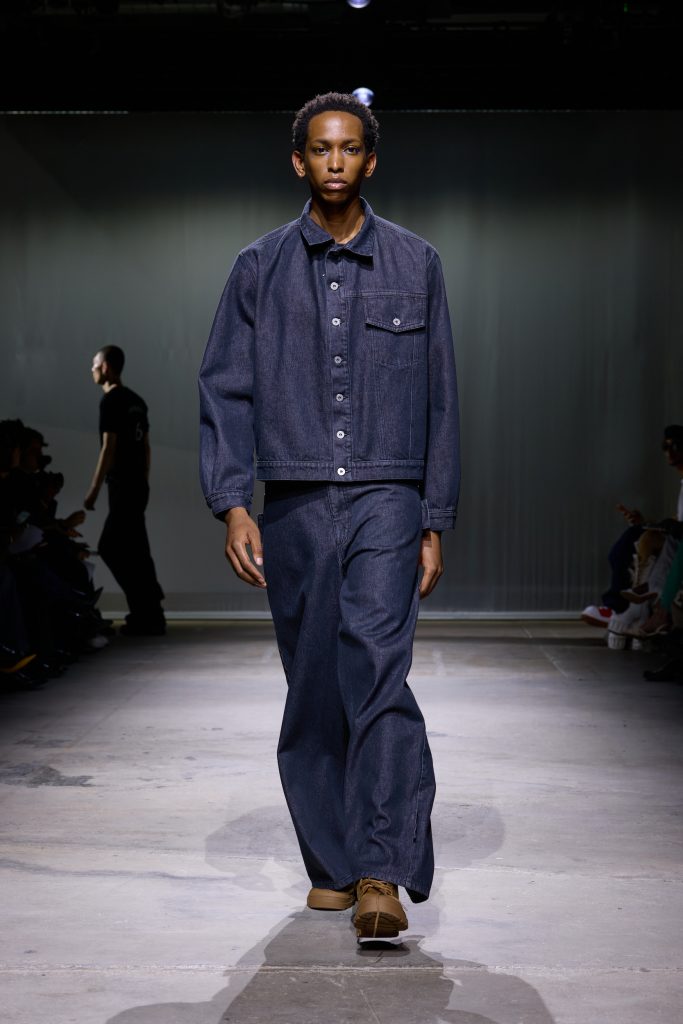
For more than a decade, the brand’s Kyiv atelier has been an integral part of its design practice, with a continued focus on upcycling, zero-waste techniques, experimental denim work and finding new ways to use materials that already exist. Production is not treated simply as the final stage of design; experiments with construction, waste, fabrics and existing garments have shaped the visual language of KSENIASCHNAIDER from the outset.
The result of UTC+1 exists somewhere between function and fiction, sport and street, graphic design and clothing, identity and escape. It borrows the visual language of belonging without allowing itself to be fully defined by it.
Everything looks as though it has a place somewhere.
Exactly where that place is, remains an open question.
Виробництво тут не сприймається просто як фінальний етап дизайну: експерименти з конструкцією, відходами, тканинами та вже існуючим одягом формують візуальну мову KSENIASCHNAIDER від самого початку.
Результат UTC+1 знаходиться десь між функцією та вигадкою, спортом і вулицею, графічним дизайном та одягом, ідентичністю та втечею. Він запозичує візуальну мову приналежності, не дозволяючи повністю себе нею визначити.