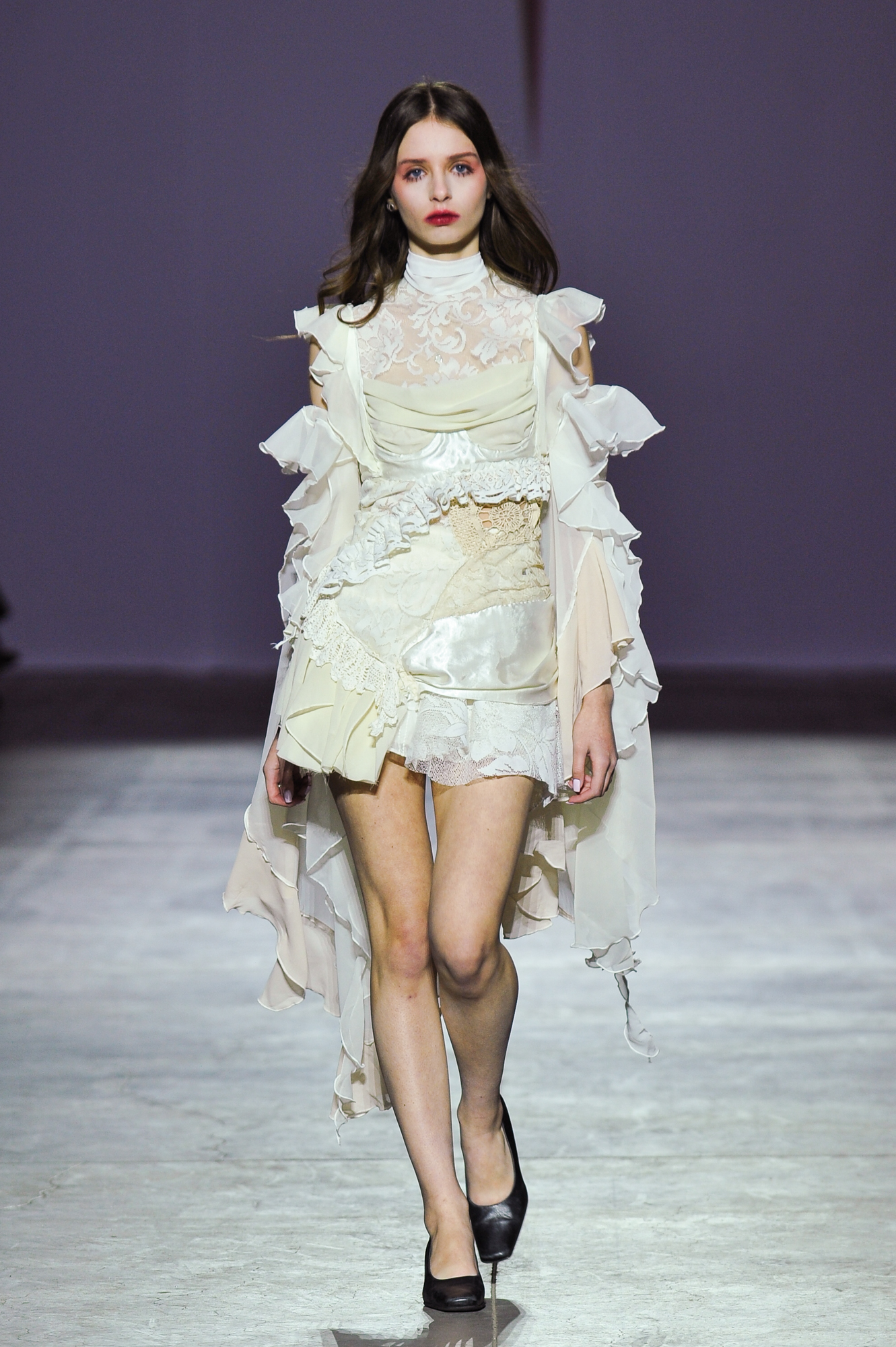
FW26–27: New Names Show
ST.MARIIA
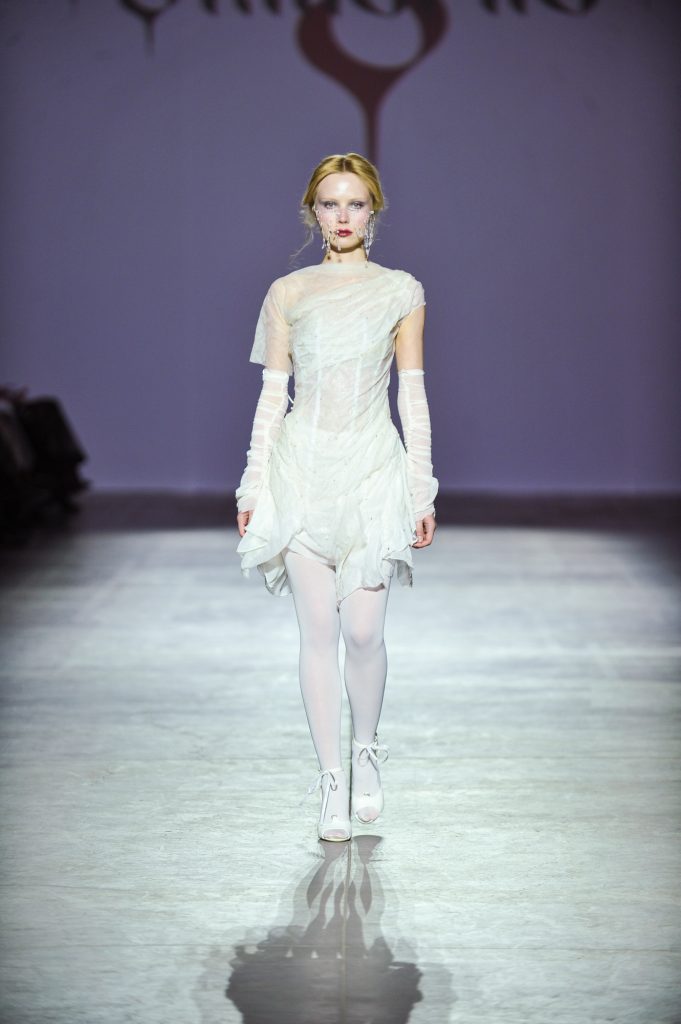
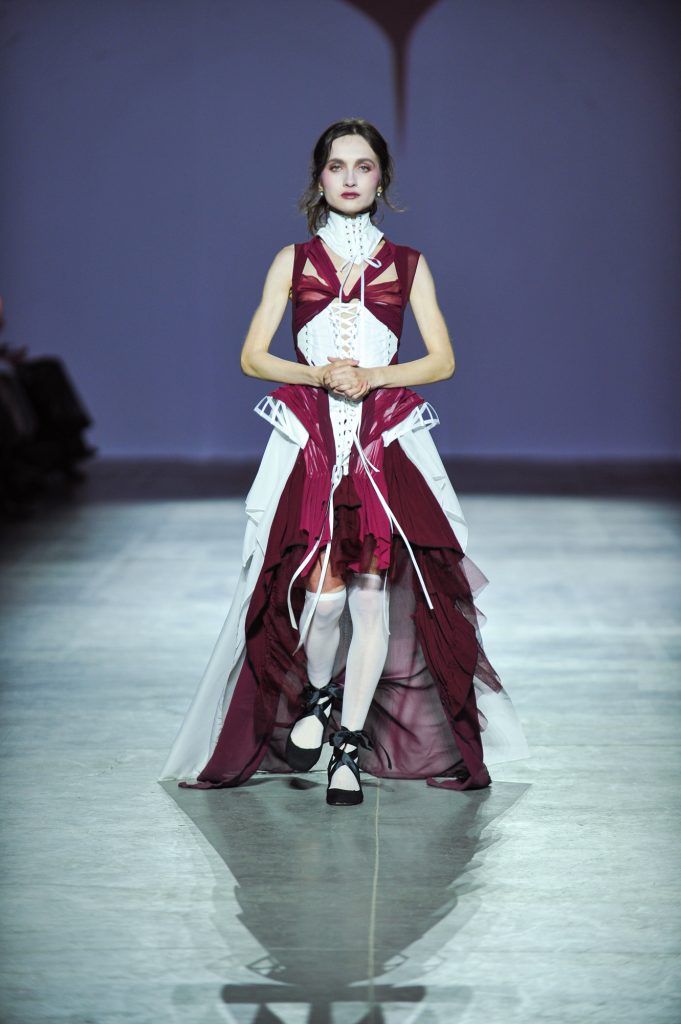
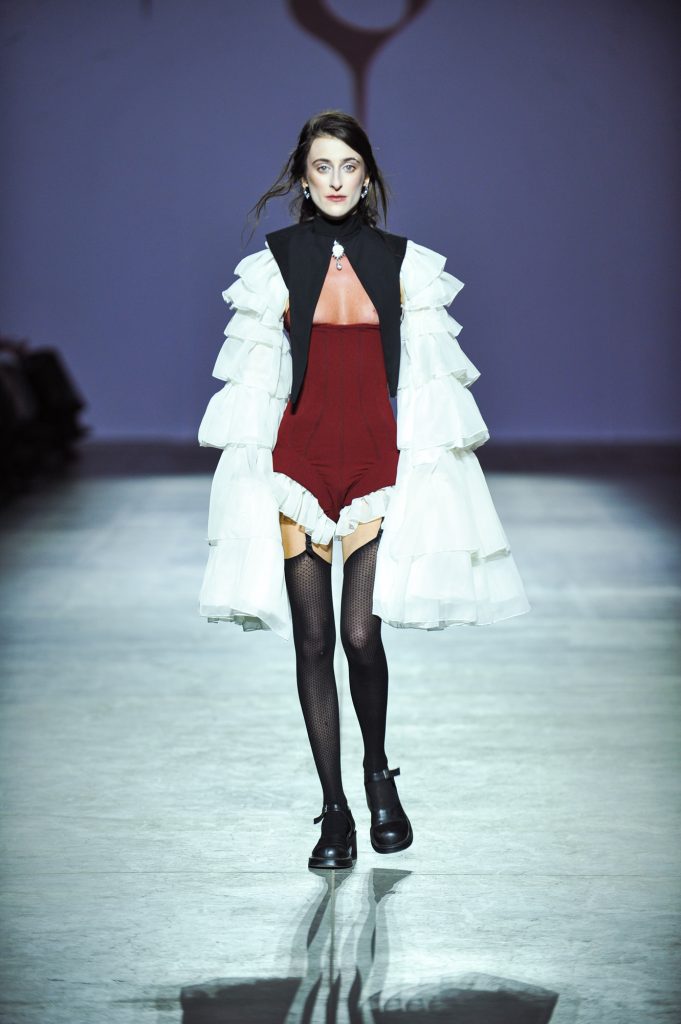
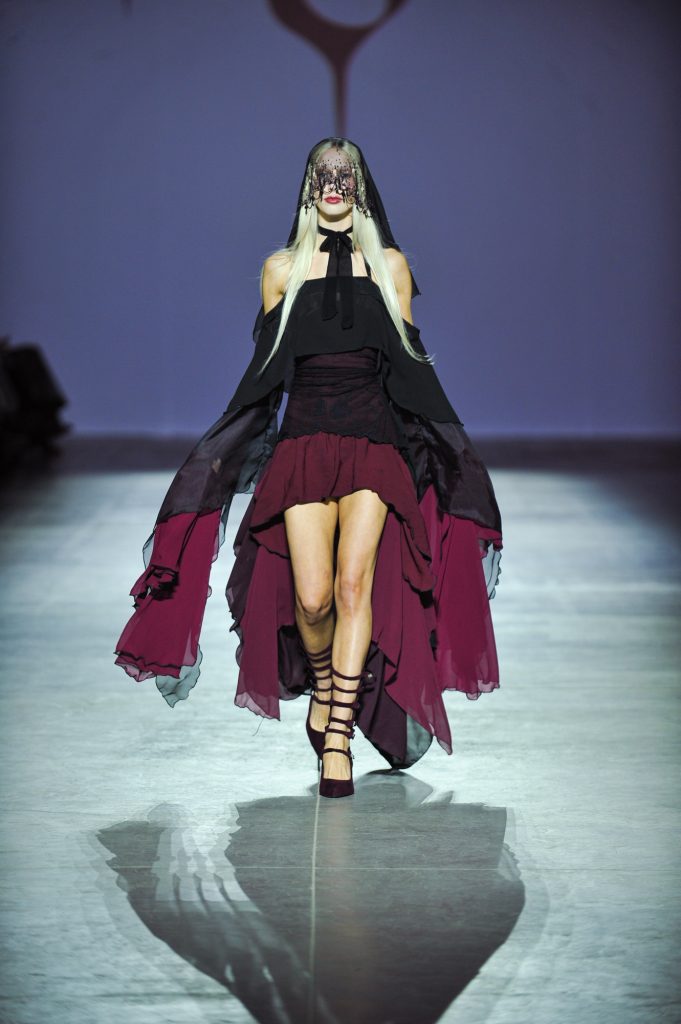
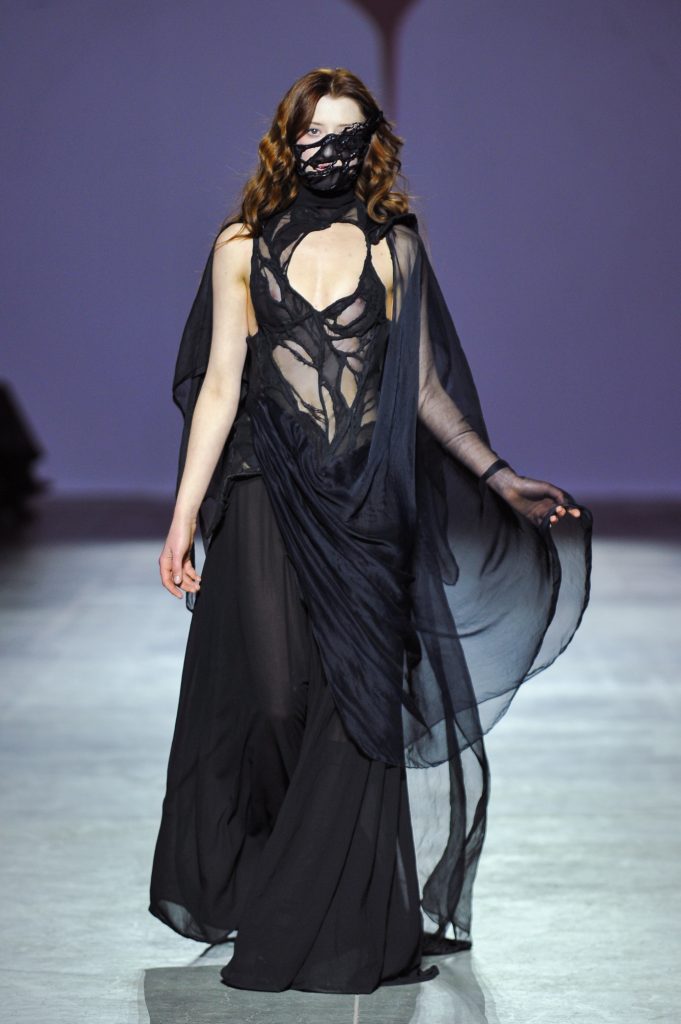
The collection “Memento Vitae” by ST.MARIIA emerged through the gradual transformation of one thought into another. Its creation method was pure improvisation, combined with upcycling and the reworking of materials that carry within them the stories of hundreds of different lives.
Like many of us, I have often heard the phrase “Memento Mori” — remember death — yet I had never heard “remember life.” This idea became the title “Memento Vitae” and the red thread connecting the looks throughout the collection.
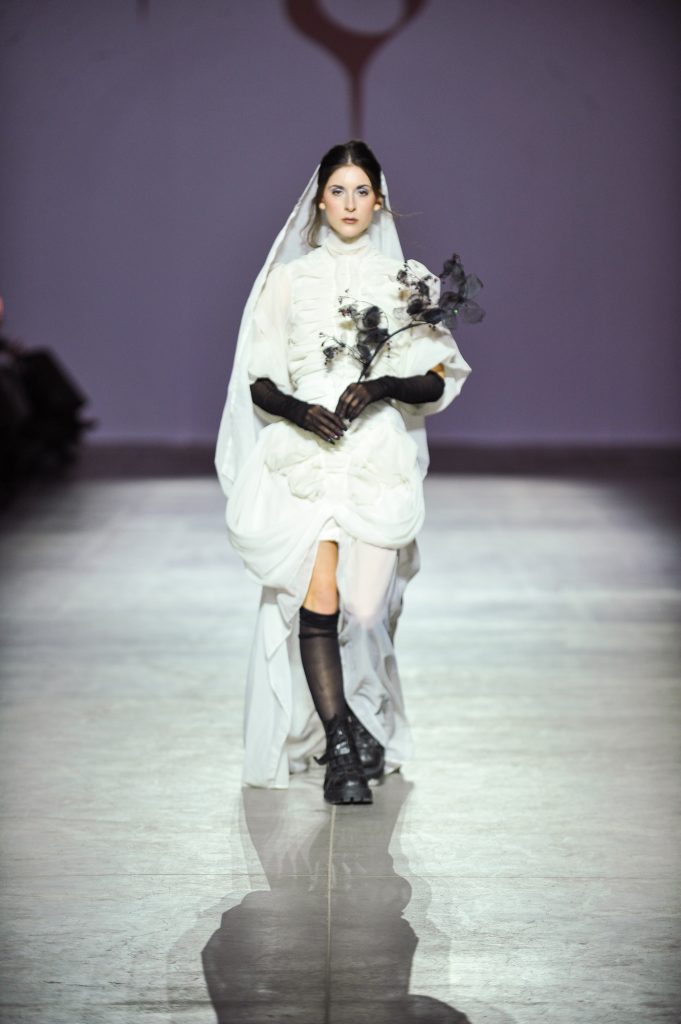
The thought behind the project was to remind us of something often forgotten or unintentionally pushed aside under the pressure of circumstances and everyday problems: the simple fact of human existence — the only form of conscious life in nature.
Each look reflects both a stage and a fragment of human existence. While the details of every life, identity, and personality differ, we are all the same, and we all follow the same path — birth, life, and death.
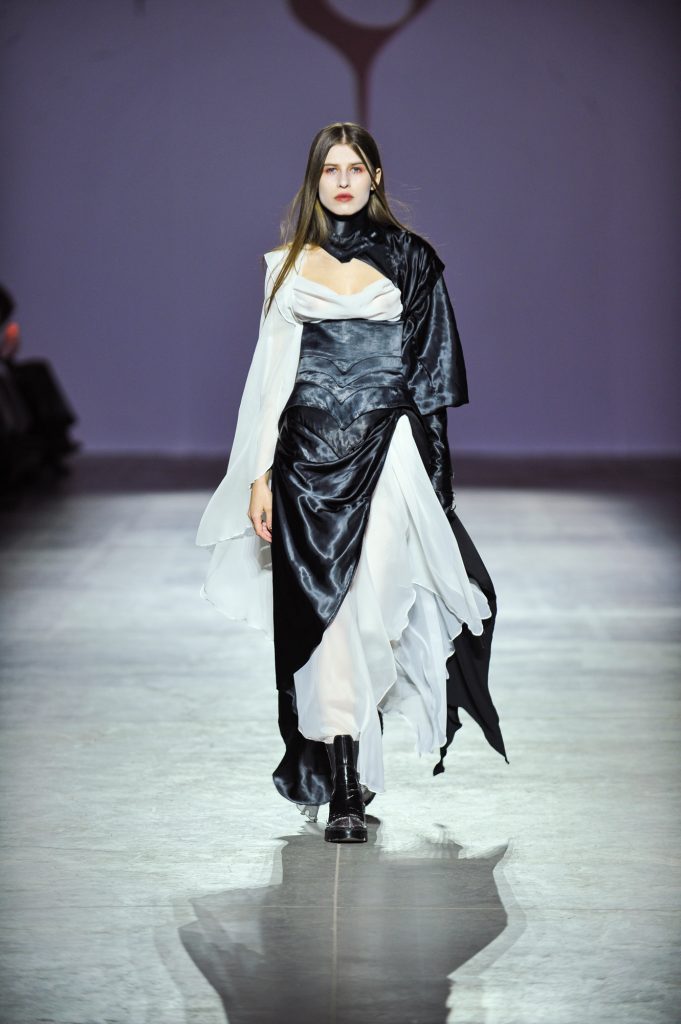
This collection is a reflection on the fragility of individuality and the inevitability of time. Style, hair colour, symbols on the body, or gestures of protest are ways to capture oneself in a moment, to define personal boundaries and loudly declare one’s presence. Yet fashion, like life, exists within the coordinates of history: it preserves the mood of an era but eventually becomes its artifact.
Through silhouettes, textures, and details, the brand explores the tension between the desire to stand out and the shared destiny that ultimately unites everyone.
That is why this collection is not about fear or fatalism, but about recognising the value of the moment: remember death, but do not forget life.
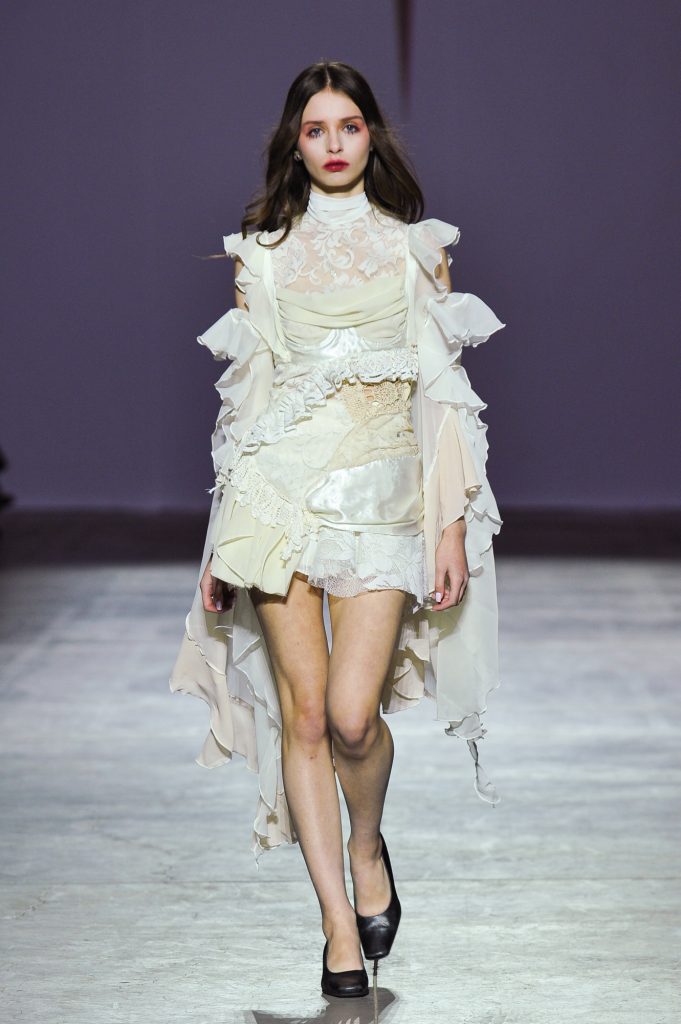
KRYLAS ATELIER
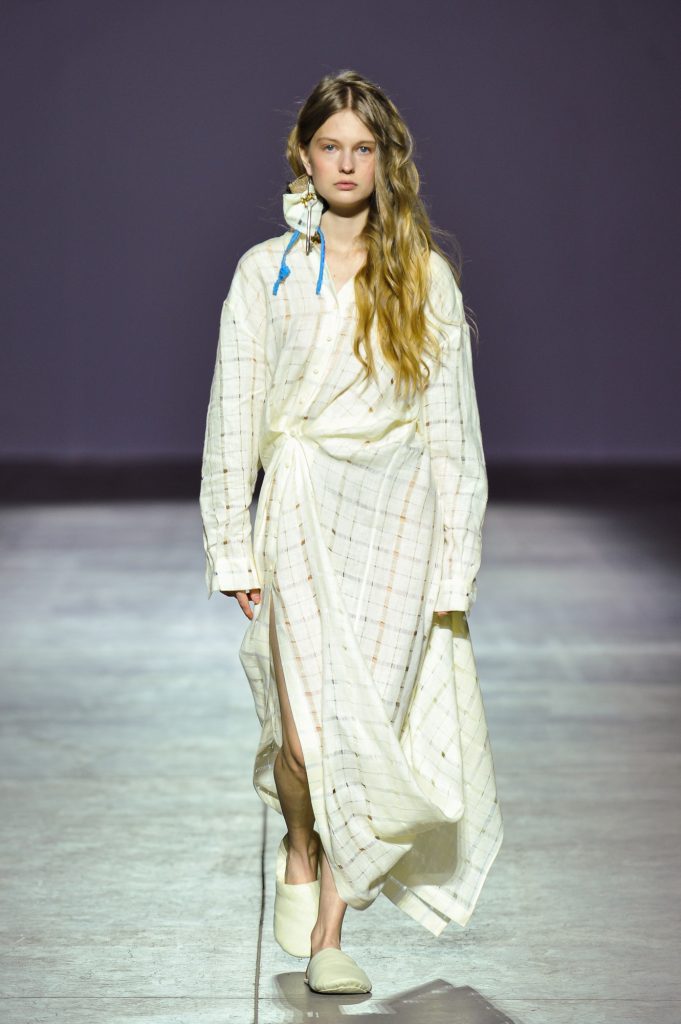
The STILL IN BED collection by Krylas Atelier explores a woman’s inner state — a moment of choice between home and the outside world, between the intimate and the public, between the desire to stay and the necessity to leave.
It is a story about home as both a physical and a mental space. About the bed, pajamas, a towel wrapped around the head, wrinkled sheets, and everyday rituals. It is about that moment when a woman has seemingly already put on a jacket — a symbol of public life, work, and social roles — yet in her thoughts and body, she still remains at home.
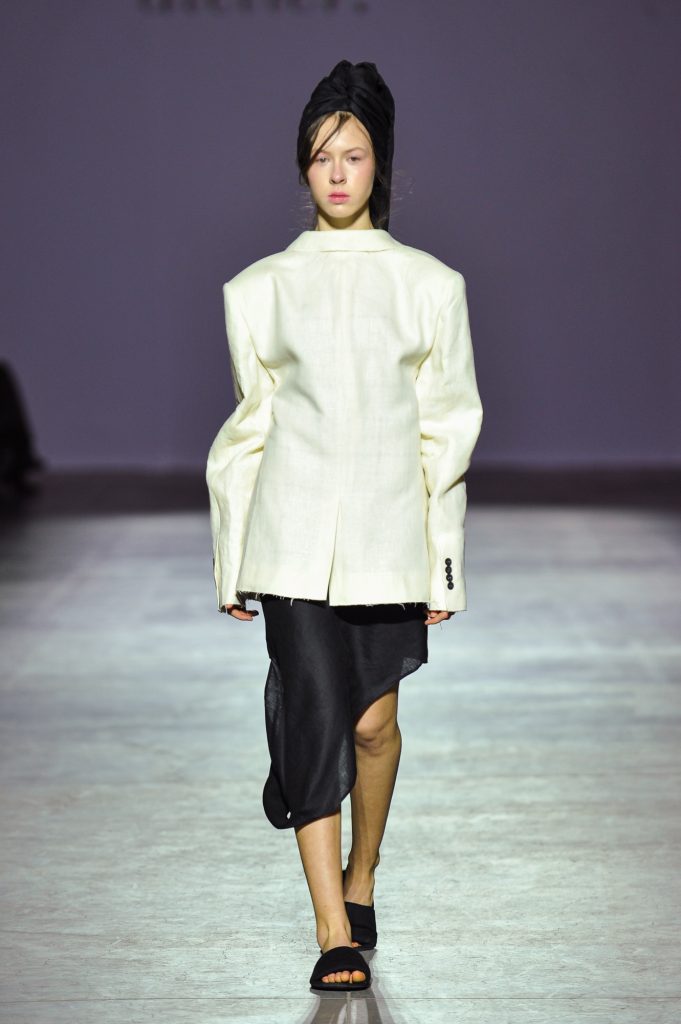
The garments in the collection appear as though they were thrown on accidentally — in the dark, in haste, almost blindly. They are held with one hand, slip from the shoulders, open up, and sometimes even tear. This is not about negligence but about the honesty of the moment — about doubt and the pause before action.
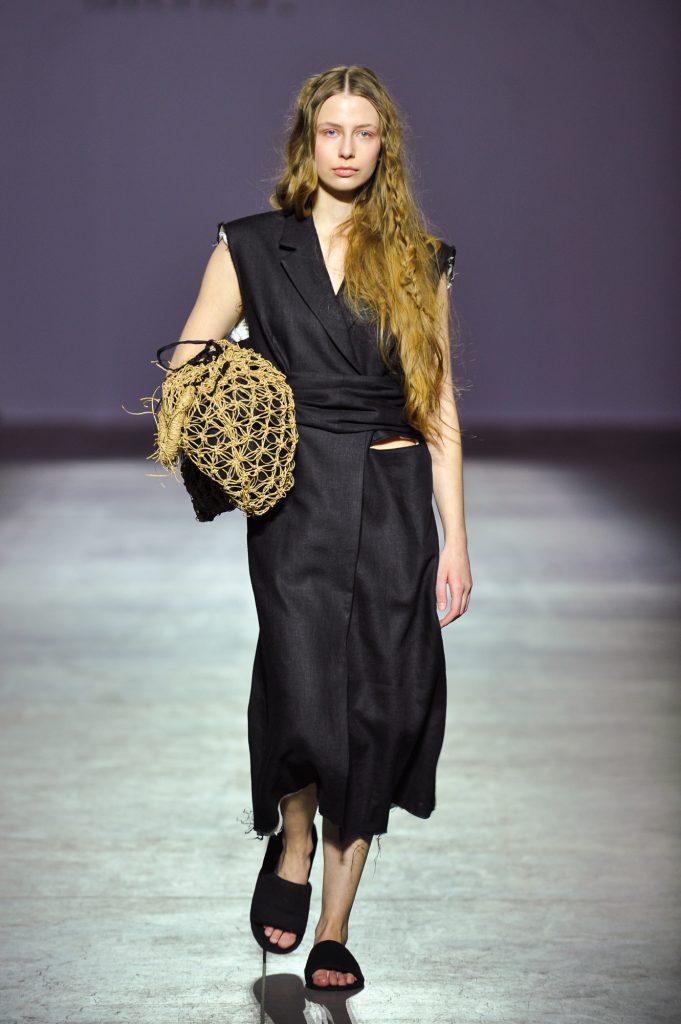
Here, home and public life are not separated — they exist simultaneously. A jacket appears alongside pajamas, and the office and bedroom merge into a single space. Clothing becomes an extension of the inner state: sometimes structured and composed, sometimes soft and relaxed. Each look represents either a moment of transition or its absence — from home to public space, from rigidity to softness, from structure to rupture.
The materials and colours of the collection function as carriers of memory and feeling. Domestic linen breathes and changes with the body, preserving warmth and shape. The hand-created check pattern appears as the vulnerability and authenticity of morning — something deeply personal. The colour of butter conveys the warmth and calm of a slow dawn.
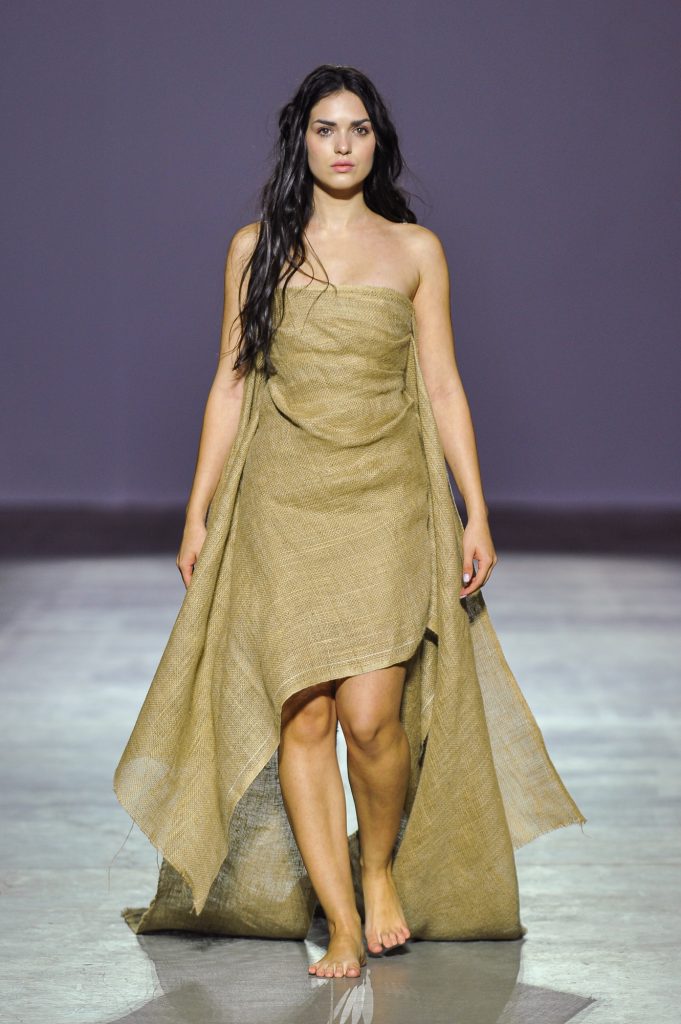
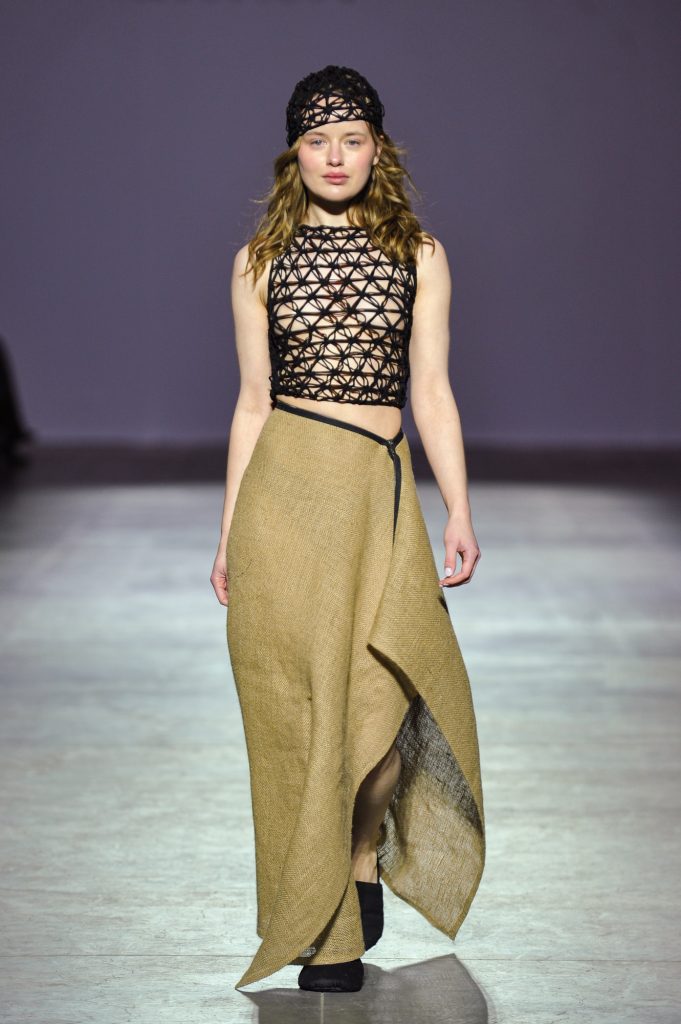
Burlap, raw and unrefined, is not about luxury but about everyday life. It symbolizes truth, directness, sincerity, hard work, and material reality. Black in the collection acts as strictness and fixation — a boundary and a reality one must eventually return to.
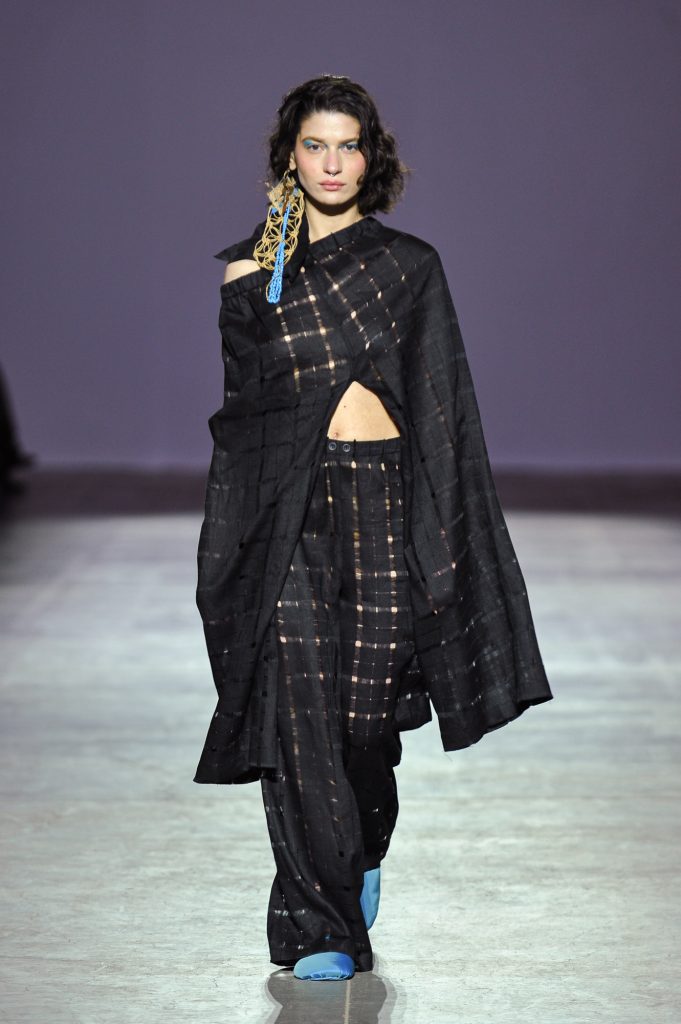
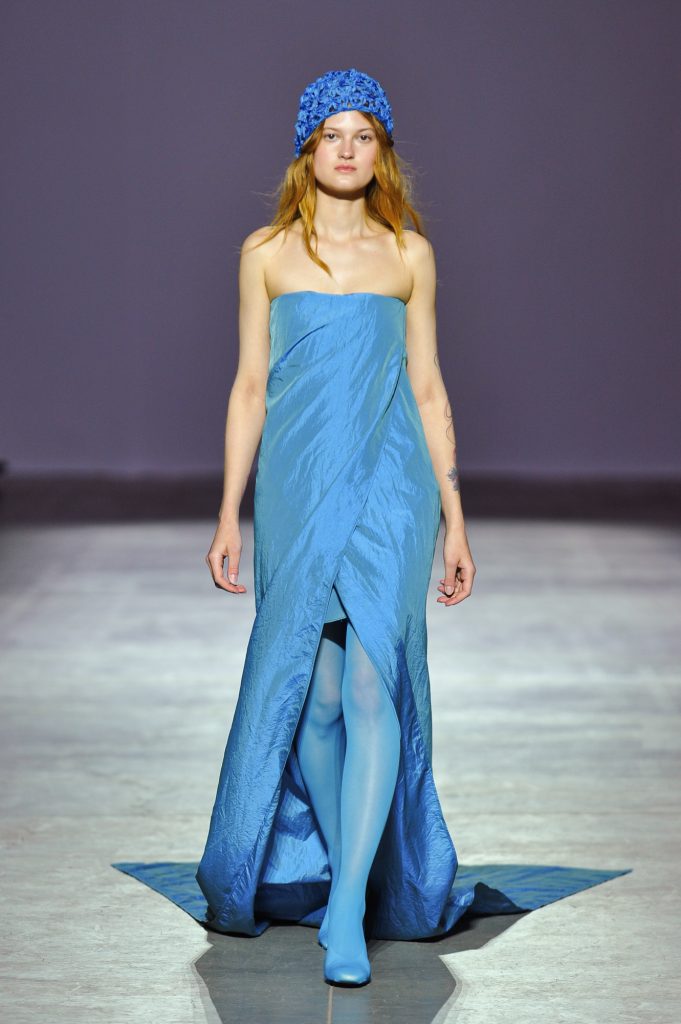
Knitting and raffia create structures resembling a floral mesh. This is not decoration but the result of lived experience — an open vulnerability that simultaneously becomes protection, a grounding, and a return to oneself.
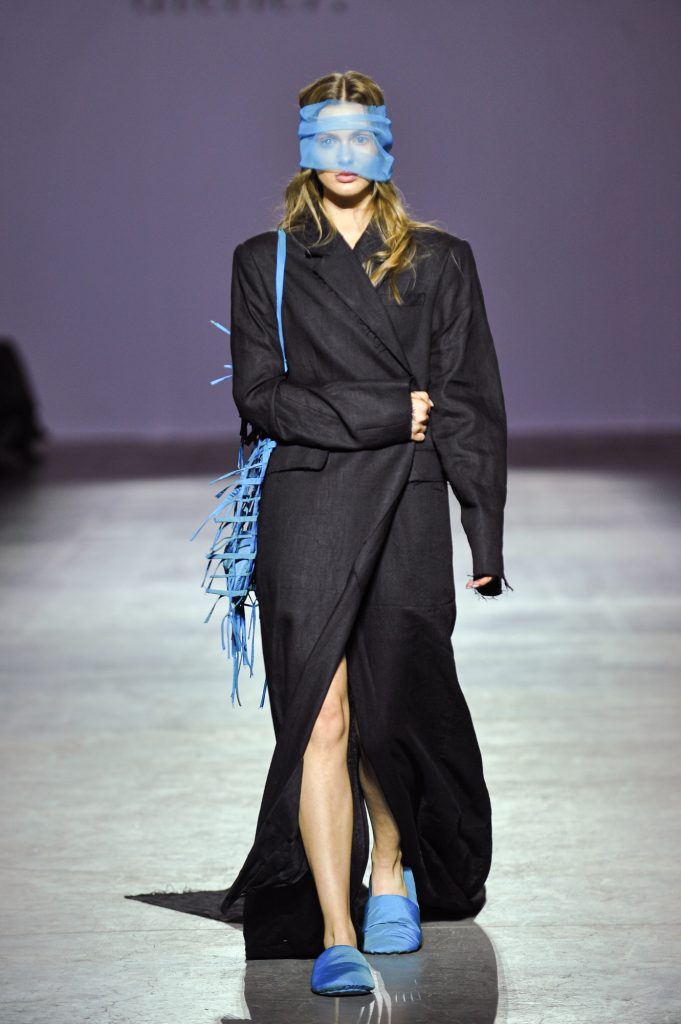
Bright blue taffeta appears as a grotesque mask — the moment of fully stepping outside, when action overcomes inner resistance. Its deliberately artificial contrast emphasizes the gap between inner state and public appearance.
The collection is constructed like a puzzle, where one look flows into another. The main fabric becomes the lining, while the lining transforms into something intimate — something meant to remain private. Clothing has no clear hierarchy: the external can become internal, and the hidden can suddenly appear on the surface.
STILL IN BED tells the story from the moment of waking up to the moment a woman goes to sleep. It is about fatigue from structures and expectations, about inverted logic, about the desire to stop controlling everything.
It is about boundaries — what I show and what I hide.
Ultimately, this collection is about those thoughts and emotional states that are difficult to articulate aloud but easy to wear. About clothing as an extension of the body, memory, and inner space.
KUDREVSKYI
Ukrainian brand KUDREVSKYI made its debut at Ukrainian Fashion Week, turning the runway into an artistic performance exploring grace, movement, and the beauty of sculptural form.
The collection originated from designer Maksym Kudrevskyi’s participation in the XXVI All-Ukrainian Young Designers Contest “A Look into the Future. The Khanenko Museum Collection,” dedicated to the heritage of the Bohdan and Varvara Khanenko National Museum of Arts. One of the key references for the collection became the 16th-century wooden sculpture Madonna and Child, whose balanced forms, sculptural plasticity, and sense of inner light informed the character of the silhouettes.
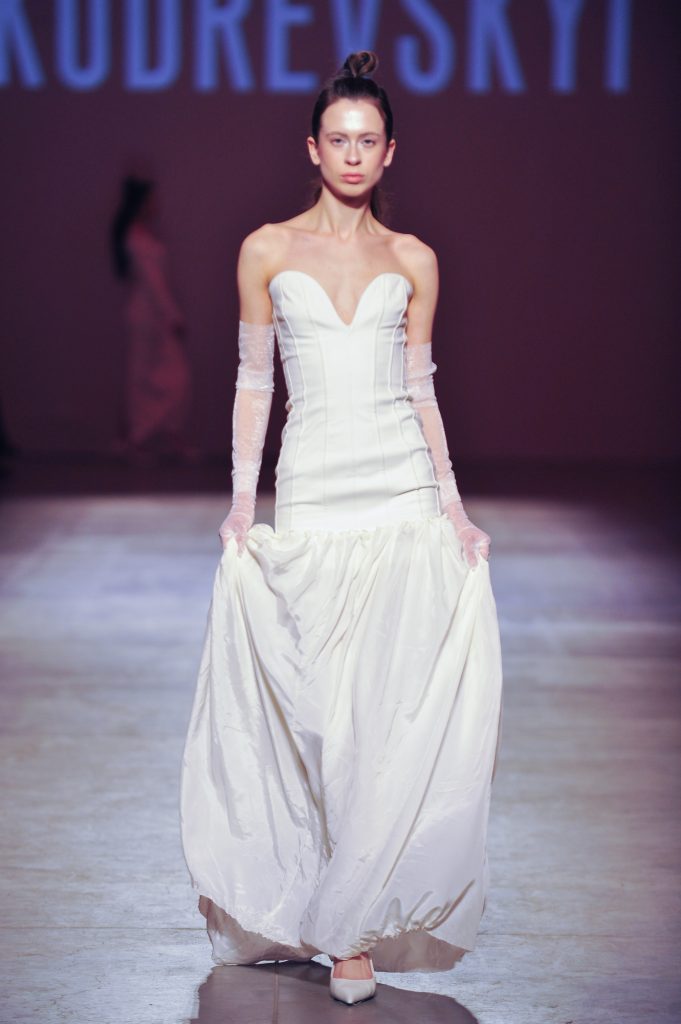
Gradually, the collection evolved into a study of luminous imagery and the fluidity of drapery. Sculpture — a symbol of ideal form — becomes a metaphor for harmony and timeless grace. From this emerges the image of a perfectly balanced, plastic figure, traditionally embodied in sculpture. In KUDREVSKYI’s collection, this grace comes to life through movement, expressed in light fabrics and softly sculpted silhouettes.
The silhouettes revolve around elongated shapes and draped constructions: long dresses with vertical folds, asymmetrically draped skirts, bodysuits and softly sculpted pieces, as well as corset tops. These are complemented by a structured jacket and trousers with draped details, extending the collection beyond eveningwear. The styling introduces elements inspired by the aesthetics of rhythmic gymnastics — ribbons, floral hoops, and soft, weightless ballet slippers.
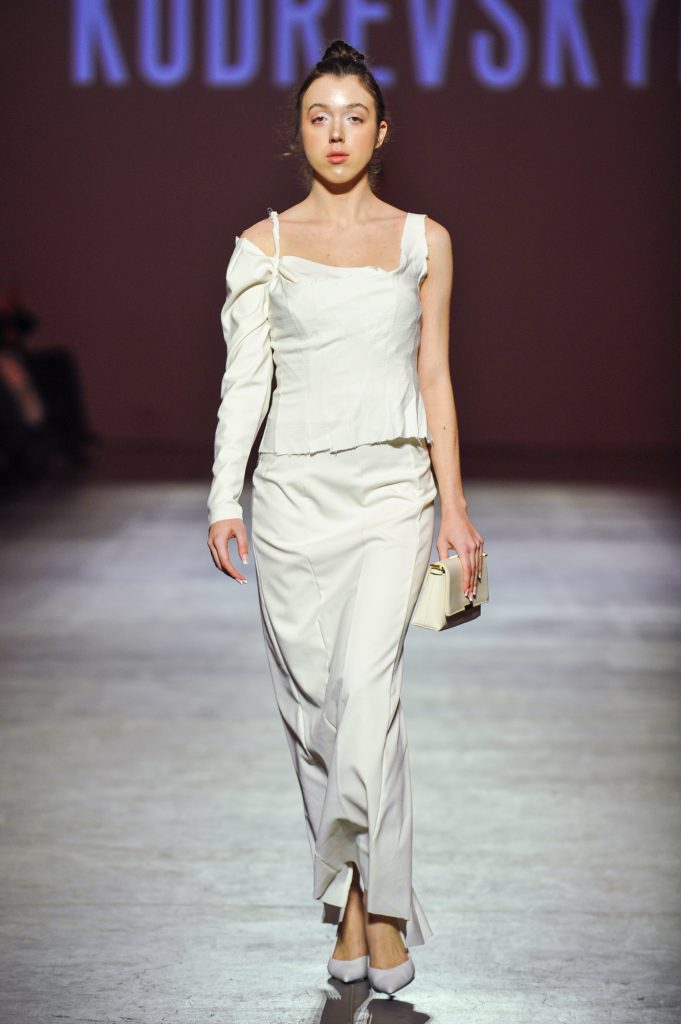
The collection is rendered in a light colour palette dominated by white and its subtle variations, emphasising the purity of form. In terms of materials, the designer combines glossy viscose with matte textured crepe in a monochrome composition, complemented by elements of sheer mesh that add depth and a sense of layering. The interplay of these three textures creates looks that feel both complex and harmonious.
The show at Ukrainian Fashion Week unfolded as an artistic performance. Professional rhythmic gymnasts took part in the presentation, turning the runway into a space where fashion, body, and movement interact.
Through this collection, KUDREVSKYI explores the transition from static sculptural beauty to living, dynamic grace — where clothing becomes an extension of movement and sculpture itself begins to move.
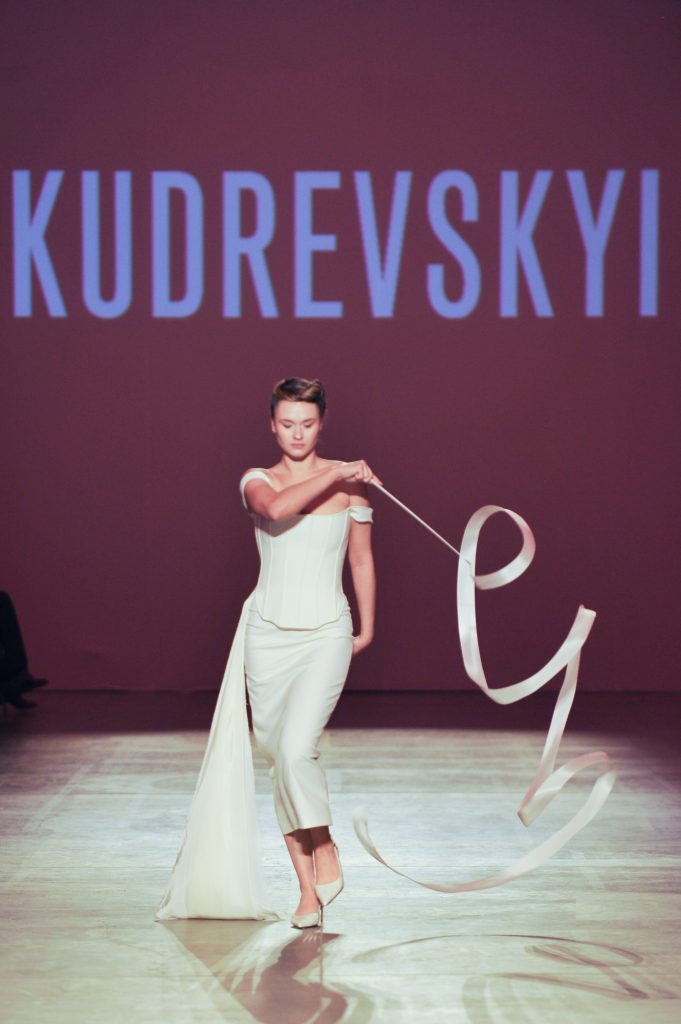
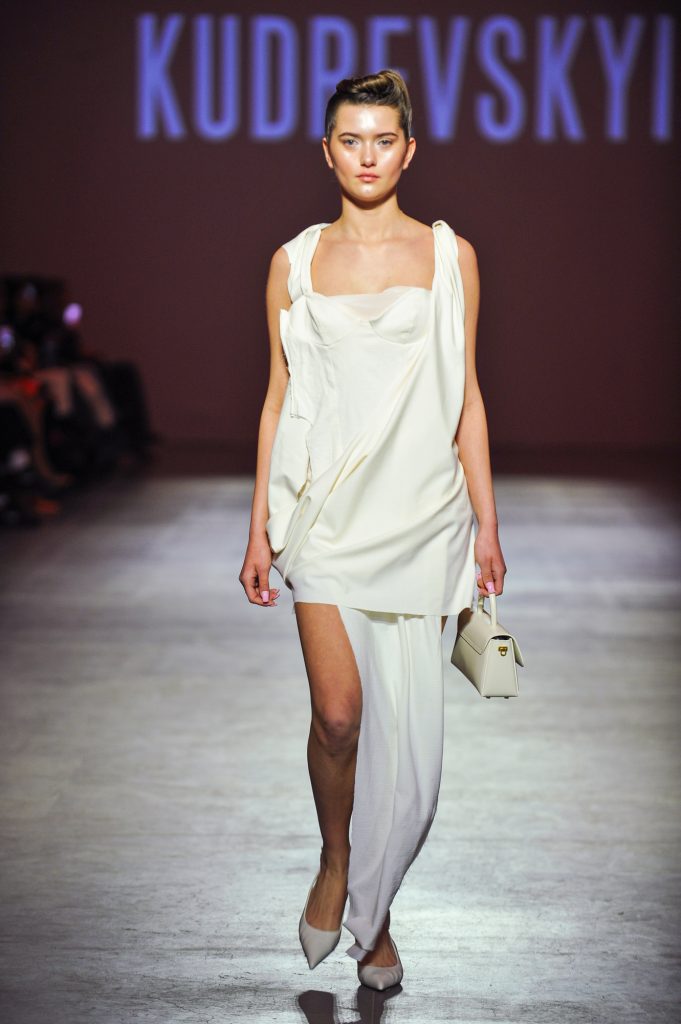
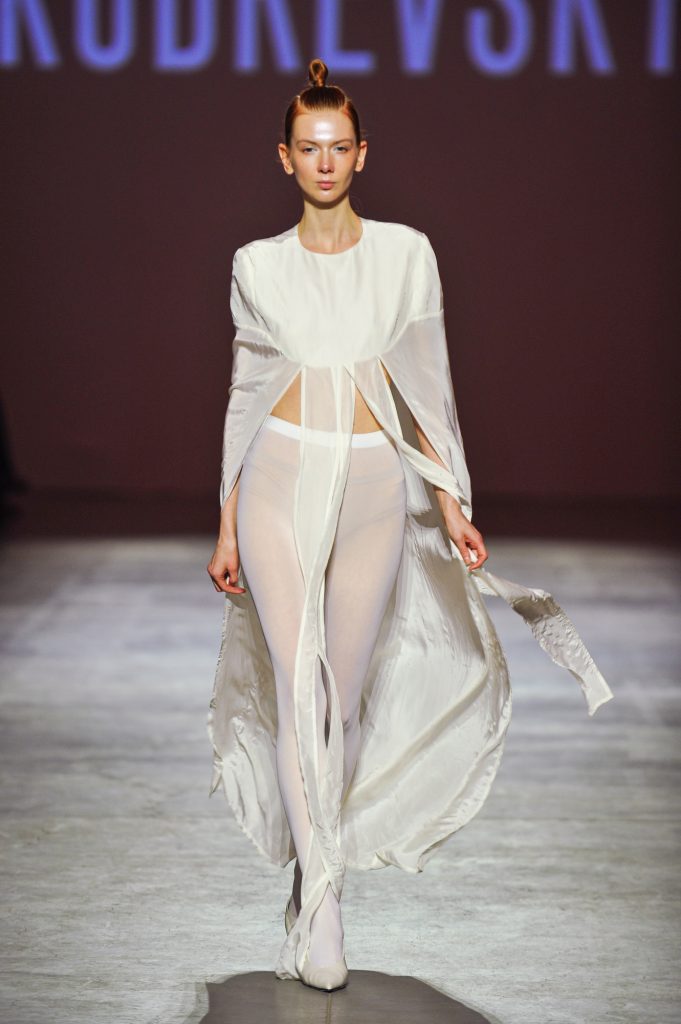
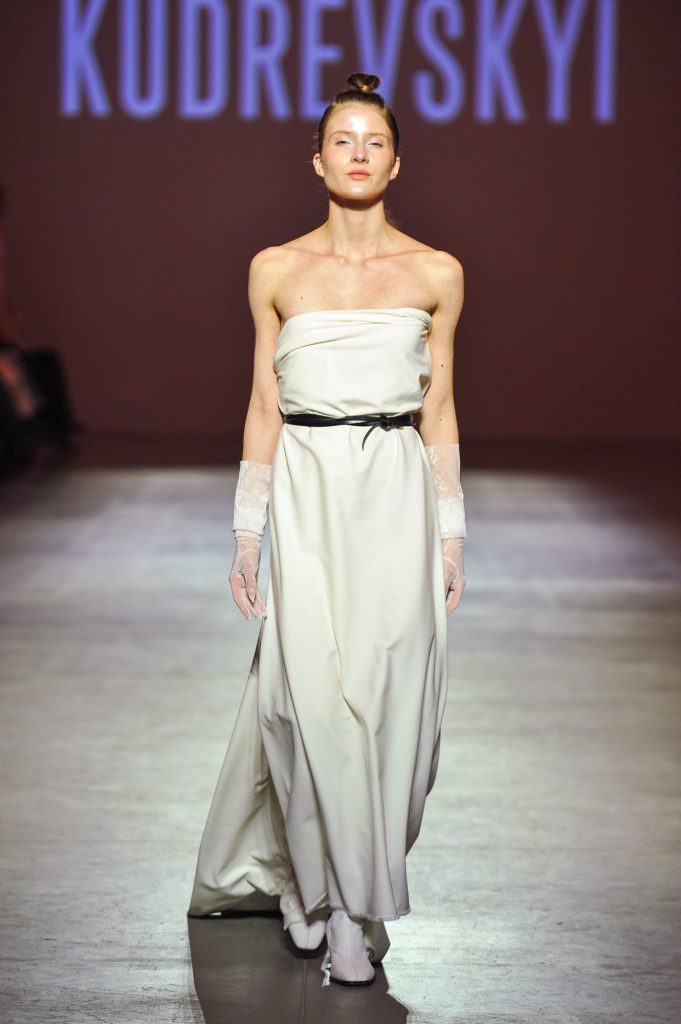
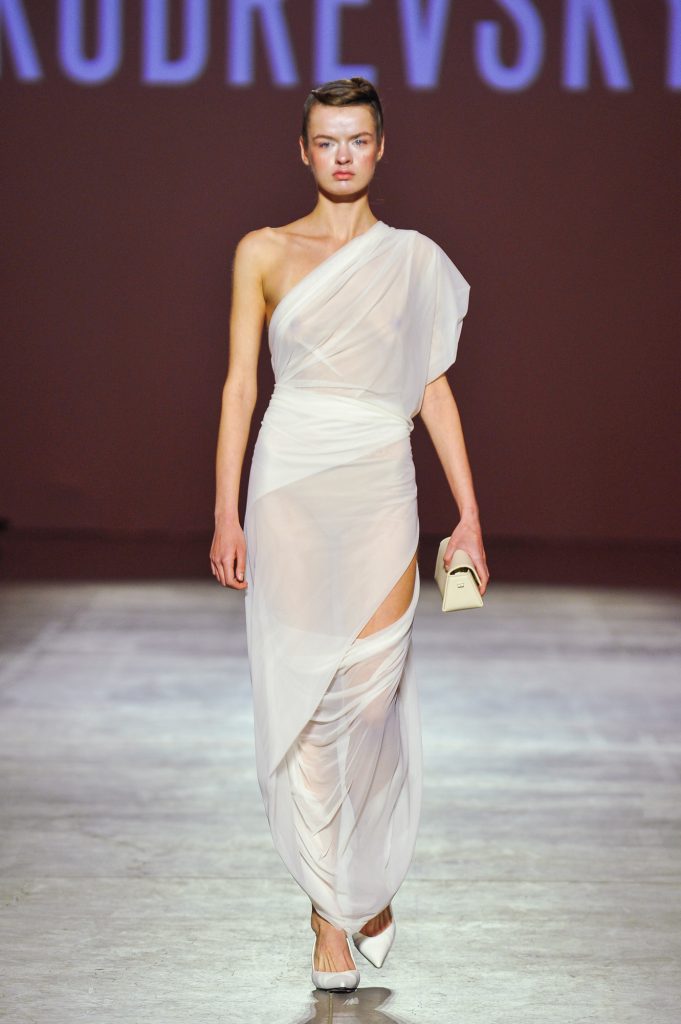
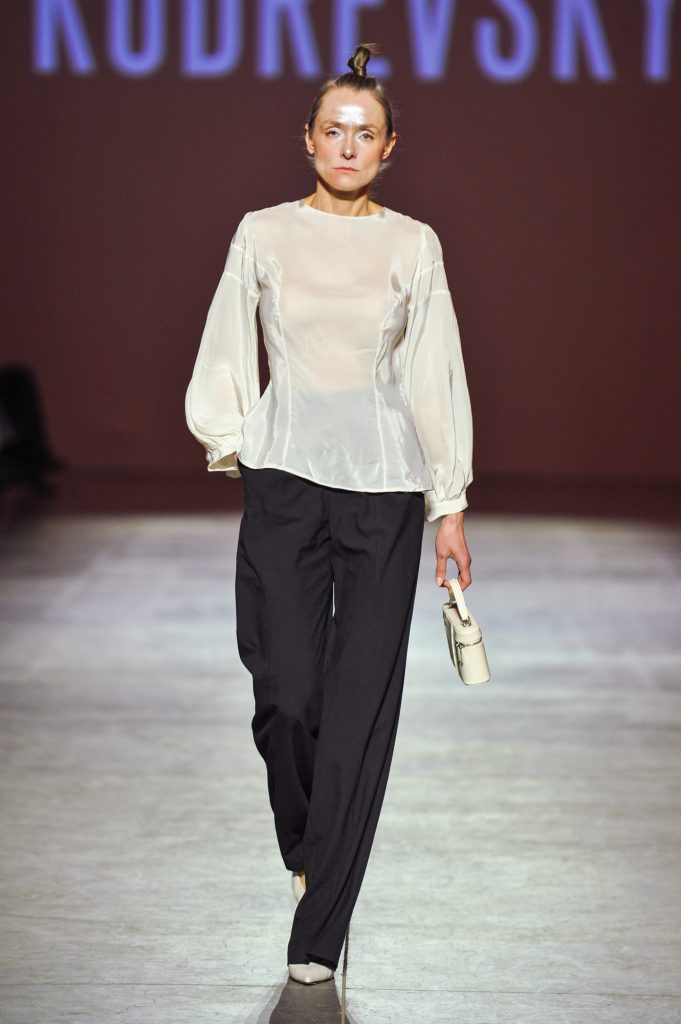
Photo: Volodymyr Bosak