
FW26-27: leCRI show
Escapism, romance, and sustainability are the core values of leCRI. Each new collection becomes an invitation into the designer’s imaginative world and an attempt to shape a new vision of conscious beauty. Every look is both a challenge to her own craftsmanship and a space for experimentation.
The main source of inspiration for the FW26–27 collection is the ama — the legendary “women of the sea,” professional Japanese divers who, for centuries, plunged into the icy ocean waters without scuba gear, gathering shellfish, pearls, seaweed, and other treasures of the sea.
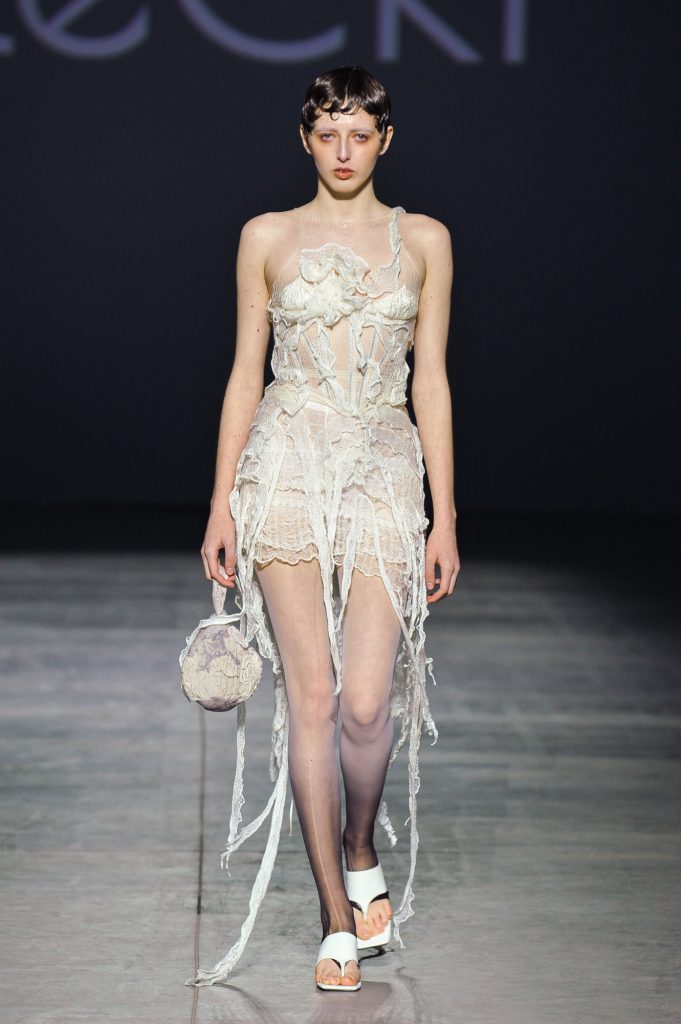
The ama tradition spans more than two thousand years, appearing in ancient Japanese texts and serving as a motif in iconic miniatures, legends, and myths. The profession flourished during the Edo period, when pearls became an exceptionally valuable and desired material. In some regions of Japan, ama still exist today — although their numbers have significantly declined, the very preservation of this age-old tradition speaks to the special place these divers hold in the country’s history.
Delving into the origins of these fearless women, the designer drew inspiration from their aesthetics, rituals, and the mysticism that accompanied this unique female profession for millennia. Courage, strict discipline, and intense physical and mental training — all required by their daily labor — were remarkably intertwined with grace, religious practices, and a profound unity with the ocean and its ecosystem.
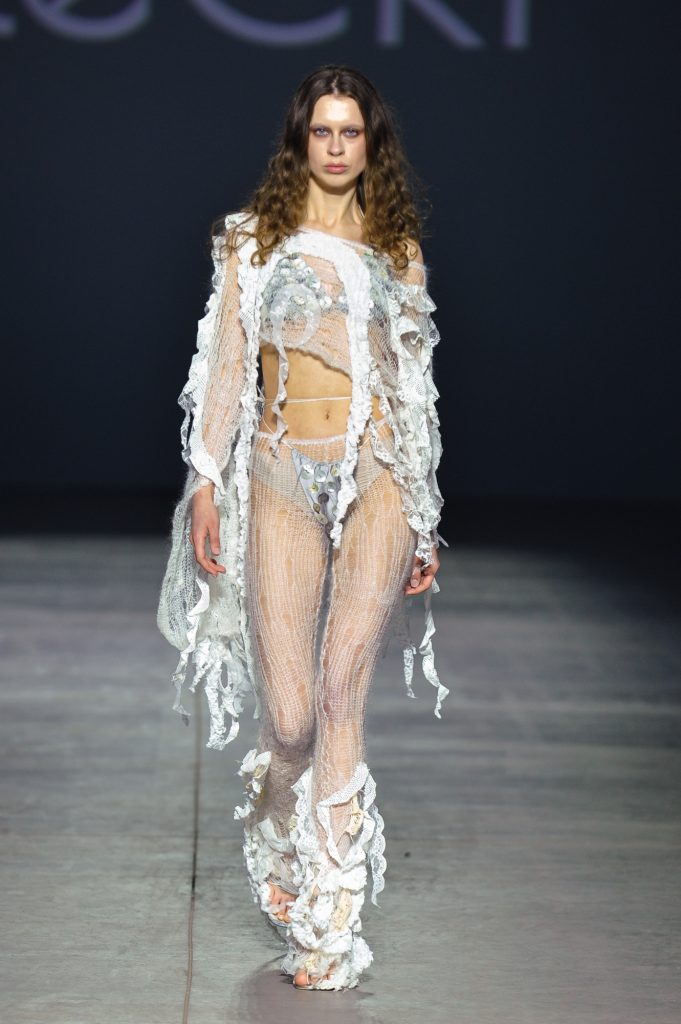
The mastery of the ama lay not only in their ability to remain underwater for extended periods, but also in the wisdom of interacting delicately with the ocean without disturbing its complex natural balance. This knowledge and skill were passed down from elder women of the community to young girls from an early age and, for centuries, formed the foundation of many coastal communities.
The primary goal of the collection is to immerse the viewer in the unique world of Japanese professional divers who achieved harmony with the elements of water and air.
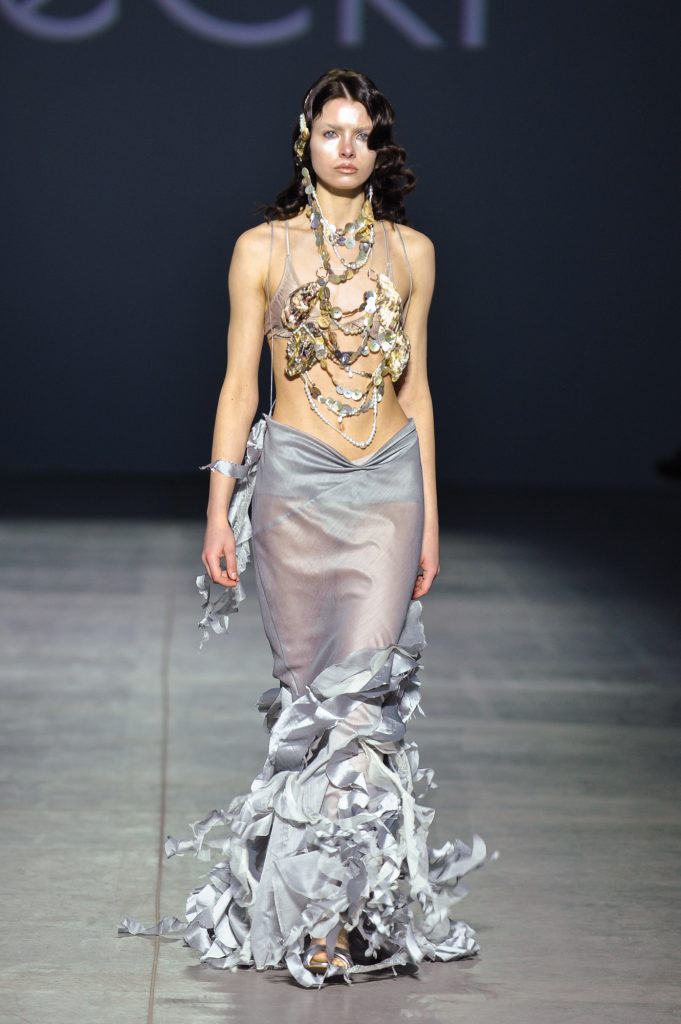
Remaining true to the brand’s DNA, the designer continues to experiment with upcycling techniques. The collection also extensively features unconventional materials: natural latex imitating octopus tentacles, interpretations of fishing nets, as well as shells and netsuke handcrafted from clay. As always, a key emphasis is placed on handcraft and fabric manipulation — Japanese hand-dyeing techniques such as shibori, pleating, appliqué, and knitting.
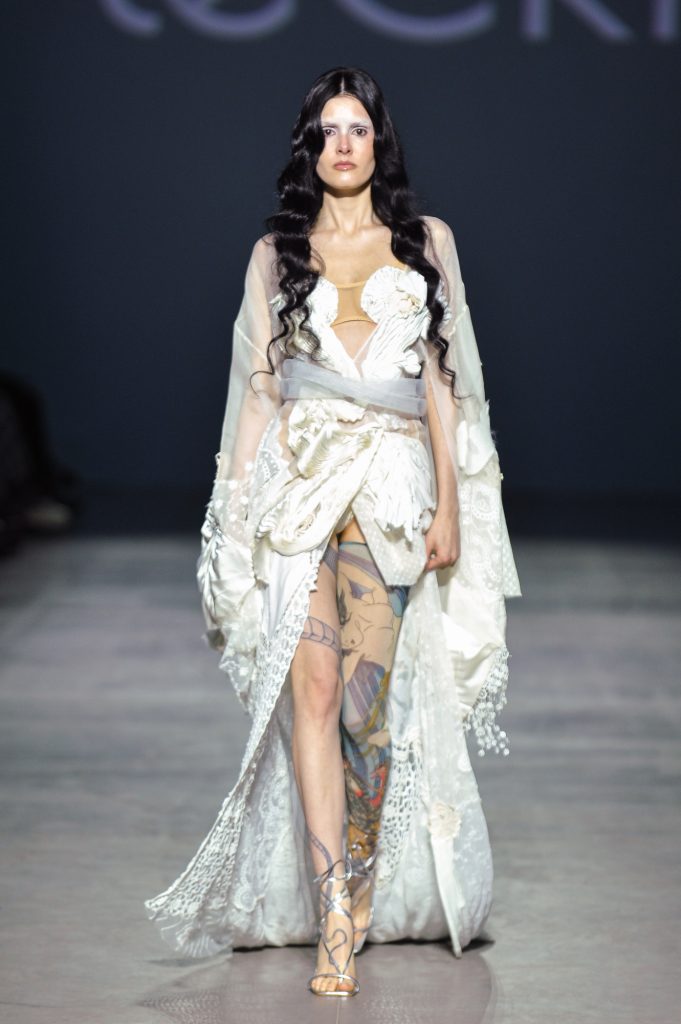
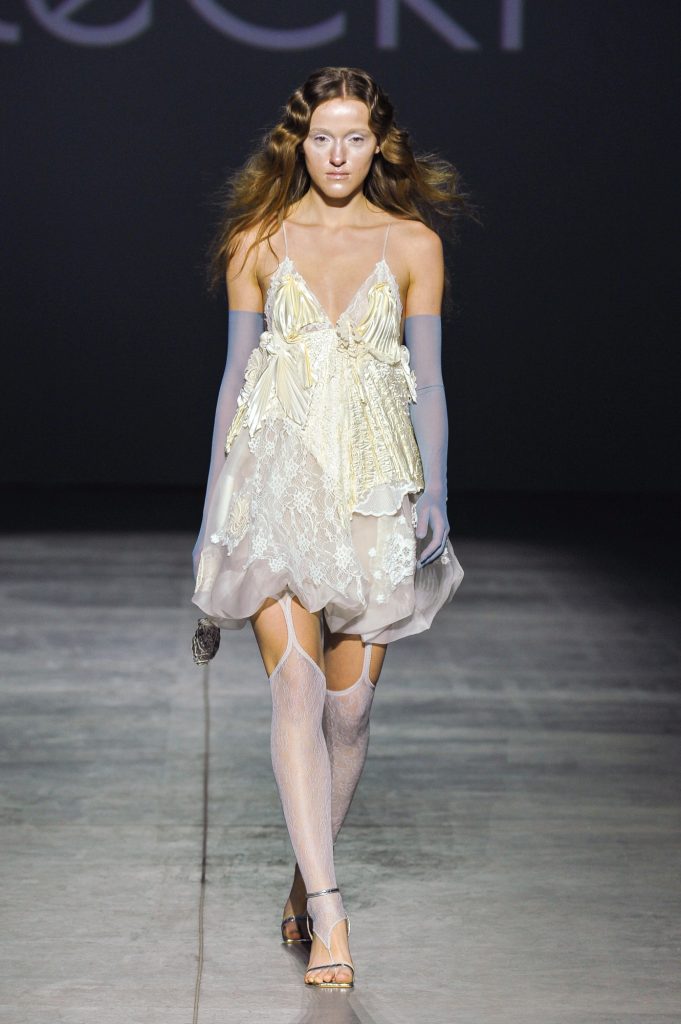
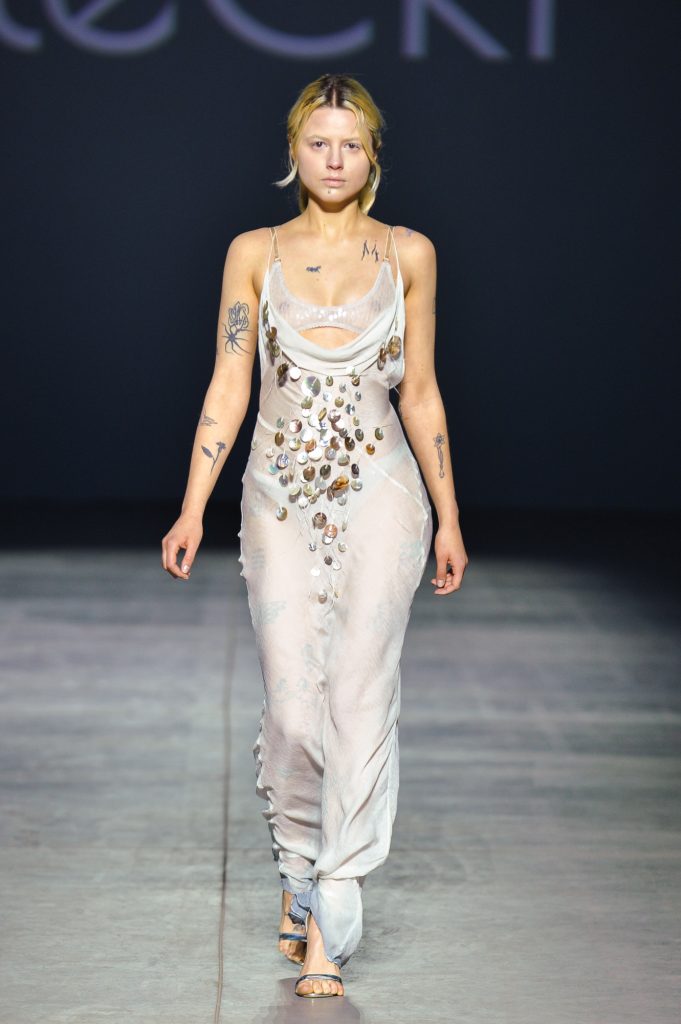
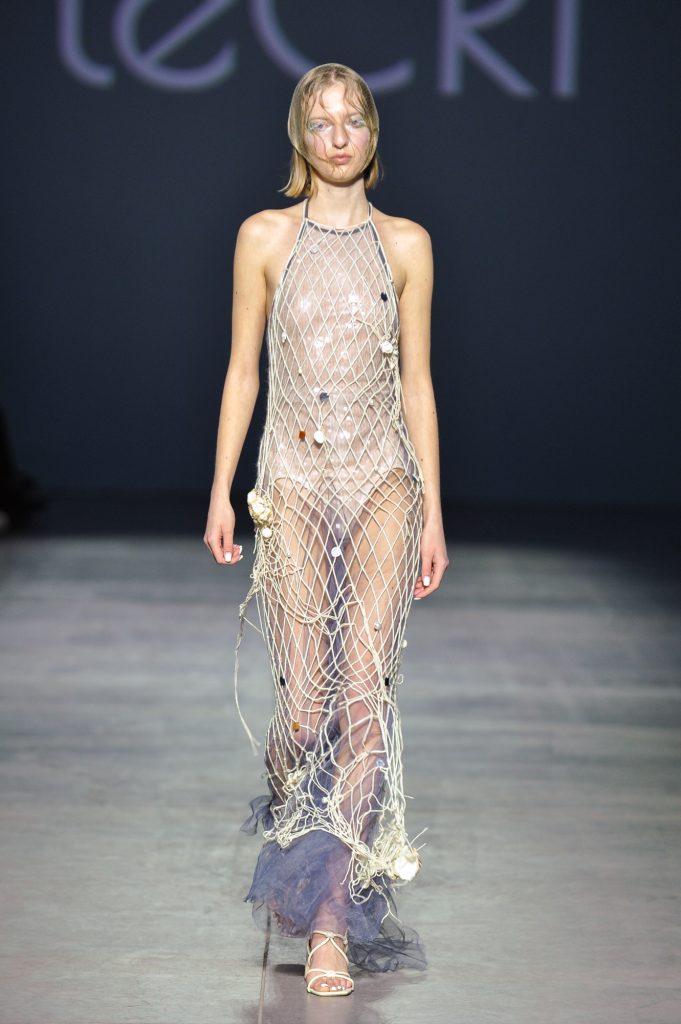
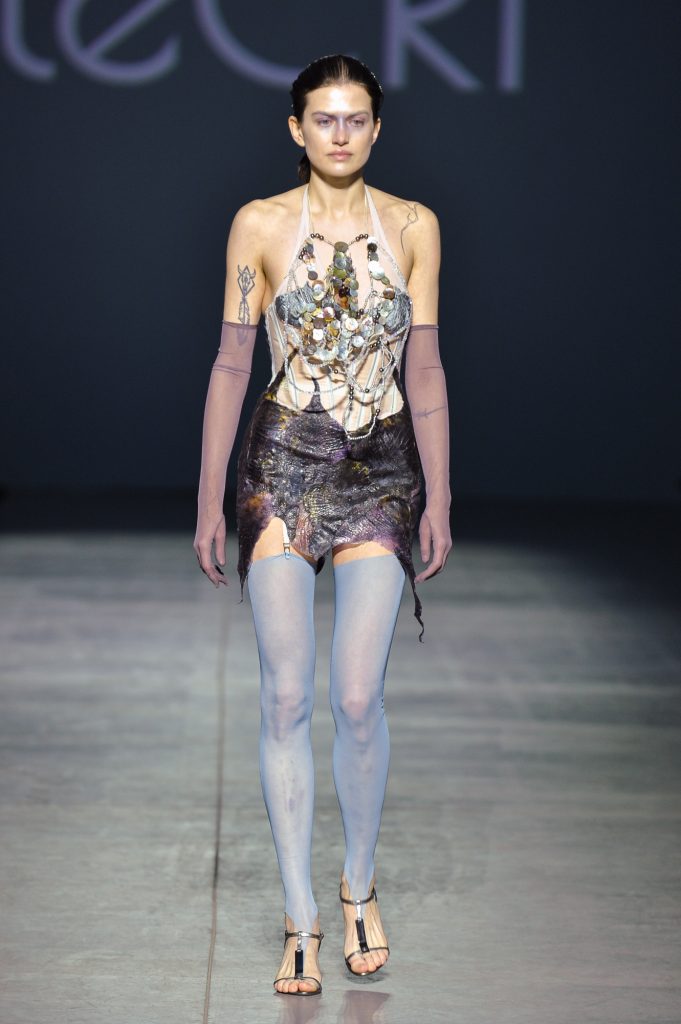
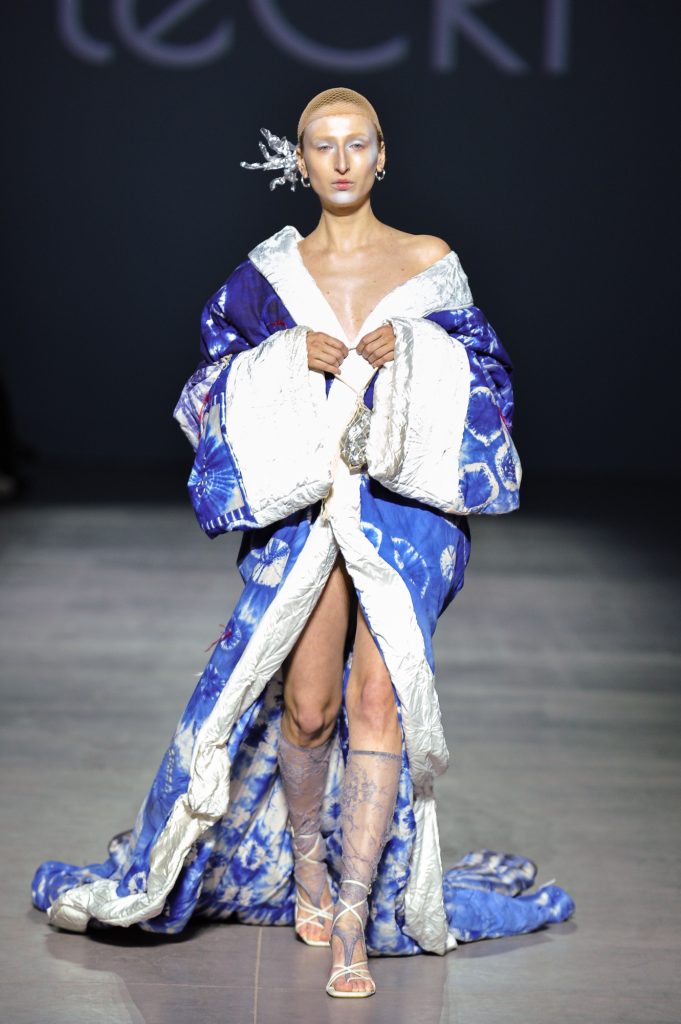

Photo: Volodymyr Bosak