FW26-27. ART OF FASHION: Sustainable Innovations
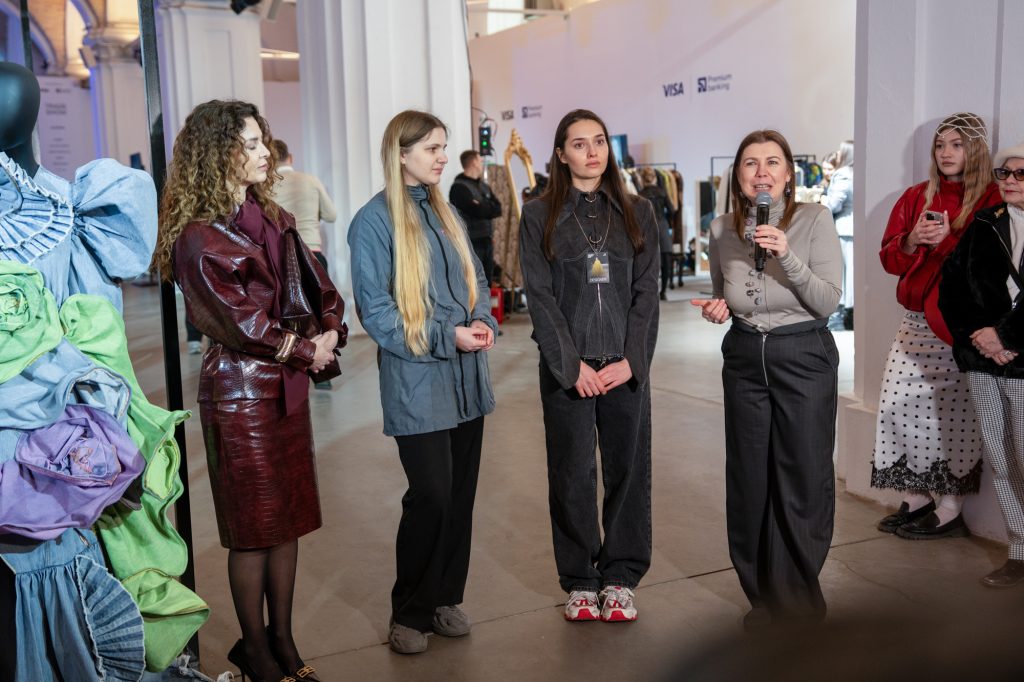
On March 13, ART OF FASHION: Sustainable Innovations, the main exhibition of Ukrainian Fashion Week FW26–27, opened at Mystetskyi Arsenal in Kyiv.
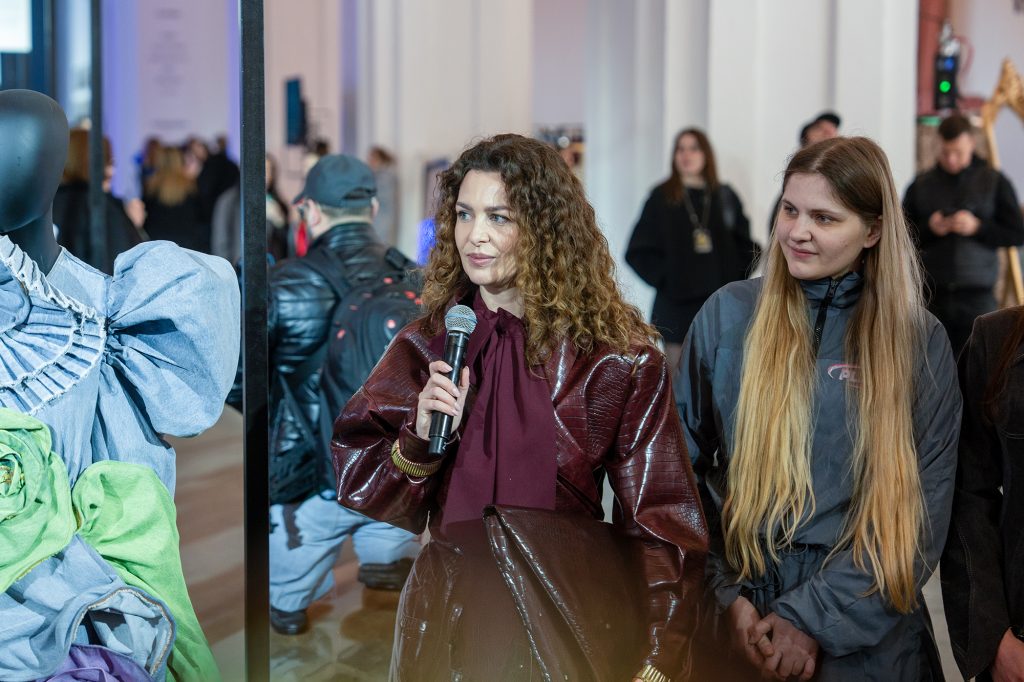
The exhibition features 9 looks created by Ukrainian designers BEVZA, J’AMEMME, KSENIASCHNAIDER, LITKOVSKA, NADYA DZYAK, PLNGNS, TG Botanical, UPSLOWUSE, alongside the fashion school UFEG.
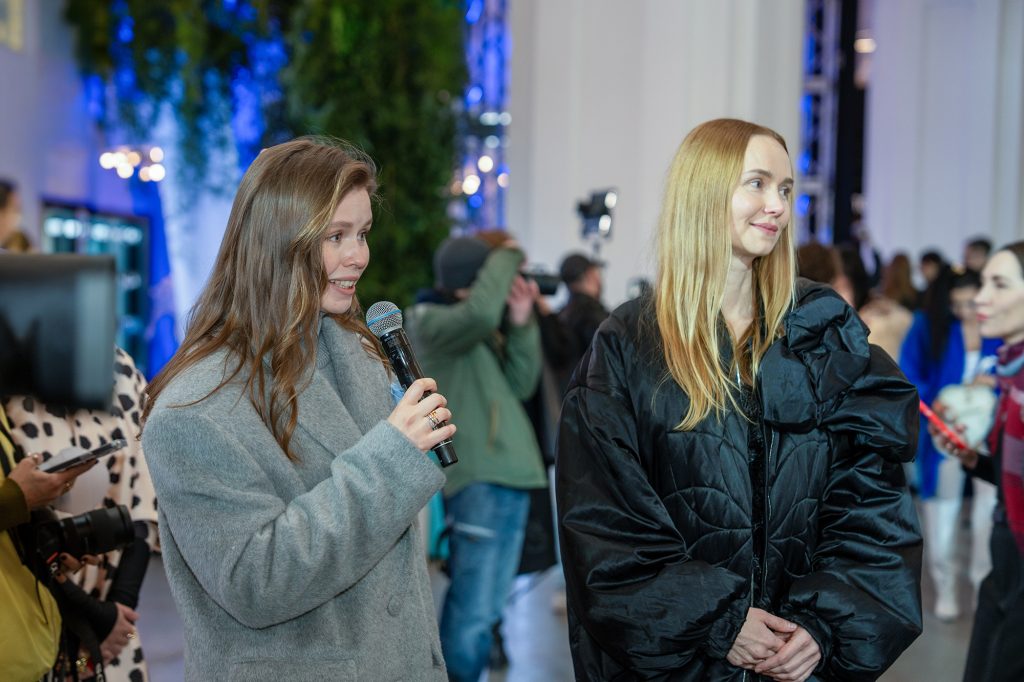
“At a time when the world is changing with unprecedented speed, Ukrainian fashion demonstrates its ability to rethink, innovate, and evolve sustainably. Even amid the full-scale war, Ukrainian designers are creating not just clothing, but shaping a vision of the future where creativity meets responsibility. They explore new technologies, materials, and forms that respond to global challenges — from environmental to social,” — comments Iryna Danylevska, Founder and CEO of Ukrainian Fashion Week.
Ukrainian Fashion Week FW26-27 is dedicated to the innovative and sustainable approaches of Ukrainian designers. This season, fashion becomes a space where responsibility and awareness merge with powerful creative energy. The exhibition at Mystetskyi Arsenal brings these approaches to life through a series of looks that highlight sustainable fashion practices — from upcycling and recycling to zero-waste methods, responsible material sourcing, and innovative technologies.
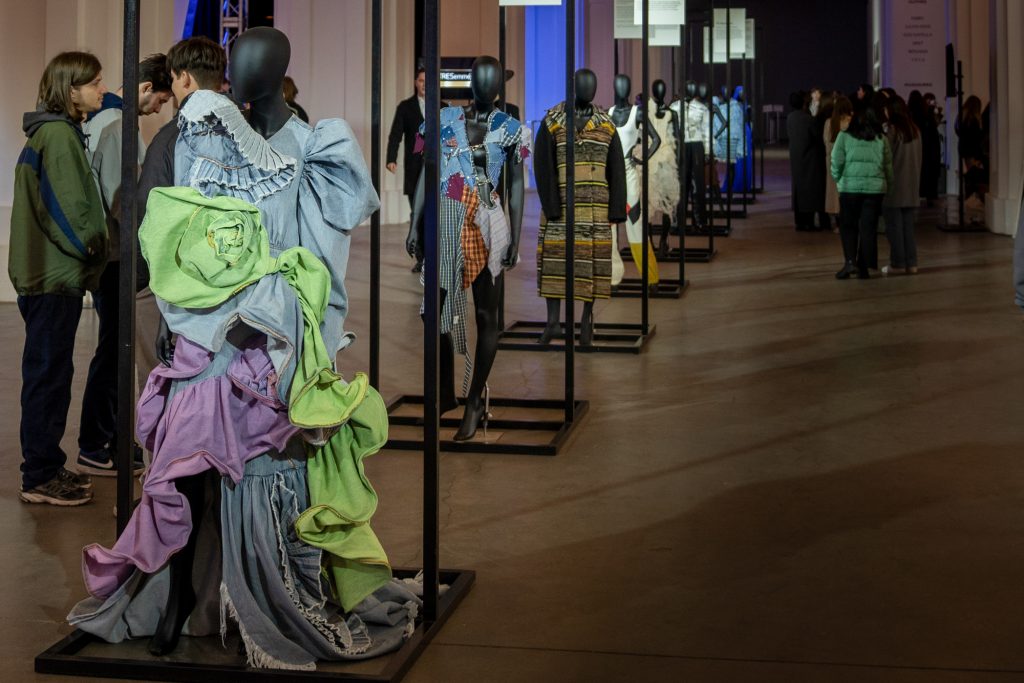
BEVZA
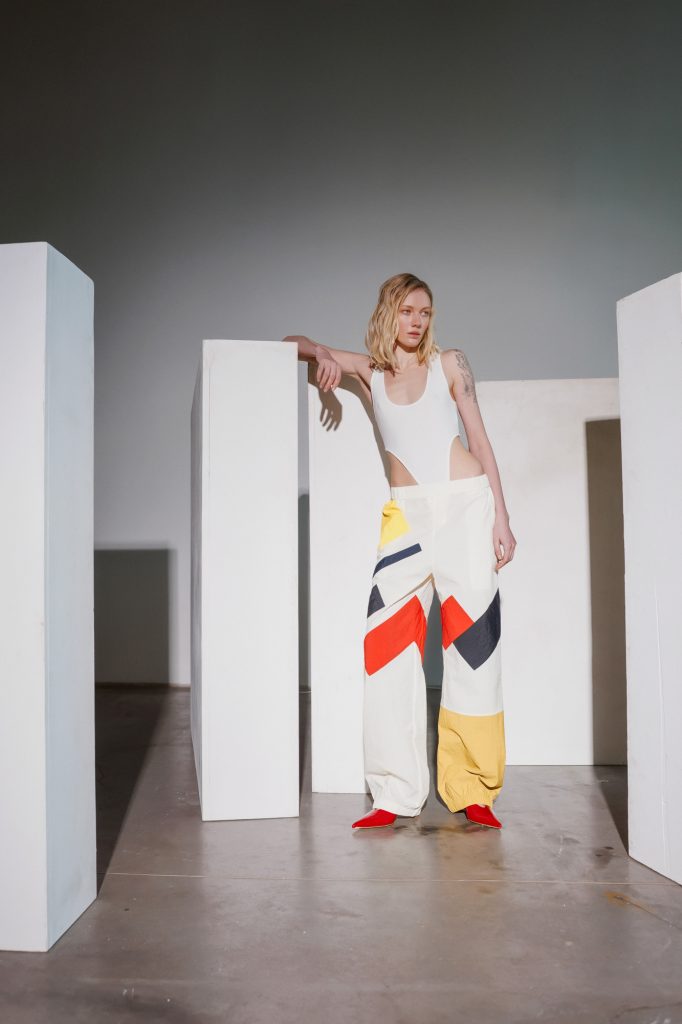
The brand presented “Malevych” tracksuit pants from SS26 collection that was a tribute to Kazimir Malevych, one of the world’s most famous artists of Kyiv origin. The pants are made from carefully selected vintage materials and contain partially upcycled details — elements from reused fabrics. The design is developed taking into account the principles of zero waste technology, minimizing production waste and optimizing the use of resources.
The work is part of the brand’s sustainable approach to production, where responsibility for material and process becomes an integral part of design. Thus, the avant-garde heritage of the early 20th century and the modern ethic of sustainable development are combined — where form is not only an aesthetic, but also a position.
J’AMEMME
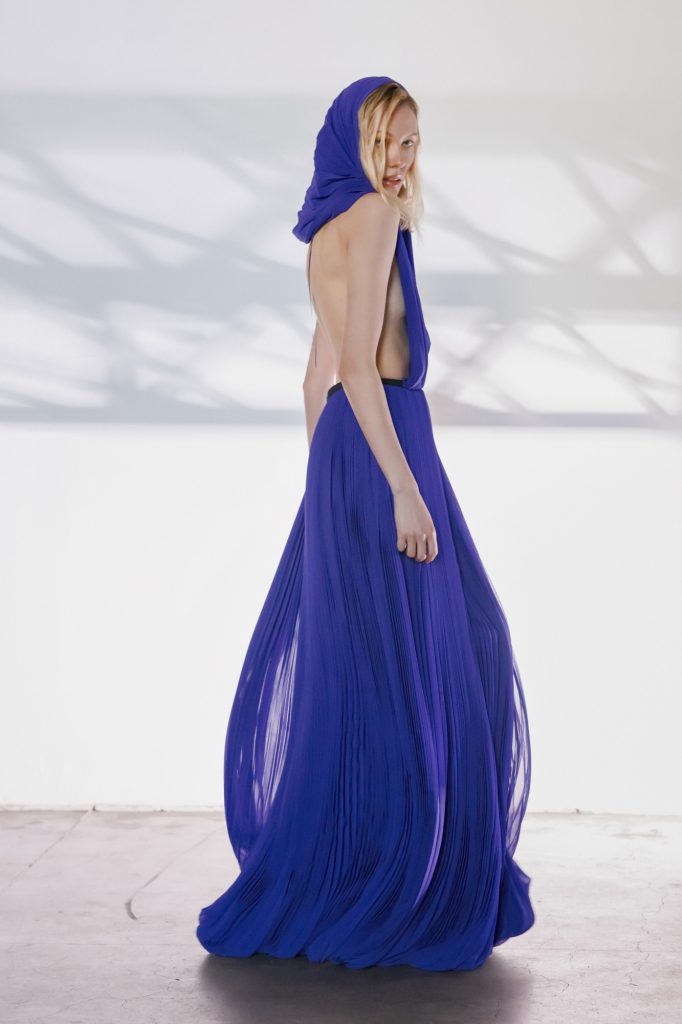
The violet chiffon J’amemme dress was created in collaboration with Perwoll and made entirely from 100% recycled plastic (recycled PET). The material underwent a full transformation cycle – it was collected, processed, and then turned into new textiles suitable for fashion production. This approach helped reduce the use of virgin plastic and minimize environmental impact. The project reflects the brand’s philosophy of conscious consumption and responsible production, proving that innovation and sustainability can go hand in hand in contemporary fashion.
KSENIASCHNAIDER
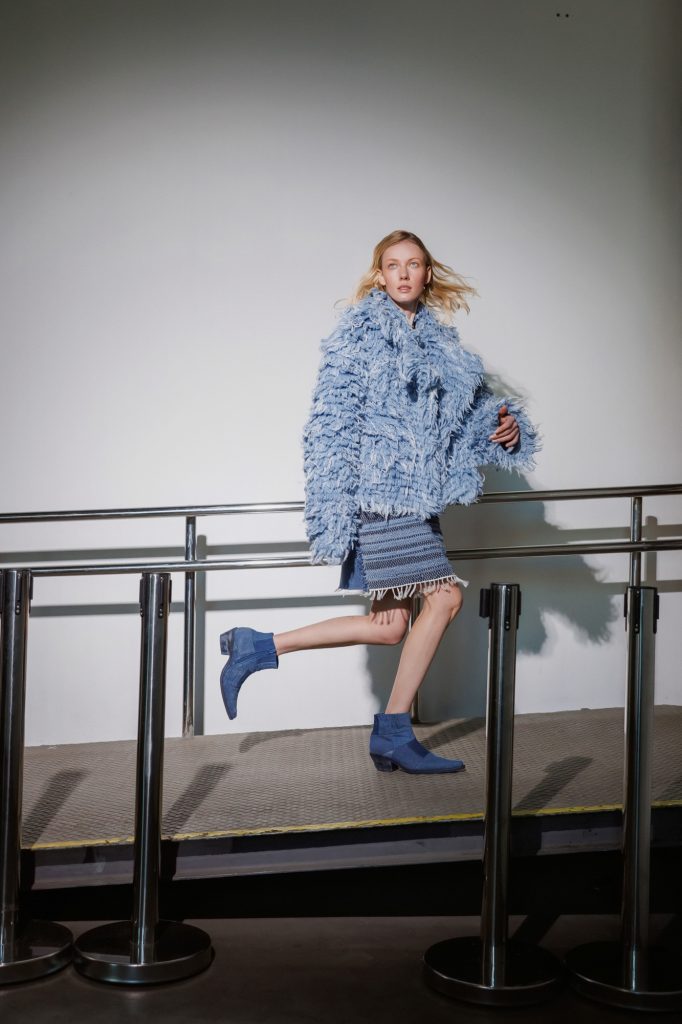
The look reflects KSENIASCHNAIDER’s approach to sustainability — as a process of transformation rather than constant production. Each piece begins with existing materials and is reworked through design, craft, and experimentation, extending their life and meaning. Denim Fur is crafted from reworked vintage denim and delicate frayed offcuts – the technique has become one of the brand’s most recognisable signatures and was awarded a PETA Vegan Fashion Award. Zero-waste skirt is hand-woven from denim scraps and production leftovers. Created in collaboration with a women’s community of artisanals from Stina village (Chernihiv region), the fabric is created on traditional wooden looms. The look is completed with patchworked boots developed in collaboration with Ukrainian footwear brand Hvoya.
LITKOVSKA
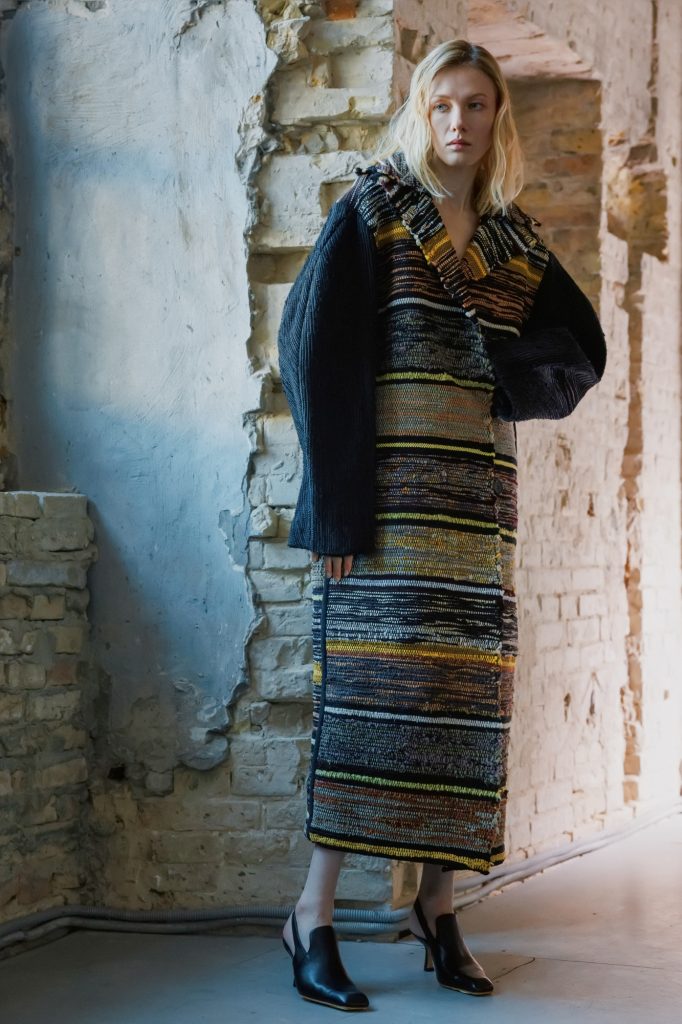
The sustainable demi-couture line Artisanal by LITKOVSKA is a bridge between past and future, where tradition remains modern and timeless. Each ARTISANAL garment is a unique piece, created entirely by hand from recycled materials — production leftovers, textile fragments, and archival garments. These materials are shredded and rewoven into new fabrics by craftswomen in the Ukrainian Carpathians, using traditional techniques on 100-year-old looms. Every piece has a distinctive colour pattern and is accompanied by a Passport stating the number of handwork hours.
NADYA DZYAK
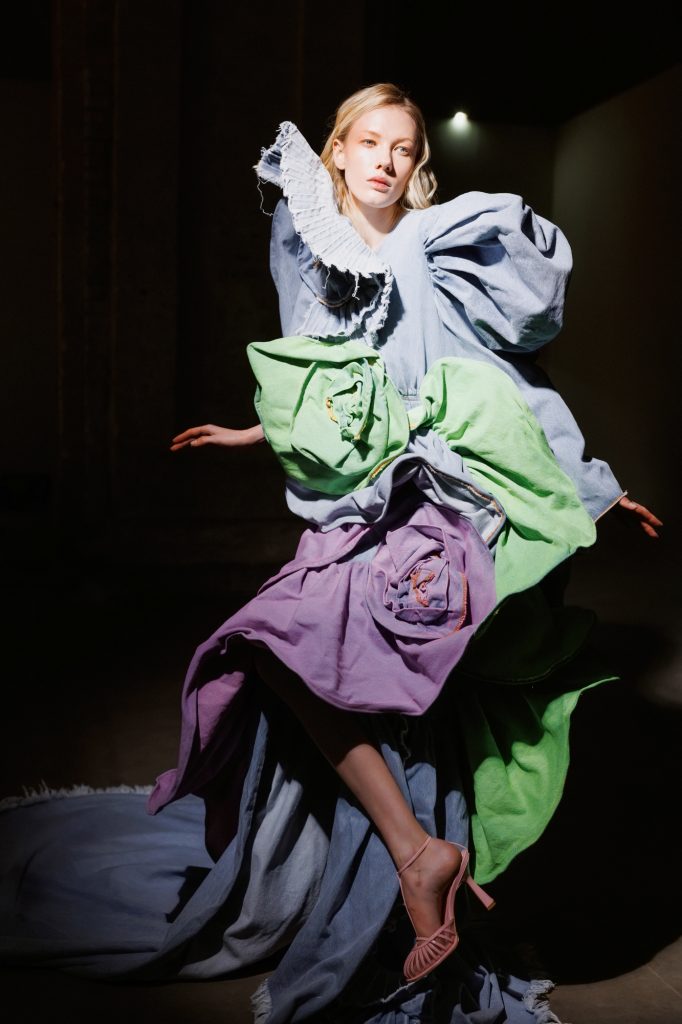
The dress-object by NADYA DZYAK was created for the Kering S|STYLE – DENIM edition, an initiative powered by Kering’s Material Innovation Lab founded and curated by Giorgia Cantarini. The project highlights the potential of eco-friendly technologies in denim production. The piece is made from Italian Pure Denim, treated at Tonello using clean processes such as ozone finishing and plant-based dyeing. The look brings together key elements of the brand’s DNA – sculptural construction, voluminous ruffles and floral details, as well as innovative hand-crafted denim pleating.
Created for Kering’s international denim project, the dress became the result of the brand’s long-term evolution: deep respect for material, engineering of form, devotion to craftsmanship, and readiness to work with the industry at its highest technological level. The dress premiered in Milan at Fondazione Sozzani and was also presented at the Première Vision Denim Project in Milan and New York.
PLNGNS
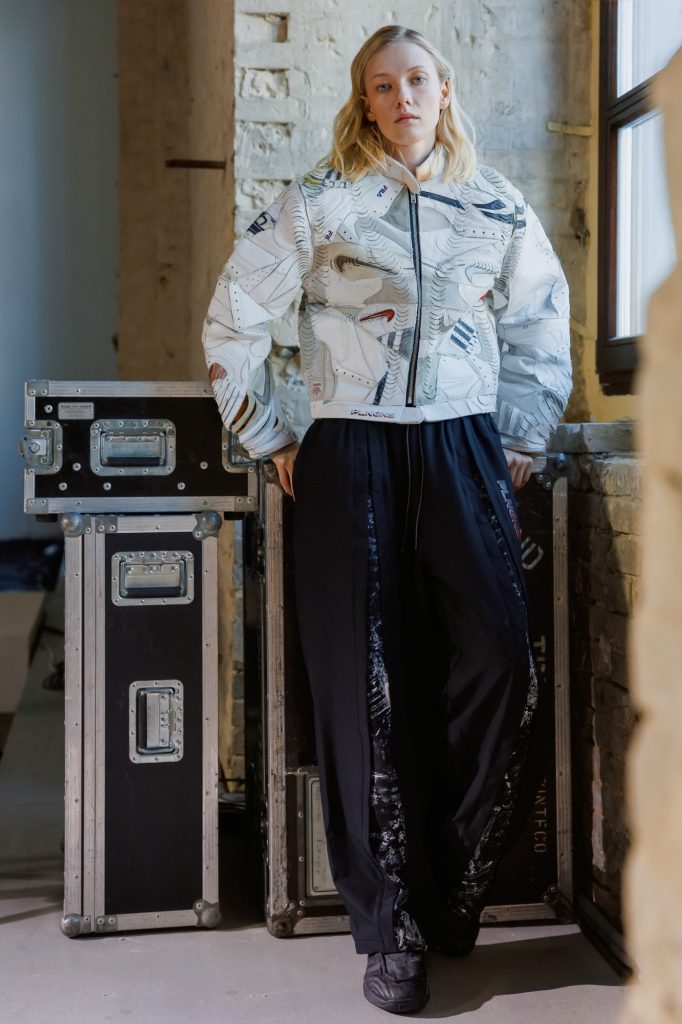
Moto jacket, trousers and sneakers by PLNGNS are from the “Identity” collection, presented at Berlin Fashion Week FW25-26. The jacket is crafted from fragments of upcycled leather sneakers – each panel preserving traces of the material’s previous life. The nylon trousers are made from leftover stock fabrics and feature a print by a sneaker outsole. The look is completed with a pair of sneakers assembled by hand from upcycled elements, serving as a manifesto of transformation and circularity in fashion.
TG Botanical
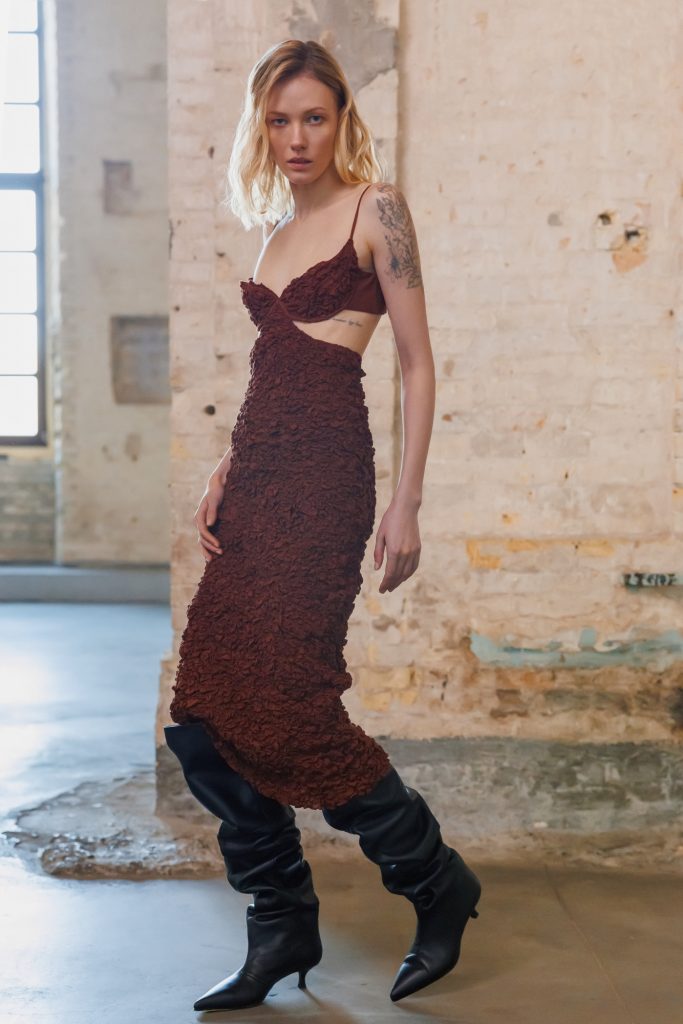
The Nadiya dress from the TG Botanical SS26 collection, The Garden of Awakening, combines femininity, comfort, and the brand’s signature aesthetic inspired by nature and the soil. The Nadiya dress is crafted from certified fabric made of 100% nettle, using an elastic 3D ruching technique with a granular berry pattern. Thanks to the brand’s unique hand-crafted ruching technique, an integral part of its DNA, the dress interacts gently with the body and moves with it, creating a sense of natural freedom.
UFEG
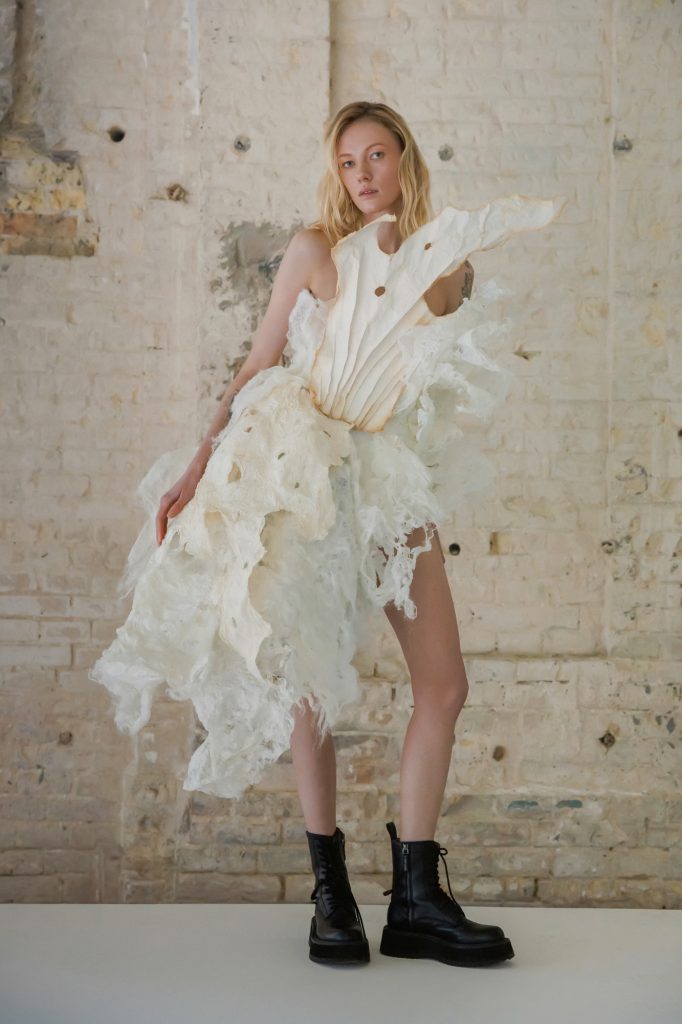
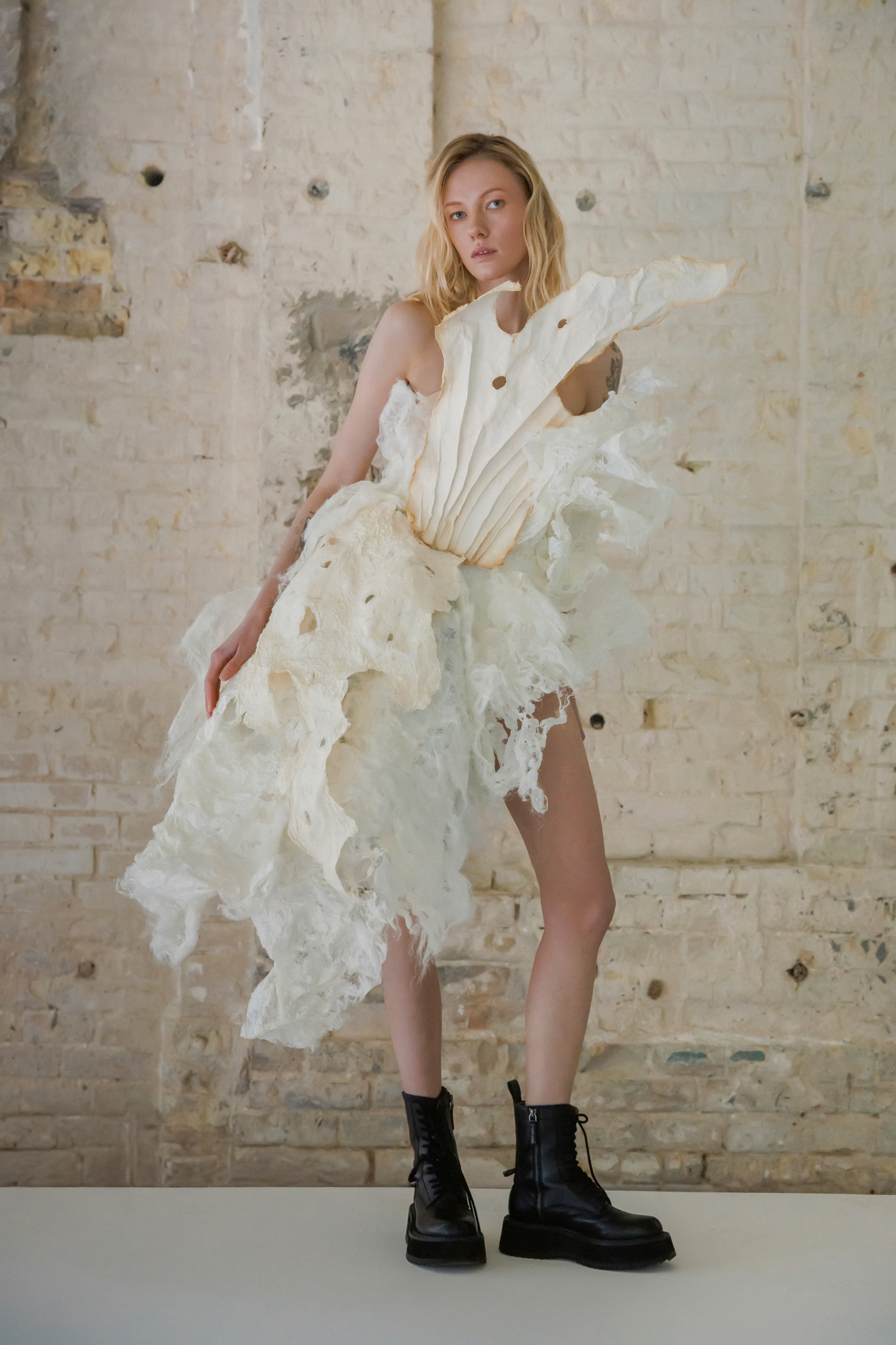
Fashion school presented a biodesign dress created within the grown-to-wear concept, in which garments are developed from living materials. The piece was designed by Hanna Hurinenko for the BIO:Matter project by Ukrainian Fashion Education Group. The work combines bacterial cellulose, starch- and protein-based composites, as well as flax and wool fibers integrated into the structure of the material. Bacterial cellulose, cultivated using the human-safe bacterium Komagataeibacter xylinus, forms rigid, architectural elements, while softer components add flexibility and movement.
All materials used are fully biodegradable, pointing toward a possible future for fashion — one that is more mindful of resources and the relationship between humans and nature.
UPSLOWUSE
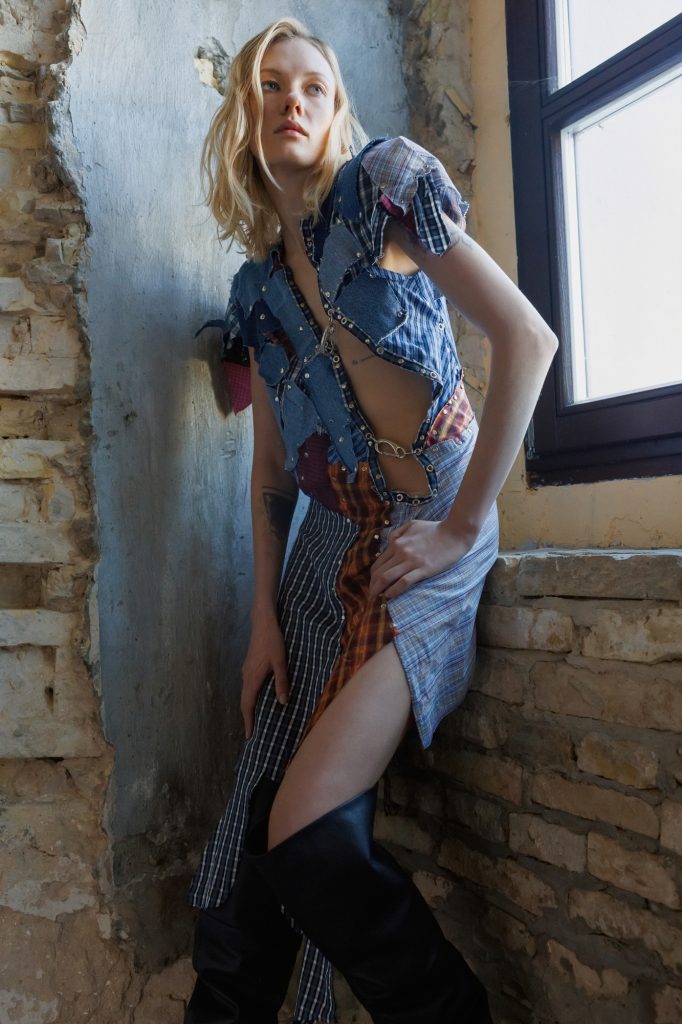
“The look was born in the darkness of a cold Kyiv atelier — without electricity and without a single machine stitch, shaped solely by hand. When the city was left without light in the midst of January frost, the act of creation became one of acceptance and resilience. From production remnants of denim and checked cotton, we assembled a new form without concealing its mechanical construction. It is an aesthetic of necessity transformed into a statement about the resilience of Ukrainian society and a new consciousness in fashion”.
Credits: Sergii Khandusenko
Model: Ilona Verbova
Model Agency: Select Management
Stylist: Bogdan Kovalenko
Stylist Assistant: Florinda Chernyshyna
MU/ Hair: 96groupShoes: KACHOROVSKA
Exhibition Photo Credits: Kate Gagosova